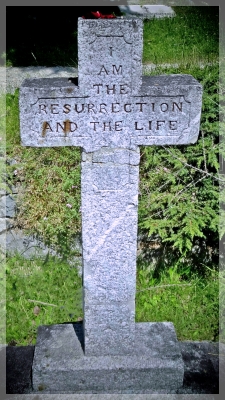
GETTING RIGHT, RIGHT NOW

Then Jesus turned to the crowd and said, “When you see clouds beginning to form in the west, you say, ‘Here comes a shower.’ And you are right. When the south wind blows, you say, ‘Today will be a scorcher.’ And it is. You fools! You know how to interpret the weather signs of the earth and sky, but you don’t know how to interpret the present times.” [Luke 12:54-59 (NLT)]

After admonishing the crowd surrounding Him for being able to predict the weather but being oblivious to the signs of the arrival of God’s Kingdom, Jesus told a parable about getting right with God before judgment. As He was speaking, he was told about a recent incident in which Pontius Pilate ordered his soldiers to murder some Galileans while they offered their Temple sacrifices. On Monday, in “The Man from Galilee,” I wrote about the stereotypes Judeans had of Galileans; along with thinking them to be uneducated peasants, many Judeans regarded Galileans as trouble-making rebels against Rome. Indeed, Galileans had revolted after Herod the Great was named King, and, in 6 AD, another rebellion was led by Judas of Galilee. Indicating Rome’s expectation of armed resistance from Jesus and his Galilean disciples, a contingent (around 500) of heavily armed soldiers were sent to arrest Him in Gethsemane. Jesus even asked if they thought him a dangerous revolutionary. While turning the other cheek and loving one’s enemies was a revolutionary concept, that was not the kind of revolution people expected from a Galilean.

Understanding the crowd’s bias makes it likely that their specific mention of the murdered men being Galilean indicates their suspicion that the men may have been trouble-makers who deserved their deaths. Perceiving the crowd’s smug viewpoint, Jesus asked whether those Galileans deserved their brutal deaths more than any other Galilean and immediately answered His own question with a firm, “Not at all!” Turning the tables on his questioners, He mentioned a recent disaster that had horrified the nation when eighteen men were crushed to death after a tower they’d been building collapsed on them. He then asked, “Were they the worst sinners in Jerusalem?” before repeating His caution to repent lest His listeners perish as well.

As long as life goes smoothly for us, it’s easy to self-righteously think that those who suffer deserve God’s judgment. After all, that’s what Job’s friends mistakenly thought about his afflictions. When life takes a turn for the worse and we’re on the receiving end of tragedy as it did for Job, that reasoning flies out the window. None of those laborers were any more deserving of their deaths than were the “Galileans.” By the same token, none of them were less deserving of their suffering, even if they all were truly evil people.

Whether the devastation and loss of life from events like Hurricane Ian or the unbearable horror of a school shooting like Uvalde, experiencing tragedy has nothing to do with one’s righteousness. The Book of Job makes it clear that even the most righteous among us have no right to question God. Suffering, disease, and death originate from God’s curse because of that first sin. Even terms like “innocent child” and “good person” are relative terms since we all are sinners and deserving of God’s righteous judgment.

Tragedies show us that life is fragile and that we must get right with God before we die and face judgment. If nothing else, catastrophe and misfortune should drive us to repentance and Jesus warned the crowd to do just that: “Repent of your sins and turn to God.” It is repentance that keeps us from perishing—not from suffering and certainly not from dying—but from perishing!

“Do you think those Galileans were worse sinners than all the other people from Galilee?” Jesus asked. “Is that why they suffered? Not at all! And you will perish, too, unless you repent of your sins and turn to God. And what about the eighteen people who died when the tower in Siloam fell on them? Were they the worst sinners in Jerusalem? No, and I tell you again that unless you repent, you will perish, too.” [Luke 13:2-5 (NLT)]

Copyright ©2023 jsjdevotions. All rights reserved.


TATTOOS – Part 2

Don’t you realize that your body is the temple of the Holy Spirit, who lives in you and was given to you by God? You do not belong to yourself, for God bought you with a high price. So you must honor God with your body. [1 Corinthians 6:19-20 (NLT)]


While the New Testament does not specifically address tattooing, my friend’s question about tattoos got me wondering whether it’s addressed in general terms. Because tattoos apparently originated in things like pagan symbolism, superstition, and idolatry, some maintain they’re prohibited in Scripture. Indeed, the Israelites were prohibited from worshipping the pagans’ gods, following their customs, and participating in “detestable acts” like child sacrifice and the New Testament warns of sorcery and idolatry, but applying those words to tattoos seems a long stretch. The dates of holidays like Christmas (Saturnalia), All Saints’ Day (Samhain), and Valentine’s Day (Lupercalia) have pagan beginnings as do customs like placing flowers on graves, embalming, and celebrating birthdays. Must we abandon those (along with the heart symbol) because of their pagan origins? In that case, we’ll need to ditch our calendars since both the days of the week and the names of the months are founded in astrology and pagan gods (i.e., Saturday/Saturn, Thursday/Thor, March/Mars, and June/Juno)! Where do we draw the line?

Just because pagans did something doesn’t necessarily mean it is sinful. Before condemning every pagan custom, we should remember that even the pagans ate, harvested crops, worshipped, and prayed! In fact, much of the early church’s success was because it adapted to (but didn’t adopt) the pagan culture of its time without compromising the gospel message. “Like the apostle Paul,” said pastor and theologian Dr. E. Glenn Hinson, “they sought to be all things to all people, that Christianity might become the religion of as many as possible.”

The Apostle Paul refers to a Christian’s body as God’s temple and some condemn tattoos with this verse. Likening tattoos to graffiti in the sanctuary of a church, they consider them nothing short of vandalism or defilement. Citing Paul, they maintain that altering our bodies in any way is a sin. Again, where do we draw the line—at make-up, plucking eyebrows, shaving, piercings, coloring hair, Lasix and cataract surgery, corrective and reconstructive plastic surgeries, Botox, or even Spanx? All alter our bodies in one way or another. Since the Apostle was specifically addressing sexual immorality among believers, that’s not what Paul had in mind with his words.

Perhaps the best Scripture to guide us regarding any body embellishment is found in 1 Peter 3. Rather than prohibiting adornments altogether, Peter was emphasizing a proper sense of values. Materialism, boastfulness, conceit, attention seeking, and obsession with sex existed in the 1st century just as they do today. Whether it’s a body entirely covered with tattoos, one enhanced with every sort of plastic surgery, a see-though gown with plunging neckline, heavy gold chains around the neck and gold rings on every finger, or tee shirts with rude or hateful messages on them, none seem to display the Spirit of God or represent the way our humble, gentle, and holy Lord would have appeared.

How we adorn our bodies is one of those grey areas that, to some extent, is a matter of taste and judgment. Remembering that we are created in God’s image and hold His Holy Spirit within us, we must be led by the Spirit, the Word, and common sense. Clearly, any practice that is vulgar, ostentatious, insensitive, or a distraction to one’s Christian influence should be avoided yet, even those guidelines are open to interpretation. When in doubt, I find it best to err on the side of caution and ask, “What would Jesus do?”

Our lifestyle, language, attitudes, and manner of dress reflect on His name. He leads us in paths of righteousness for His name’s sake. Unless you are honestly convinced that the thing in question will bring glory to God, then don’t do it. [Curtis Hutson]

Don’t be concerned about the outward beauty of fancy hairstyles, expensive jewelry, or beautiful clothes. You should clothe yourselves instead with the beauty that comes from within, the unfading beauty of a gentle and quiet spirit, which is so precious to God. [1 Peter 3:3-4 (NLT)]

Copyright ©2023 jsjdevotions. All rights reserved.

IN THE YEAR OF OUR LORD

In the beginning [before all time] was the Word (Christ), and the Word was with God, and the Word was God Himself. [John 1:1 (AMP)]

I am the Alpha and the Omega, the First and the Last, the Beginning and the End [the Eternal One]. [Revelation 22:13 (AMP)]

tri-colored heronVarious events leave an indelible mark on our personal history and we have our “befores” and “afters” with which we mark time. It might be BP for “before Parkinson’s,” AM for “after marriage,” BS for “before sobriety,” or AC for “after cancer.” When we had little ones, our time was marked by BC (before children) and AD (after diapers)! Of course, for most of the world, the designations BC and AD have to do with the calendar and delineate whether the time was before or after Christ.


When just a child, I knew BC meant “before Christ” but mistakenly thought AD meant “after death.” As a result, I wondered where that left the thirty-three years He walked the earth. Was that DC—“during Christ?” AD actually is an abbreviation for anno Domini Nostri Jesu Christi, Latin for “in the year of our Lord Jesus Christ” (“in the year of our Lord,” for short), so those thirty-three years belong on the AD side of the timeline.

The BC/AD system was a byproduct of an attempt by the First Council of Nicaea (AD 325) to unify the church by setting the date of Easter as the first Sunday following the full moon following the spring equinox. Computations determining the date were recorded in documents known as Easter tables. But, with no universally accepted way of dating the years, some calendars were based on the founding of Rome and others on the reign of Roman Emperor Diocletian. As a result, depending on the dating system, Easter’s date varied by as much as five weeks. Wanting to unite the church in their celebration of the most important event in Christianity, a monk named Dionysius Exiguus introduced the concept of AD in 525 when he anchored his Easter table on the year of the Lord’s birth. It was, however, several centuries before his system became commonplace.

In 731, the English monk Bede was the first author to use Dionysius’ AD system in his history of the English people. Bede also was the first person to use BC to designate how many years prior to Christ’s birth an event occurred. In the ninth century, the Roman Emperor Charlemagne adopted the BC/AD system throughout his empire and, by the fourteenth century, most of Christendom had adopted it.

Although Dionysius never explained how he determined Jesus’ birth year, he probably consulted the early church writings of Clement of Alexandria and Eusebius of Caesarea to estimate the date. As it turns out, he miscalculated the year and most historians now believe Jesus actually was born four to six years earlier than Dionysius thought. Nevertheless, error or not, whether we use BC and AD or the more “politically correct” BCE (before the common era) and CE (common era), our calendars are anchored in Christ’s incarnation!

Aside from our calendars, while there was a time before Jesus appeared in Bethlehem, there never really was a time before Christ. Moreover, what I didn’t understand as a girl is that, while time has passed since Jesus walked the earth, there never has been a time “after” Him. Jesus always existed and forever will exist. He was here at the beginning of time, He is here now, and He will be here at the end; He is the Alpha and Omega. In actuality, it always has been AD—anno Domini—the year of our Lord.

For Christians, perhaps the most important dividing line is a very personal BC—before Christ. Different for each of us, it is the moment we accepted Christ as our Lord and Savior. It is our real birth (rather re-birth) day and, from that moment on, we truly live in AD—the year of our Lord.

For just as in Adam all die, so also in Christ all will be made alive. [1 Corinthians 15:22 (AMP)]

Copyright ©2023 jsjdevotions. All rights reserved.

MIRACLE AT CANA – Part 2

The next day there was a wedding celebration in the village of Cana in Galilee. Jesus’ mother was there, and Jesus and his disciples were also invited to the celebration. The wine supply ran out during the festivities, so Jesus’ mother told him, “They have no more wine.”… This miraculous sign at Cana in Galilee was the first time Jesus revealed his glory. And his disciples believed in him. [John 2:1-3,11 (NLT)]

eastern bluebird
Jesus told several parables about the importance of accepting God’s invitation to the feast in His Kingdom. The wedding at Cana, however, shows us what happens when we invite God to our feast! While we don’t know the reason Jesus and the disciples were at the festivities, the men weren’t wedding crashers. In fact, John makes a point of telling us they were invited guests. The story of Cana tells us that Jesus not only transforms the ordinary into the extraordinary but, when invited into our lives, He also changes circumstances, makes scarcity into surplus, exchanges sorrow for joy, and empowers the servants (us) to do His work, just as He did that day in Cana. That first miracle was Jesus’ simple way of saying, “Invite me into your life and see what wonderful things can happen!”

When Zacchaeus welcomed Jesus into His home, salvation came as well! When Levi the tax collector invited Jesus home for dinner, he found salvation and the despised publican became Matthew, the gospel writer and Apostle. When Peter opened his home to Jesus, his mother-in-law was healed of her fever. Martha welcomed Jesus to her home and her brother Lazarus was resurrected! After the synagogue leader Jairus begged Jesus to come into his home, the man’s dead daughter was brought back to life. When Cleopas and his friend invited the resurrected Jesus to break bread with them, they finally recognized Him as the risen Lord! Good things happen when we invite Jesus into our homes!

The Old Testament tells us that good things happen when we invite God’s messengers into our homes and lives. Because Rahab welcomed Israel’s spies into her home, she and her family were saved when Jericho fell. Because the widow of Zarephath welcomed Elijah to her table and served him her last morsel, she, her son, and the prophet had food enough for the famine’s duration. After the wealthy woman of Shunem invited Elisha into her home, she was blessed by having a much-desired child and then by having her son brought back to life through God’s power. Indeed, good things happen when we invite God and His messengers into our lives!

Jesus didn’t gate-crash that wedding feast in Cana, show up uninvited at the house of Levi/Matthew, or bully His way into the home of Martha, Mary and Lazarus; He was an invited guest. Right now, Jesus politely stands at the entryway of our lives, knocks at our heart’s door to gain admittance, and waits to be invited inside. Because we have free will, whether or not we welcome this guest is our choice alone.

There was no room for Jesus when He arrived in Bethlehem that first Christmas. Have we made room for Him this Christmas? Will we open the door to our hearts and lives and warmly receive Him into our homes and lives? Or, as happened that starry night 2,000 years ago, will we ignore His knock the way we would a door-to-door salesman and send Him on His way?

Come, Lord Jesus, be our guest and let these gifts to us be blessed. Amen [child’s prayer from 17th Century German hymn]

Look! I stand at the door and knock. If you hear my voice and open the door, I will come in, and we will share a meal together as friends. [Revelation 3:20 (NLT)]

Copyright ©2022 jsjdevotions. All rights reserved.

MIRACLE AT CANA – Part 1

It doesn’t matter whether we have been circumcised or not. What counts is whether we have been transformed into a new creation. May God’s peace and mercy be upon all who live by this principle; they are the new people of God. [Galatians 6:15-16 (NLT)]

monarch butterfly
It was while Jesus was a guest at a wedding in Cana that He quietly performed his first miracle and turned water into wine. Wine making, however, seems an odd choice for the Lord’s first recorded miracle. Later in His ministry, He healed lepers, gave sight to the blind, walked on water, fed thousands, calmed storms, and raised the dead. Simply turning water into wine with only a few people even knowing what He did pales in comparison with those other impressive and public miracles. Granted, His act of compassion saved the wedding’s host from humiliation and embarrassment, but Jesus was the Son of God and tasked with the greatest mission in the world. Nevertheless, there He was, at a wedding reception, playing the role of caterer and quietly telling the servants what to do as He turned jugs of wash water into vintage wine.

John tells us that this miracle in Cana was the first time Jesus “revealed his glory” and that His power over creation confirmed the disciples’ belief that Jesus was the Messiah. Jesus, however, didn’t have to be at a wedding to demonstrate His divine power for the disciples; that could have been done anywhere. Jesus never did anything by happenstance and, with only 37 miracles recorded during His ministry, there must have been a specific reason for this miracle and for its inclusion in the gospel. But, since its purpose never is stated, what are we to make of it?

The miracle at Cana, however, differs from the other ones in which Jesus healed, restored, enlarged, provided, controlled nature, resurrected the dead, and made nothing into something (when a coin appeared in the mouth of a fish). Cana’s miracle was one of transformation; Jesus converted one substance (water) into an entirely different one (wine). Throughout His ministry, the One who transformed water into wine transformed the lives of all who came to believe in Him when He converted sinners into saints! He continues that transformation in the lives of His believers today.

The servants brought Jesus jugs of wash water which were transformed into vintage wine. Just imagine what He can do with us when we bring Him our lives!

The same Jesus Who turned water into wine can transform your home, your life, your family, and your future. He is still in the miracle-working business, and His business is the business of transformation. [Adrian Rogers]

And so, dear brothers and sisters, I plead with you to give your bodies to God because of all he has done for you. Let them be a living and holy sacrifice—the kind he will find acceptable. This is truly the way to worship him. Don’t copy the behavior and customs of this world, but let God transform you into a new person by changing the way you think. Then you will learn to know God’s will for you, which is good and pleasing and perfect. [Romans 12:1-2 (NLT)]

Copyright ©2022 jsjdevotions. All rights reserved.

LOST

“If you look for me wholeheartedly, you will find me. I will be found by you,” says the Lord. [Jeremiah 29:13-14a (NLT)]

Trapp family chapel - Vermont
As devout Jews, every year Joseph, Mary, and their family made the seventy-mile trek from Nazareth to Jerusalem to celebrate Passover and the Festival of Unleavened Bread. After spending the week in Jerusalem, they gathered with others to make the three-day journey back to Nazareth. It wasn’t until making camp that first night that they discovered Jesus was missing. At first, Joseph and Mary appear to be neglectful and careless parents and little better than the absent-minded McCallisters (of Home Alone) who misplaced their son Kevin not once but twice! After God entrusted His only son to their care, can you imagine Mary and Joseph trying to explain to the Lord how they managed to lose Him?

Mary and Joseph’s error, however, is understandable. Jerusalem normally had a population estimated at 80,000 but, during the Passover, it would have swelled to around 400,000 as people crowded into the city for the festival. Entire villages often travelled together. Traditionally, the women and children would have been in the front of the caravan while the men followed in the rear. Being twelve, Jesus was neither a young child nor a grown man and could have been in either group. As the people gathered for their return trip to Nazareth, each parent probably assumed Jesus was with the other one. Once they discovered His absence, Mary and Joseph returned to Jerusalem the next morning to search for the missing boy and eventually found Him.

While at a mall some 45 years ago, we lost our youngest child in the same way—I thought he was with his father while he thought the boy was with me! Once he and I reconnected and discovered that our child was with neither of us, we spent a frantic ten minutes until we found him enjoying a lollipop at mall security. I can’t imagine waiting days before he was found! No wonder Mary’s anxiety and fear turned into a little scolding when Jesus was discovered!

Bible scholars disagree on how long Jesus actually was missing. Some say it was a total of three days: one day to discover His absence, another day to return to Jerusalem, and the third day to find Him. Other scholars, however, interpret Luke’s words to mean that after the two days of travel, Joseph and Mary searched Jerusalem for three days. Whether three days or five, it appears that the temple was not the first place Mary and Joseph looked. Knowing Jesus as His parents did, shouldn’t it have been the first place they looked? When they finally found Him there, Jesus was surprised by their frantic search. We now understand Jesus’ rather impertinent words to his parents: “‘Why did you need to search?’ he said. ‘Didn’t you know that I must be in my Father’s house?’” [2:49]

Like Joseph and Mary, do we make incorrect assumptions about Jesus’ presence in our lives? Do we expect Him to follow us or us to follow Him? Do we make the Pharisees’ mistake of assuming that being religious is the same as being righteous? Do we assume pardon without any penitence or forgiveness when we won’t forgive? Do we assume we’re saved without having been transformed? Do we assume He’ll answer our prayers without our answering His call? Do we assume we’re living for Him without first having died with Him? Do we take Jesus’ presence for granted? Do we expect him to take our journey or are we taking His? It’s never Jesus who is lost but, without Him, we surely are!

As Joseph and Mary learned, if we discover Jesus is missing, a good place to start looking for Him is in His Father’s house.

Search for the Lord and for his strength; continually seek him. [1 Chronicles 16:11 (NLT)]

Copyright ©2022 jsjdevotions. All rights reserved.