ON MARCH 25 (Part 1)

So the Word became human and made his home among us. He was full of unfailing love and faithfulness. And we have seen his glory, the glory of the Father’s one and only Son. [John 1:14 (NLT)]

If we were living in England or any of its colonies between 1155 and 1752, today would be New Year’s Eve. Back then, the British Isles used the Julian calendar. Named after Julius Caesar, the calendar year originally began January 1. After the fall of the Roman Empire, however, the new year’s onset gradually changed to the first day of spring. While starting a new year in the dead of winter seemed counter-intuitive, beginning it on March 25, the date of both the spring equinox and the Christian Feast of the Annunciation of Christ’s Birth, seemed a more logical way to start the year.

The Julian calendar, however, miscalculated the adjustments needed for leap years as well as the date of the spring equinox. Wanting Christians to celebrate Easter on the correct date, Pope Gregory instituted a new liturgical calendar with a better way of calculating leap years in 1582. Called the Gregorian calendar, January 1 was set as the beginning of the year. While March 25 no longer marked the equinox, it remained the date of the Annunciation. Although much of Roman Catholic Europe adopted Gregory’s calendar, Protestant England resisted and continued to follow the Julian calendar until finally adopting the Gregorian one in 1752.

While no longer New Year’s Day, for those in liturgical churches, tomorrow (March 25) is known as the Annunciation of our Lord. Commemorating the angel Gabriel’s visit to the Virgin Mary, it is a celebration as much Protestant as it is Roman Catholic. The Annunciation was celebrated as far back as the fourth or fifth century and its March date was set in the seventh.

Let’s not forget that the story of Jesus didn’t begin in Bethlehem; it began in Nazareth nine months prior to that night. It was when Mary became pregnant that God became incarnate—a human being made of flesh and blood. Granted, He was only two cells fused together at first. Nevertheless, that zygote had everything in it to become the man Jesus. It divided again and again, the embryo grew, the cells began to differentiate, and the fetus developed everything needed to live outside His mother. Since sin-filled man was incapable of going to God, on that day, our perfect God came to us. Fully God and fully man—that baby boy forming in Mary’s womb was the promised Messiah and savior of mankind!

While Jesus’ incarnation is the core of our Christianity, it is difficult to understand and, for some people, impossible to believe. Nevertheless, the God who spoke the world into creation, created night and day, scattered the stars through the sky, filled the oceans with water, and populated the earth with living plants and animals could certainly manage to plant a fetus in a womb without going through the ordinary steps. When Mary assented to God’s will, Jesus was conceived through the power of the Holy Spirit!

Of course, since we really don’t know when Jesus’ birth took place, we don’t know the date of His conception. Nevertheless, having grown up in a liturgical church, I find a richness and strength in remembering and celebrating events in the life of Christ (even if the dates are wrong). Luke’s gospel account of Gabriel’s visit to Mary seems more appropriate in this spring season of new beginnings and fresh starts than in winter, a time of dormancy. On what I hope to be a beautiful spring day for you, please take the time to read the account of this blessed miracle found in Luke 1:28-36. Remember to thank God for His entry into the world as a man so that He could save humanity.

Jesus Christ became Incarnate for one purpose, to make a way back to God that man might stand before Him as He was created to do, the friend and lover of God Himself. [Oswald Chambers]
Without question, this is the great mystery of our faith: Christ was revealed in a human body and vindicated by the Spirit. He was seen by angels and announced to the nations. He was believed in throughout the world and taken to heaven in glory. [1 Timothy 3:16 (NLT)]

Copyright ©2025 jsjdevotions. All rights reserved.

THE FIG TREE – Part 2

As they passed by in the morning, they saw the fig tree withered away to its roots.  And Peter remembered and said to him, “Rabbi, look! The fig tree that you cursed has withered.” And Jesus answered them, “Have faith in God. Truly, I say to you, whoever says to this mountain, ‘Be taken up and thrown into the sea,’ and does not doubt in his heart, but believes that what he says will come to pass, it will be done for him. [Mark 11:20-23 (ESV)]

The next morning, while Jesus and the disciples walked from Bethany to Jerusalem for yet another confrontation with Judea’s religious leaders, the disciples saw the tree Jesus cursed the previous day. The disciples had witnessed Jesus cast out demons and still a storm with a just a word but, when they saw the withered and dead fig tree, they were amazed. Normally, trees die slowly from the top down but this tree instantly withered from the roots up. With dead roots, no amount of water or fertilizer would revive it. Having witnessed the tree go from abundance to ruin with just a word from the Lord, rather than asking Jesus to explain cursing the tree, the disciples focused on the speed with which the fig died.
Rather than focusing on spiritual hypocrisy and the significance of the dead fig, Jesus focused on how He performed the miracle and spoke about the power of genuine faith. This wasn’t faith in something vague like positive thinking or an object; it wasn’t faith in faith or faith in the power of prayer. He made it clear that the sole object of this faith must be God! After all, faith is only as good as the object in which it trusts and God is all-powerful, ever-faithful, and trustworthy to His promises.

Pause for a moment and consider—even though Jesus was God, He was living as a man with the limitations of humanity. By saying, “Have faith in God,” He displayed both His humanity and His dependence upon God. Jesus’ power to speak with authority, forgive sins, calm a storm, heal the sick, raise the dead, provide food for a multitude, and wither that fig tree came from His faith in God and the indwelling of the Holy Spirit.

Explaining the power of faith in God, Jesus told them that, with faith, they could move the mountain on which they were standing (the Mount of Olives) into the sea (probably the Dead Sea 15 miles away). Moving a mountain is even more inconceivable than killing a tree with a word but Jesus uses this hyperbole to emphasize that what is impossible with man can be accomplished through faith in the power of God!

We tend to say that prayer changes things—but it is God who does the changing! Although we speak of the power of prayer, prayer alone has no power; the power comes from God who hears that prayer. We often lament, “If only I had more faith!” The disciples even asked Jesus to increase their faith. Jesus, however, told them that the size of their faith doesn’t matter—even a mustard seed of faith is enough! (With a diameter of 1 to 2 millimeters, the mustard seed was used proverbially to represent the smallest of things.) It’s not the amount of faith that matters—as long as we put our faith completely in God’s power rather than ours. It’s not faith that moves those mountains—it’s God! Even if our faith is not great, our God is!

The apostles said to the Lord, “Increase our faith!” And the Lord said, “If you had faith like a grain of mustard seed, you could say to this mulberry tree, ‘Be uprooted and planted in the sea,’ and it would obey you.” [Luke 17:5-6 (ESV)]

But he said, “What is impossible with man is possible with God.” Luke 18:27 (ESV)]

Copyright ©2025 jsjdevotions. All rights reserved.

THE FIG TREE (Part 1)

He noticed a fig tree in full leaf a little way off, so he went over to see if he could find any figs. But there were only leaves because it was too early in the season for fruit. Then Jesus said to the tree, “May no one ever eat your fruit again!” And the disciples heard him say it. …  The next morning as they passed by the fig tree he had cursed, the disciples noticed it had withered from the roots up. Peter remembered what Jesus had said to the tree on the previous day and exclaimed, “Look, Rabbi! The fig tree you cursed has withered and died!” [Mark 11:13-14, 20-21 (NLT)]

Mark tells of a time when a hungry Jesus cursed a fig tree and caused it to wither and die simply because it had no figs. As the only destructive miracle done by the Lord, His action is difficult to understand, especially since we’re told “it was too early in the season for fruit.” The same power that brought Lazarus back to life and turned water into wine easily could have given the tree ripe figs, so why did Jesus kill the fruitless tree?

Jesus never acted haphazardly and what seems at first to be a pointless act of power becomes a living parable when we put it in context. Taking place during Jesus’ last week of earthly life, Jesus and the disciples were walking from Bethany up to Jerusalem. After cursing the tree (11:13-14), Jesus went into Jerusalem and cleansed the temple of money-changers and merchants (11:15-17). That evening, while the chief priests and scribes plotted Jesus’ death, He and the disciples returned to Bethany (11:18-19). It is the next morning that the withered tree is discovered (11:20-21). The timing of these events was no accident.

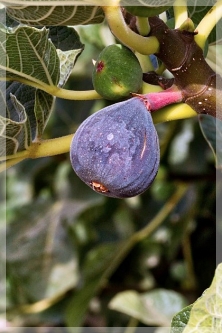
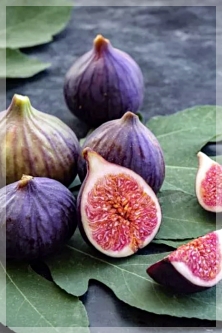
Not living in 1st century Judea, we find our figs at the grocery and know nothing about their cultivation. Because both wild and cultivated fig trees were plentiful in Palestine, Jesus and the disciples knew that a fig tree produces edible small fig knobs before its leaves ever appear. Called taqsh, these knobs are the precursors of figs and often were eaten by travelers and the poor. Even though it wasn’t the season for mature fruit, any fig tree “in full leaf” would have displayed a crop of taqsh. The absence of taqsh meant the tree never would never produce fruit. Jesus wouldn’t have cursed an immature tree or one without leaves and He didn’t curse the tree simply because it had no figs. He cursed that leaf-filled tree because it was guilty of false advertising! While its leaves promised knob-like figlets (taqsh) there were none.

Both the cleansing of the temple and the cursing of the unfruitful fig tree have to do with judgment. Throughout the Hebrew Scriptures, the fig tree is symbolic of Israel and the tree’s condition often represented the people’s spiritual fruitfulness, peace, prosperity, and well-being. The fig tree died in judgment but flourished when Israel was righteous and holy.

With its rituals and sacrifices, Israel looked fruitful but, like the fig tree, it lacked fruit—the fruit of righteousness that God demanded. His house of prayer and worship had been turned into a marketplace filled with thieves while Israel’s empty worship was a fruitless sham. With their sacrifices, tzitzit and tefillin, public prayers, adherence to the oral Law, and concern about spiritual cleanliness, they had the trappings of religion but, like the leafy fig, they were all show without substance. Both Jesus’ cursing of the fig tree and His cleansing of the Temple signify God’s impending judgment for religious hypocrisy. Moreover, the dead tree even points to the Temple’s destruction in 70 AD (predicted by Jesus in Matthew 23:38 and 24:2).

The message found in the destruction of this fig tree is not limited to the 1st century Israel; it is meant for us all. The cursing of that tree tells us that God expects His people to bear fruit. It is a warning that fruitlessness leads to judgment. Like that fruitless tree, could we be more show than substance—all leaves but no fruit?

A good tree produces good fruit, and a bad tree produces bad fruit. A good tree can’t produce bad fruit, and a bad tree can’t produce good fruit. So every tree that does not produce good fruit is chopped down and thrown into the fire. [Matthew 7:17-19 (NLT)]

Yes, I am the vine; you are the branches. Those who remain in me, and I in them, will produce much fruit. For apart from me you can do nothing. Anyone who does not remain in me is thrown away like a useless branch and withers. Such branches are gathered into a pile to be burned. [John 15:5-6 (NLT)]

Copyright ©2025 jsjdevotions. All rights reserved.

DO THE WORK

Be strong and courageous, and do the work. Don’t be afraid or discouraged, for the Lord God, my God, is with you. He will not fail you or forsake you. [1 Chronicles 28:20 (NLT)]

Jesus offered fishing advice to the disciples twice after they’d spent a night of fishing with absolutely nothing to show for it and, twice, after doing as He directed, they ended up with a miraculous catch of fish. The first time, their catch was so heavy that their nets began to tear and the two boats hauling it in nearly sunk from the weight! The second time, unable to pull the net into their boat, the men had to get out and drag it into shore!

Even a fresh crew would have had difficulty hauling in such enormous catches but these men had worked all night and probably were exhausted from the countless times they’d dropped or cast their nets and brought them in. Moreover, the fishermen’s work wasn’t over once they reached shore. They had to disentangle their catch from the three-layered trammel nets and had to clean, repair, and dry those nets before their work was done!

As awestruck as the disciples were by those overflowing nets, imagine their astonishment if the fish had jumped right into their boats! Surely the One with the divine power to restore lepers, cast out demons, feed a multitude with a boy’s lunch, cause a silver coin to appear in a fish’s mouth, and make fish appear at His command easily could have filled the disciple’s boats without the exhausted men lifting a hand. Despite the more than thirty miracles of provision and healing recorded in the gospels, Jesus chose to have them work for their blessing. He miraculously provided the fish but it was the men who did the heavy lifting!

Thomas Edison said, “Opportunity is missed by most people because it is dressed in overalls and looks like work.” I think it’s much the same with God’s answers to our prayers. We’d prefer a God of instant solutions but most of God’s answers come disguised as work. Just as the disciples had to cast their nets before catching those fish, the Israelites had to go out daily to gather the manna God provided, Naaman had to wash in the Jordan seven times before God healed Him, and the servants had to fill the jugs with water before that water became wine. The ark didn’t suddenly appear on Noah’s doorstep nor were Jerusalem’s walls restored in a day—God’s provision required the work of human hands!

When we ask for a plentiful harvest, we shouldn’t be disappointed when the answer looks like seeds, bags of fertilizer, a hoe, and a shovel. When we pray for relief from our debts, it’s likely God’s provision will look more like overtime or a second job than an inheritance or a winning lottery ticket. When we pray for recovery from a stroke, God’s provision may mean hours of physical, occupational, and speech therapy rather than a miraculous restoration and, when we pray for sobriety, God’s answer will look a lot like rehab, a counselor, and twelve steps to work. Although God is responsible for the outcome, we’re responsible for the work!

Saint Augustine (or possibly Ignatius) wisely said, “Pray as if everything depended on God and work as if everything depended on you.” That is good advice but only if we remember that prayer is how we must begin! It’s only after turning it over to God that we roll up our sleeves and get to work, always remembering that He alone is in charge and the outcome is up to Him!

You could not be saved through any effort of your own, but now that you are saved it is necessary for you to put forward every effort you can to glorify Him. [Harry Ironside]

Now all glory to God, who is able, through his mighty power at work within us, to accomplish infinitely more than we might ask or think. Glory to him in the church and in Christ Jesus through all generations forever and ever! Amen. Ephesians 3:20-21 (NLT)]

Copyright ©2024 jsjdevotions. All rights reserved.

TRUST AND OBEY 

Trust in the Lord with all your heart; do not depend on your own understanding. Seek his will in all you do, and he will show you which path to take. [Proverbs 3:5-6 (NLT)]

Great egretAfter using Peter’s boat as a preaching platform, Jesus told him to take the boat out to deeper water and let down his nets. Fishing was a way of life in Galilee and Peter, Andrew, James, and John probably started fishing with their fathers when they were just youngsters. Can you imagine their reaction to this inexperienced carpenter’s son from Nazareth telling them how to fish? Didn’t the rabbi know that net fishing was done at night when the fish were more active and less likely to see the linen nets? Having fished all night, the men were tired. By that time, they’d cleaned their nets and hung them to dry; they were ready to go home, eat, and get some sleep. Experience told them that if they’d caught nothing that night, they certainly weren’t going to catch anything in the light of day! Nevertheless, even though Peter balked at Jesus’ unusual command, he and his partners reloaded their gear, took out their boats, and let down their nets.

Fishing in deep water was done with a rectangular 3-layered, 500-foot, five-sectioned trammel net and two boats were used. After the first boat stealthily dropped the nets, the second would cause such a commotion with noise and splashing that the frightened fish would flee into the nets and get trapped in the inner mesh. The previous night, the men probably dropped and raised the trammel fifteen times to no avail but, that morning, their nets became so full of fish that they began to tear. The second boat was needed to hold the overflowing nets and both boats were on the verge of sinking from the weight. It seems that Jesus rewarded Peter and his partners quite handsomely for the use of Peter’s boat and their obedience to his instructions!

The second time Jesus told these experienced fishermen how to fish occurred after His resurrection. The men had spent an entire night casting their net with nothing to show for it when Jesus called from the shore and told them to cast it from the right side of the boat. Again, Jesus’ directions made no sense. Any fisherman knows that changing a net’s location by only a few feet won’t change the outcome—if the fish aren’t on the left side of the boat, they’re not on the right. Moreover, a net never was cast from the starboard side where the rudder mechanism was located. When pulling it up, the net could get tangled in the steering board, damage the boat, and tear. Nevertheless, the disciples did as Jesus directed, dropped it on the right side, and had another miraculous catch—one so heavy that, unable to haul the net into the boat, they had to drag it into shore!

These two stories demonstrate the obedience of faith along with the blessings that accompany obedience. Jesus’ fishing instructions weren’t just unconventional to the seasoned fishermen, they seemed unreasonable and imprudent. Nevertheless, the disciples trusted in the Lord rather than their own wisdom, left the results to Him, and were blessed with more than they could have imagined or hoped for.

We don’t have to understand the why of God’s directions, we must simply trust and obey Him! These stories tell us that faith-fueled obedience yields blessings. Rather than a boatload of fish, however, it will be a boatload of blessings beyond our wildest expectations both in this world and the next! As the old hymn says: “Trust and obey, For there’s no other way, To be happy in Jesus, But to trust and obey.” [John Henry Sammis]

The Bible recognizes no faith that does not lead to obedience, nor does it recognize any obedience that does not spring from faith. The two are at opposite sides of the same coin.[A.W. Tozer]

And it is impossible to please God without faith. Anyone who wants to come to him must believe that God exists and that he rewards those who sincerely seek him. [Hebrews 11:6 (NLT)]

Copyright ©2024 jsjdevotions. All rights reserved.

CHUTZPAH IN PRAYER

And he told them a parable to the effect that they ought always to pray and not lose heart. [Luke 18:1 (ESV)]

bald eagleI began my prayer with, “Lord, you’ve got to…” but got no further. “God doesn’t ‘got to’ do anything!” said a still small voice and the Spirit’s point was well taken. By beginning with an impertinent demand like a selfish petulant child in a toy store, I showed chutzpah of the worst kind and began again.

From the Yiddish word khutspe, meaning impudence or gall, Leo Rosten’s classic definition of chutzpah is, “that quality enshrined in a man who, having killed his mother and father, throws himself on the mercy of the court because he is an orphan.” The brazen way I started my prayer displayed chutzpah’s negative characteristics of rudeness, impertinence, presumption, insolence, and arrogance.

A little chutzpah, however, isn’t necessarily bad. On the positive side, chutzpah includes the qualities of fearlessness, pluck, mettle, and boldness; it questions, challenges assumptions, speaks up, and stands its ground. Chutzpah, at its worst, is rude, disgraceful, and harmful. At its best, however, this combination of audacity and gumption can bring glory to God’s name. This difference is in motivation—rather than being done for personal gain, “holy chutzpah” is done to reveal God’s kingdom on earth.

Moses showed holy chutzpah on Mt. Sinai when he debated God about the destruction of the Israelites and Abraham showed chutzpah when he negotiated with God over the complete destruction of Sodom and Gomorrah. When Jacob wrestled with God,  the man persisted despite a dislocated hip until he’d received a blessing! That’s chutzpah!

In Cana, Mary showed chutzpah by expecting Jesus to solve a wine shortage when the problem wasn’t His to solve and His power was unknown to others. The Syrophoenician woman certainly showed chutzpah by challenging Jesus after he denied her request to heal her demon-possessed daughter. Think of the chutzpah of Bartimaeus, the blind beggar who, despite a scolding by the crowd, persisted in calling out to Jesus; the woman with the bleeding disorder with the audacity to come out in public and the gumption to touch the fringe on Jesus’ robe; and the parents who ignored the disciples’ rebukes by bringing their little children to be blessed by the Lord!

A pastor friend frequently says, “Ours in an audacious God; we should honor Him with audacious prayers.” Do we? When King Hezekiah fell ill, Isaiah told him he would not recover. Unwilling to accept his fate, the king had the chutzpah to ask God for more years. God heard, healed him, and Hezekiah lived another fifteen years! What if he hadn’t asked for those years? Consider how different his story and those of people like Moses, Abraham, and the Syrophoenician woman would have been if they hadn’t had the chutzpah to make their audacious pleas and petitions! Ours is a big God for whom nothing is impossible! Let us come before the Lord, not with arrogance and impudence, but with boldness, humility, respect, and faith.

Praying recklessly brave prayers humbles me, reminding me of both my own great need and his great strength. In asking him for big, impossible things, I expect my dependence on him to grow, my willingness to take risks for his kingdom to increase, and my intimacy with him to deepen. [Lisa Schrad]

So let us come boldly to the throne of our gracious God. There we will receive his mercy, and we will find grace to help us when we need it most. [Hebrews 4: 16 (NLT)]

Copyright ©2024 jsjdevotions. All rights reserved.