ADVENT HOPE

I pray that your hearts will be flooded with light so that you can understand the confident hope he has given to those he called—his holy people who are his rich and glorious inheritance. I also pray that you will understand the incredible greatness of God’s power for us who believe him. This is the same mighty power that raised Christ from the dead and seated him in the place of honor at God’s right hand in the heavenly realms. [Ephesians 1:18-20 (NLT)]

Without Christ there is no hope. [Charles Spurgeon]

According to the Greek myth, when Zeus presented a beautiful jar to Pandora as part of her dowry, he forbade her to open it. Curiosity, however, got the best of her. When she lifted its lid to peek into the jar, all the malevolence and afflictions Zeus hid inside were released. As evils like sickness, chaos, death, conflict, hatred, jealousy, sorrow, envy, lust, famine, and violence came rushing out , the terrified woman quickly replaced its lid. All that remained in the jar was hope—the only consolation humans have for the trouble and suffering Pandora let loose upon the world.

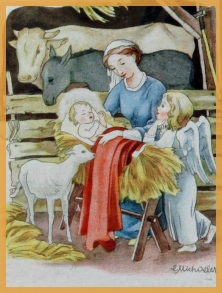
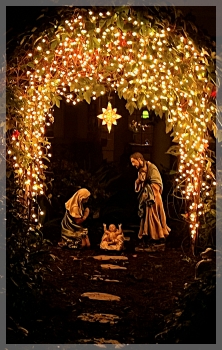
Of course, it wasn’t Pandora who brought misery into the world—it was Adam and Eve who brought sin, misery, and death into the world with their disobedience. Rather than remaining in Pandora’s jar, hope came to the world in a baby born in Bethlehem about 2,000 years ago.

How many times this past week did you hope? Did you hope the family would arrive safely, the turkey would be done on time, the rolls wouldn’t burn, or that no one would argue about politics at dinner? We hope for things both large and small—getting a raise, excellent grades, better health, reconciliation, a good night’s sleep, a winning season for our team, a cure for cancer, an on-time departure, finding the perfect gift, world peace, the winning lottery ticket, or a better tomorrow.

Biblical hope, however, isn’t about expecting better circumstances. Biblical hope is living through the storms, loss, pain, and disorder of this life while holding on to the hope that God will show up right in the middle of our mess! In the darkness of our lives and today’s troubled world, Christ’s followers have hope regardless of whether our circumstances change for the better or the worse. We have hope because we know the One who holds our future in His hands. We have hope because we know that He is with us every step of the way. Best of all, we have hope because we know how the story ends—and its end is better than anything we possibly could imagine!

Yesterday was the first Sunday in Advent—the four-week season in the Church calendar dedicated as much to the Messiah’s second arrival as to His first! In observance of this season of preparation, last night we lit the first candle (the candle of hope) in our Advent wreath. A circular garland of evergreen, the wreath’s greens represent eternal life and its round shape represents God’s unending love. Often called the prophecy candle, it reminds us that the Messiah’s arrival, death, resurrection, and return in final victory were prophesied hundreds of years before His birth. This first candle represents mankind’s past hope for the coming of the promised Messiah, our present hope because of Jesus’ presence in our lives, and our future hope for His promised return.

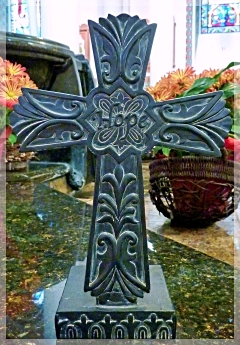
Hope came into the world with the birth of Jesus—Immanuel—God with us. God gave us hope with His forgiveness of sins, our salvation, and His promise of peace. He gave us hope with the resurrection of the dead, the communion of saints, the redemption of creation, the Holy Spirit, the return of Christ, and the life of the world to come. Thank you, Heavenly Father, for the gift of hope.

The Christmas message is that there is hope for a ruined humanity—hope of pardon, hope of peace with God, hope of glory—because, at the Father’s will, Jesus became poor and was born in a stable so that thirty years later He might hang on a cross. [J.I. Packer]

I pray that God, the source of hope, will fill you completely with joy and peace because you trust in him. Then you will overflow with confident hope through the power of the Holy Spirit. [Romans 15:13 (NLT)]

THANK YOU NOTES

Give thanks to the Lord, for he is good! His faithful love endures forever. [Psalm 107:1 (NLT)]

It’s one thing to be grateful. It’s another to give thanks. Gratitude is what you feel. Thanksgiving is what you do. [Tim Keller]

wild turkeyWhen I was a girl (back in the days of pen, paper, and postage stamps), my mother insisted that I write a “thank you” note for any gifts I received. Whether my birthday or Christmas, I was not allowed to enjoy any gifts until the necessary notes had been written. Moreover, each note had to be personal. I couldn’t just write a quick generic, “Thank you for the nice present.” I had to say something specific about the gift and, if it was money, I had to say how I planned on using it. Even if the present was something I really didn’t like or want (and we’ve all had those kinds of gifts), I had to express gratitude. My mother reminded me that, while I might not value the gift, someone else’s time, thought, love, and money had gone into getting it for me. Therefore, I should take the time to properly acknowledge and show my appreciation for the giver’s generosity. Her “thank you” note rule also applied whenever someone did something special for me. If a family took me to an event or I’d spent the night at a friend’s house, a note of thanks had to be written.

Eventually, once I was old enough to buy the gifts, host the guests, and do the good turns and favors, I appreciated the time, energy, money, thought, and love that goes into those things. My mind set changed from “I have to write a note” to “I want to write a note.” Rather than an obligation, thanking someone became a privilege.

Whenever I get a note of thanks, I relish it, especially when it’s from a grand. Misspellings or poor penmanship don’t matter to me; I love knowing that they (and their parents) appreciate the gift and the love that came with it. Unfortunately, nowadays, people rarely write “thank you” notes or even send “thank you” emails. We seem to take people, their gifts, and kindness to us, quite for granted.

As rare as hand-written notes are today, how much rarer is it for us to remember to send our thanks regularly to our Father in Heaven? What if we couldn’t play with our toys, enjoy our health, use our talents, spend our money, live in our homes, hug our family, eat our food, use our intellect, or accept God’s grace until we had properly thanked him? The fourth Thursday in November may be our national day of thanksgiving, but every day should be a day of giving thanks. That means seriously thinking about our many blessings, specifying the gifts for which we are grateful, and then actually giving God our thanks and praise.

Later today, when you take that walk in a vain attempt to work off the extra 2,000 or more calories you consumed at dinner, try listing your blessings and offering your thanks as you walk. Chances are that you’ll still be thanking God for His gifts by the time you return home.

Silent gratitude isn’t very much use to anyone. [Gertrude Stein]

Enter his gates with thanksgiving; go into his courts with praise. Give thanks to him and praise his name. For the Lord is good. His unfailing love continues forever, and his faithfulness continues to each generation. [Psalm 100:4-5 (NLT)]

Copyright ©2024 jsjdevotions. All rights reserved.

CHRIST THE KING

“My kingdom isn’t the sort that grows in this world,” replied Jesus. “If my kingdom were from this world, my supporters would have fought, to stop me being handed over to the Judaeans. So then, my kingdom is not the sort that comes from here.” [John 18:36 (NTE)]

God’s kingdom, you see, isn’t about food and drink, but about justice, peace, and joy in the holy spirit. [Romans 14:17 (NTE)]

For those of us who attend liturgical churches, yesterday was the last Sunday of the liturgical (or church) year: Christ the King Sunday. A kind of liturgical “New Year’s Eve,” it is the climax and conclusion of the Church’s year.

Starting with Advent, the first half of the church year focuses on the events of Jesus’ life: His incarnation, birth, manifestation, temptation, suffering, death, resurrection, and ascension. The second half of the church year begins on Pentecost (with the outpouring of the Holy Spirit) and, depending on Easter’s date, lasts 23 to 28 Sundays. Sometimes called Ordinary Time, this season focuses on the teachings of Jesus. Next Sunday, we start a new year with the first Sunday in Advent and begin another journey through Scripture to remind us of who we are and to whom we belong.

Like the rest of the liturgical church calendar, Christ the King Sunday is man-made rather than ordained by God. Nevertheless, having attended a liturgical church most of my life, I find comfort in regularly celebrating not just Christmas and Easter but the entire mystery of Jesus—from His incarnation through His death, resurrection, and ascension, to the gifting of the Holy Spirit and the expectation of His glorious return.

When I first saw the words “Christ the King” on the church hymn board years ago, I didn’t know that this observance is a modern addition to the church year. It was instituted in 1925 by Pope Pius XI in response to the growth of communism, fascism, atheism, and secular ultra-nationalism in Europe at that time. Although first observed by the Roman Catholic church, Protestant denominations such as the Lutheran, Anglican, Moravian, Methodist, Nazarene, and Presbyterian churches have joined in observing this day as a reminder that Christ reigns above all earthly rulers.

In the past, cults of personality have formed around leaders like Mussolini, Hitler, Stalin, Mao Zedong, and they continue to form around some world leaders today. Christ the King Sunday is a vivid reminder that our allegiance belongs to our spiritual ruler in heaven as opposed to any earthly political “messiah.” While temporal powers will fade away, Christ’s reign and His kingdom remain eternal. Whether Roman Catholic, Orthodox, or Protestant, observing Christ the King helps to move us from the politics of people to the politics of heaven.

Indeed, Jesus is unlike any other head of state in history. While most leaders are concerned with gaining, increasing, and maintaining power, Jesus gave up His divine power to live as a man among the poor and humble and to die a criminal’s death. While the world’s “kings” strive to amass wealth; King Jesus deliberately left the grandeur of Heaven to be born in a stable and live in a small village as a carpenter’s son. Believing that might makes right, the world’s leaders use economic and military might to enforce their will but Jesus chose to love and forgive his enemies. Jesus’ kingly degrees are unlike those of any earthly ruler: love God, love our neighbors, do unto others as we would have them do to us, pray for our enemies, turn the other cheek, go the extra mile, live in peace with one another, and invite the poor, crippled, lame and blind to our banquets—hardly the typical political platform!

The Kingdom of God is a present reality in our lives and yet, at the same time, the completed Kingdom is yet to come. Theologians describe it as our living in the already—what Christ has done—and the not yet—what He is yet to do when He returns in majesty and glory. Until that day, however, there will be a struggle between the kingdoms of this world and God’s Kingdom. We might want to ask ourselves to which kingdom we owe our allegiance and evaluate whether our actions, attitudes, and words reflect that allegiance. May we always remember that Jesus is our only king; indeed, He is the King of Kings and Lord of Lords!

Then I heard something like the sound of a great crowd, like the sound of many waters, and like the sound of strong thunder, saying, “Alleluia! The Lord our God, the Almighty, has become king! Let us celebrate and rejoice and give him the glory, because the marriage of the lamb has come, and his bride has prepared herself. … On his robe, and on his thigh, is written a name: King of kings, and Lord of lords. [Revelation 19:6-7,19 (NTE)]

Copyright ©2024 jsjdevotions. All rights reserved.

TRANSFORMING PUMPKINS

Don’t copy the behavior and customs of this world, but let God transform you into a new person by changing the way you think. Then you will learn to know God’s will for you, which is good and pleasing and perfect. [Romans 12:2 (NLT)]

Just finishing its 5th season, the Food Network’s “Outrageous Pumpkins” features remarkable pumpkin artistry. This year’s competition matched up 14 of the nation’s best carvers into teams and challenged them to create over-the-top pumpkin creations. The pumpkin artists created horrific nightmares, constructed grisly crime scenes, and fashioned monstrous mechanical battling beasts. Using everything from melon ballers to huge saws, they they sculpted extraordinary and intricate ghouls, witches, wizards, goblins, werewolves, and monsters. As someone who is severely pumpkin-challenged (and eventually purchased a permanent Jack O-Lantern complete with an electric light), I’m amazed by the skill of these artists.

Watching those carvers transform what are nothing more than large gourds into works of art, I couldn’t help but think of another artist who is in the business of transformation: God. There are both similarities and differences between transforming pumpkins into Halloween décor and transforming people into Christians. In both cases, the finished product bears little resemblance to what it once was. But, while the pumpkins become something frightening and macabre, the Christians become more beautiful!

Both carvers and God start by selecting their subject but, unlike the pumpkin artists, God isn’t looking for perfection. He’ll take any color, size, condition, or age. Scratches, bruises, blemishes, a dried-up stem, and even a little mold or rot won’t keep anyone from His workshop. Just as the carvers cut into the pumpkins and scrape out all of the slimy stuff inside, God opens us up, as well. Rather than scooping out our guts, however, He scrapes away things like fear, anger, despair, doubt, hate, pride, and greed. Instead of an X-Acto knife, vegetable peeler, saw, or drill, God’s tools consist of His word, the church, and both blessings and challenges. Just as those artists’ imaginative pumpkin creations are unique, each one of God’s creations is a one-of-a-kind custom design.

Preferring something sinister and spooky, pumpkin carvers usually give their creations a menacing expression. Although the Christian’s outward appearance may not change, God wants His handiwork to spread faith, hope, and love rather than terror or dread so He gives us a far nicer demeanor. The carvers occasionally make small mistakes and, when that happens, they simply alter their design or use a toothpick to reattach a piece. God, however, never makes a mistake and every one of His creations is perfectly made. Pumpkin carvers transform pumpkins for only a few weeks around Halloween and I’m not sure what they do the rest of the year. On the other hand, God keeps busy transforming people all year long.

Although the carvers leave their pumpkins hollow, God fills His people with the Holy Spirit and His gifts. Wanting their creations to glow from the inside out, both the carver and God insert lights. While the carver uses a candle, light bulb, or flashlight, the Christian’s light comes from the Holy Spirit. Eventually, the pumpkin’s light will cease shining but God’s light lasts a lifetime. Unlike competitive carvers, God has no time limit and He continues tweaking us until our dying day. While the “Outrageous Pumpkins” competitors performed their artistry in hope of winning a $50,000 prize and bragging rights, God transforms His children simply out of His love for us.

Despite the hours and labor that go into their making, those fantastic pumpkin creations are temporary. Even when dipped in a mild bleach mixture, they will turn moldy and soft; eventually, they’ll end up in the trash. Not so with God’s handiwork! Unlike carved pumpkins, Christians tend to improve over time; in fact, they last forever!

A pumpkin has no choice about being chosen, washed, and transformed but we are free to reject God’s hand in transforming our lives. It’s wise to remember, however, that any pumpkins remaining in the patch after harvest will rot and decompose; the same goes for people.

This means that anyone who belongs to Christ has become a new person. The old life is gone; a new life has begun! [2 Corinthians 5:17 (NLT)]

Copyright ©2024 jsjdevotions. All rights reserved.

ONCE AND FOR ALL – YOM KIPPUR

He will lay both of his hands on the goat’s head and confess over it all the wickedness, rebellion, and sins of the people of Israel. In this way, he will transfer the people’s sins to the head of the goat. Then a man specially chosen for the task will drive the goat into the wilderness. As the goat goes into the wilderness, it will carry all the people’s sins upon itself into a desolate land. [Leviticus 16:21-22 (NLT)]

While the year is 2024 on most calendars, it is year 5785 on the Hebrew calendar and the tenth day of Tishri begins at sunset tomorrow. For our Jewish brothers and sisters, it will be the Day of Atonement or Yom Kippur. With its themes of atonement and repentance, it the holiest day of the year for a Jew.

The book of Leviticus describes the rituals the Israelites were to perform on this holy day every year. In ancient Israel, this was the only time the high priest could come into the Holy of Holies (the innermost sacred area of the tabernacle or temple) where the Ark of the Covenant was housed. But, before coming into the presence of God and the Ark and beginning the ritual of atonement, he had to ritually cleanse himself from sin by bathing and dressing in spotless plain linen garments. The high priest then atoned for his own sins and those of his family with the sacrifice of a bull.

Two unblemished male goats were taken from the community and lots were cast to determine which goat would be given to the Lord. The first goat was sacrificed and its blood sprinkled on the mercy seat of the Ark. This was the sin offering and made to appease the wrath of God and atone for the sins of the people. Then, having received forgiveness, the second goat was brought before the altar. As a way of transferring the sins of the people to the goat, the priest laid his hands on its head and confessed all the peoples’ sins and transgressions. This goat, the “scapegoat,” was then sent out into the wilderness to carry those sins into the wasteland. In this ancient ritual, the blood of the first goat provided propitiation by appeasing God’s wrath and the second goat provided expiation by atoning for and removing those sins. This atonement ritual was to be repeated year after year.

Without a temple in Jerusalem, there no longer are animal sacrifices or scapegoats. Nevertheless, Jews throughout the world continue to observe this holy day. When a fast day occurs on the Sabbath, it is postponed until Sunday but Yom Kippur is the exception to that rule. Referred to as the Shabbat Shabbaton (the Sabbath of Sabbaths), our observant Jewish friends will fast from all food and drink (including water) from just before sunset Friday until after sunset Saturday. Along with fasting, many Jews will abstain from wearing leather footwear, washing or bathing, applying lotions and creams, or having marital relations. Most of Yom Kippur is spent in the synagogue in intensive prayer, introspection, and the asking of God’s forgiveness for the past year’s sins. The day ends with a single blast of the shofar (ram’s horn trumpet) followed by the proclamation, “Next year in Jerusalem.”

Unlike the yearly sacrifice of goats, the sacrifice of Jesus upon the cross needed to be done only once. Christ was both our sinless high priest and the unblemished sacrifice. When He gave himself up for us, Jesus took God’s wrath upon himself as His blood dripped on the ground beneath Him. When He suffered and died on the cross, Jesus was both the propitiation and expiation of our sins for all time. By dying, this sinless man took on God’s wrath—the wrath we sinners deserved. Rather than take our transgressions into the wilderness, He “removed our sins as far from us as the east is from the west” for all time. [Psalm 103:12] Thank you Jesus!

If you are ready to partake of grace you have not to atone for your sins—you have merely to accept of the atonement. All that you want to do is to cry, “God have mercy upon me,” and you will receive the blessing. [D.L. Moody]

We are made right with God by placing our faith in Jesus Christ. And this is true for everyone who believes, no matter who we are. For everyone has sinned; we all fall short of God’s glorious standard. Yet God, in his grace, freely makes us right in his sight. He did this through Christ Jesus when he freed us from the penalty for our sins. [Romans 3:22-24 (NLT)]

Copyright ©2024 jsjdevotions. All rights reserved.

EASTERTIDE

Jesus told her, “I am the resurrection and the life. Anyone who believes in me will live, even after dying.” [John 11:25 (NLT)]

“Happy Easter,” said the Pastor as she welcomed us to worship. She was neither a week late nor four weeks early for Greek Orthodox Easter. While it’s no longer Easter Sunday and all the jelly beans, chocolate bunnies, and hard-boiled eggs have been eaten, it is Eastertide (“tide” just being an old-fashioned word for “season” or “time”). The Christian or liturgical calendar designates Eastertide as the fifty days from Easter/Resurrection Sunday to Pentecost (when we celebrate the outpouring of the Holy Spirit and the birth of the church).

Because it didn’t come by divine revelation, the church calendar isn’t sacred. Scripture doesn’t mandate the celebration of holy days and seasons like Lent, Good Friday, Easter, Advent, and Christmas. Nevertheless, God commanded the Israelites to celebrate specific events in their history and seasons of fasting and feasting tied to Jewish history are found throughout the Old Testament. Although the Christian church calendar isn’t established in Scripture, its basis certainly is.

We don’t even know the exact date of Christ’s birth, death, or resurrection and it wasn’t until 325 AD that Easter’s date was set as the first Sunday after the first full moon on or after March 21. The church (or liturgical) calendar was developed by tradition and church law so that, regardless of their location, all of Christ’s followers could collectively commemorate an act of God in the history of their redemption. People didn’t have ready access to Bibles in the 4th century and the regular celebration of events in the life of Christ and the church helped believers to better understand and remember them.

While liturgical churches such as the Episcopal, Lutheran, Methodist, and Roman Catholic still observe the seasons of the church, many Protestant churches do not. Some non-liturgical churches, however, are beginning to return to the traditional church calendar as a way of combatting the commercialization of our religious holidays. A few years ago, a non-denominational mega-church near our northern home announced, “This year we’re going to observe Lent!” as if it were a new idea rather than one more than 1,500 years old!

Although my neighbors went out and purchased half-price candy the day after Easter, we don’t want to spend the next several weeks dying eggs, making Easter baskets, having egg hunts, or consuming jelly beans and Peeps. Rather than repeating those secular traditions until Pentecost on May 19, Eastertide gives us fifty days to celebrate the meaning of Easter (and seven Sundays to sing the beautiful “alleluias” in Christ the Lord is Risen Today.)

During these next several weeks, let us spend as much time contemplating, appreciating, and celebrating Jesus’ resurrection as we did anticipating, planning, and celebrating His birth last December. After all, Easter is the whole reason for Christmas! Without Jesus’ resurrection, Christmas would simply celebrate the birth of a good man who said some wise things and was killed for his words.

The promise of our salvation didn’t disappear when the last chocolate bunny was eaten; the glorious Easter message is everlasting. Christ’s resurrection brings us love, grace, peace, forgiveness, redemption, and salvation, not just on Easter, but every day of our lives. One day is hardly enough time to celebrate a risen Christ—even fifty days are insufficient to rejoice in our salvation. We should be Easter people all year long.

The resurrection gives my life meaning and direction and the opportunity to start over no matter what my circumstances. [Robert Flatt]

This means that anyone who belongs to Christ has become a new person. The old life is gone; a new life has begun! [2 Corinthians 5:17 (NLT)]

 Copyright ©2024 jsjdevotions. All rights reserved.