
I have told you all this so that you may have peace in me. Here on earth you will have many trials and sorrows. But take heart, because I have overcome the world. [John 16:33 (NLT)]
 Yesterday, I wrote of those times when we’re blind-sided by challenges and difficulty. When that happens, it truly is difficult to accept and trust God’s love and wisdom. Unfortunately, while Jesus made many promises, an easy life was not one of them. In fact, we’re told that troubles are pretty much guaranteed.
Just as a book has several chapters, some happier than others, so it goes with our lives. Often a chapter filled with challenges is followed by a chapter of blessings. That happened for several of those people about whom I wrote. Three estranged adult children came together to help their parents during that series of medical crises. Better yet, their mother recovered from her stroke and her cancer treatment was successful. The man defrauded by his business partner paid off his debts and started over again; he has become a wealthy man. The woman betrayed by her husband met a widower and fell in love; the two married and she is now mother to his three children. God blessed the couple who lost their twin boys with a beautiful healthy little girl. Although she didn’t beat cancer, the fifteen extra years God gave the last woman allowed her to raise her children and hold her first grandchild. Her once heartbroken husband recently remarried and started a new chapter in his life.
Does this mean an end to all of their troubles? No; troubles will come and go. More chapters will be written, some better than others, but none of us should worry or be afraid while waiting for the next chapter to unfold. We must trust God’s plan for us and live each day, one day at a time, secure in the knowledge that God will provide us with all we need to meet every challenge. We can remain confident that the last chapter of our lives, the one when we enter God’s kingdom, will be the best one ever!
If God can bring blessing from the broken body of Jesus and glory from something that’s as obscene as the cross, He can bring blessing from my problems and my pain and my unanswered prayer. I just have to trust Him. [Anne Graham Lotz]
 “It never occurred to me,” my friend said, “that I could outlive my wife.” Several years older than his spouse, overweight, diabetic and nearly blind, he always thought she’d be there to care for him. That, however, was before she suffered a stroke, had complications from carotid artery surgery, was diagnosed with cancer, had another surgery, and started a regimen of chemotherapy (all within a few months’ time.) Like a deer caught in the headlights, he was almost frozen in disbelief, bewilderment, and fear.
 It’s a common misconception that Saul became known as Paul when Jesus transformed the Christian hater into a Christ follower on the road to Damascus. Saul, however, was always named Paul. As a Roman citizen, he would have had a three part Roman name. While we don’t know the first two parts, the third (the cognomen) and commonly used name was Paullus (which becomes Paul in English). As devout Jews, however, his parents also would have given him a Hebrew name. They named him Saul, a good name for a boy from the tribe of Benjamin (King Saul’s tribe). Understandably, when among Jews, Saul would have used his Hebrew name and Luke, the writer of Acts, refers to him as Saul until Acts 13, about fifteen years after his conversion. Saul (and Luke) started using his Roman/Gentile name of Paul around the time he moved further into the Roman Empire on his first missionary journey. As he moved into Gentile territory, Paul’s Roman name was more appropriate. The Apostle was not alone in having both a Roman and Hebrew name. One of the candidates to replace Judas had two Jewish names, Joseph and Barsabbas, along with the Roman one of Justus.
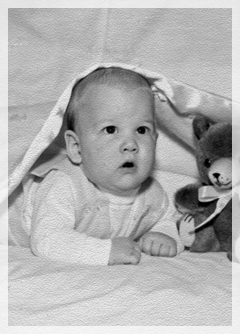 On the night He was betrayed, Jesus forewarned the disciples of the grief and fear they’d encounter in the days ahead. In his short parable about labor and delivery, Jesus prepared the remaining eleven disciples for the emotions they would encounter over the next three days: their anguish and despair as He hung upon the cross, died, and was buried. For His followers, those three days would feel like an eternity of hopelessness. But, as happens when a woman beholds her newborn baby after hours of painful labor, their despair would turn to joy when they saw the resurrected Christ!
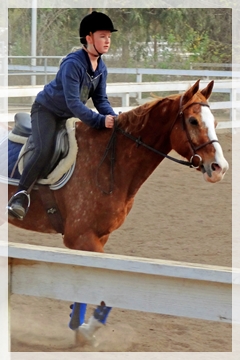 Martin Luther once compared human nature to a drunkard who, after falling off the left side of his horse, resolves not to make same mistake again. He remounts and then, overreacting, leans to the right side of his saddle only to fall off again. His point is that just because one side is wrong, the opposite extreme isn’t necessarily correct!
 In January, there will be an Empty Bowls event in our town. Attendees will purchase a bowl and then fill it with soup and bread donated by local restaurants. The money raised will help feed the more than 36,000 food insecure people in our county. To make that event possible, 4,500 one-of-a-kind bowls are made by local potters. Then, with the help of local volunteers, the bowls are painted and fired. Recently, several of us from church gathered to decorate some of those bowls. While we painted, I thought about the potters who made our bowls—how they formed and reformed their creations until they were just right. Varying in shape and size, no two bowls were exactly the same and, by the time they are painted, each will have a personality of its own. When their purchasers are done eating soup from them, they will be put to different uses. The ones embellished with paw prints or bones probably will be used by pets, and the others may be used for popcorn, nuts, cereal, loose change, or even soup!
 Devotions of the Heart