
The tongue can bring death or life; those who love to talk will reap the consequences. [Proverbs 18:21 (NLT)]
With their words, the godless destroy their friends, but knowledge will rescue the righteous. … Upright citizens are good for a city and make it prosper, but the talk of the wicked tears it apart. [Proverbs 11:9,11 (NLT)]
 When writing about nitroglycerin recently, I realized there’s something else in our lives much like this strange chemical that is both helpful and harmful. Like nitroglycerin, man’s capabilities are a dichotomy between good and evil, constructive and destructive, and beneficial or detrimental. The same mind capable of creating a vaccine that saves thousands of lives is capable of creating a nuclear bomb that can take those lives. James speaks of this incongruity when writing about the way we use our words, “We use our tongues to praise our Lord and Father, but then we curse people, whom God made like himself. Praises and curses come from the same mouth! My brothers and sisters, this should not happen.” [3:9-10]
While most of us have nothing to do with weapons of mass destruction and can’t annihilate a city with the push of a button, we can destroy one life at a time with our words! Like dynamite, our words can cause an explosion that produces major destruction. We can quash ambition with disparaging and demeaning remarks. We can shoot down someone with censure, condemnation, and blame. While we’d never think of physically harming a person, with a few words, we can wound an ego and tear open old wounds. We’d never murder anyone but we certainly can manage to kill someone’s hopes and dreams. We wouldn’t think of destroying a person’s home, yet we can demolish their reputation and even their career with just a few words! Ridicule and shaming can collapse self-esteem faster than an arrow can deflate a helium balloon. Our words, like nitroglycerin, can be devastating weapons.
Nevertheless, like medical nitroglycerin, our words also can help. Words of love, comfort, forgiveness, encouragement, respect, or sympathy can lift burdens and defuse situations better than any bomb squad. It is our choice as to whether we crush or nurture, rend or mend, stifle or encourage. My mother used to tell me, “If you can’t say something nice, say nothing at all!” Sometimes that’s easier said than done! There are times my prayer is simply that God will put his arm around my shoulder and place His hand across my mouth!
Father, forgive us for our thoughtless and often cruel words. Guide us to use our tongues with wisdom and love; show us how to heal, not harm. Let our words be ones of encouragement and support. Rather than destroyers, show us how to be builders; rather than combatants, let us be peacemakers; and rather than adversaries, let us be advocates.
Only speak words that make a heart grow stronger. [Ann Voskamp]
 The early Christians often marked anniversaries of the martyrdom of Christ’s followers. By the fourth century, however, there’d been so many martyrs that there weren’t enough days to honor them all and the idea of one feast day honoring all the martyrs began. In 609, Pope Boniface IV established an All Saints’ Day in May. After Christianity came to Ireland, however, the Roman church attached the Feast of All Saints to the pagan holiday of Samhain (a celebration of the end of the harvest and precursor to Halloween). In 847, Pope Gregory IV formally rebranded this pagan Celtic festival as All Saints Day. Saturday, November 1, is All Saints’ Day and, regardless of your denomination, it remains a day to commemorate all of the saints, not as determined by any Pope, but as defined in the Bible.
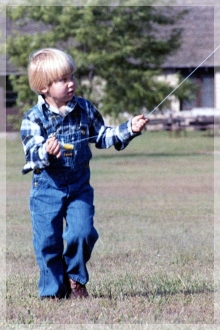 It’s been nearly 50 years, but I’ll never forget that day when, out of anger and fear, I vowed, “I’ll never forgive him!” My husband and I had taken our three children shopping for school clothes. While I was busy with the eldest, my husband said he’d take the other two for a walk through the mall. Unknown to me, the three-year-old had convinced his father that he’d stay at the store, sit quietly in a little crawl-through hole by the store’s entrance, and wait for his dad’s return. Unfortunately, my husband never told me of that decision. Having the attention span of a gnat, the little guy quickly grew bored watching shoppers. After wandering into the store to hide in the clothes racks, he looked for his brother and me. Not seeing us (since we were in a changing room), the independent guy decided we’d left without him and calmly went looking for us in the mall parking lot. While I was paying for our purchases, my husband returned with only one child in tow. Almost simultaneously, with panic in our voices, we asked one another, “Where’s Scooter?” My imagination went wild with all the horrible things that could have happened to the youngster. In an instant, I decided I’d never forgive my husband for his carelessness and that our marriage would be over!
 The two were seated next to us on the patio; the frail elderly woman was the mother and the younger woman her daughter. After pondering the menu, the mother had all sorts of questions about it. In no rush to order, she dithered over her entrée choice and, once food was served, she lingered over it. As I observed the two women, I could see and hear the daughter’s growing frustration and impatience with her mother. They reminded me of the times I took my mother-in-law out to lunch. Having “been there and done that,” I wanted to tell the daughter to be patient. One day, mom would be gone and she’d wish they had more days together.
 Monday’s devotion (“No Words of Comfort”) originally was published back in 2018. It came to mind because my son-in-law recently died. His death was sudden and unexpected and, when my daughter told me, I was sure I’d misunderstood her words. Not Mike! Still a young man in the prime of his life; it couldn’t be, but it was! Just as we all know we’re going to die someday, we know the people we love will die. It’s just that we expect those deaths to be on our timeline. But they’re not—they’re on God’s. The only guarantee that comes with life on earth is that it will end!
 The next day would have been Sally’s wedding anniversary but, because it marked the six-month anniversary of her husband’s death, there would be no celebration. Instead of flowers, dinner, and romance, there would be tears. That morning, Sally called her step-mother, Sue, to share her dread of the following day. When telling us this, Sue admitted to being at a loss for words of consolation. A woman of faith and an ordained pastor, Sue’s difficulty in finding comforting words was because her step-daughter is Jewish. When Sue married Sally’s Jewish father, she respected her new family’s faith just as they respected hers. They knew her beliefs and what she did for a living and Sue gladly answers their questions. Nevertheless, she chooses her words carefully when speaking of the Lord and neither evangelizes nor condemns. Although her words that morning were as reassuring as they could be without speaking of Jesus, Sue knew they were nowhere near as comforting as they could have been.
