
See how the siege ramps have been built against the city walls! Through war, famine, and disease, the city will be handed over to the Babylonians, who will conquer it. Everything has happened just as you said. And yet O Sovereign LORD, you have told me to buy the field—paying good money for it before these witnesses—even though the city will soon be handed over to the Babylonians. Then this message came to Jeremiah from the Lord: “I am the Lord, the God of all the peoples of the world. Is anything too hard for me? [Jeremiah 32:24-27 (NLT)]
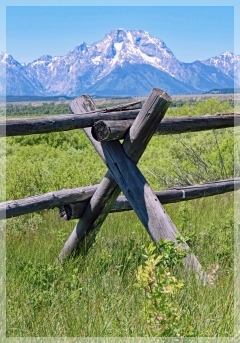 Under siege for nearly a year, Jerusalem was surrounded by the Babylonians, and Judah’s future looked grim. Whether it was poverty or the desire to get rid of property that soon would be worthless once Babylon invaded, Hanamel decided to sell his land in Anathoth, about three miles from Jerusalem. Under Israelite law, property was supposed to stay within a family and so Hanamel offered it to his cousin, the prophet Jeremiah.
Since Anathoth already was under Babylonian control, Hanamel’s real estate deal would be like being offered property in Kabul, Afghanistan. While real estate often is considered a good investment, purchasing property in an active war zone or occupied territory is not. Nevertheless, even though Jeremiah was imprisoned in the palace courtyard and the nation’s defeat was inevitable, God instructed him to become the property’s redeemer by purchasing his cousin’s land.
Having prophesied the fall of Judah, the destruction of Jerusalem, Zedekiah’s imprisonment, and the Jews’ captivity, Jeremiah knew how worthless the land was. Although he lawfully could refuse to purchase it, the prophet paid his cousin 17 shekels (about 18-months’ wages) for the land which, considering the circumstances, seems a sizeable sum for land he’d never live to enjoy. Assuring his scribe Baruch that the worthless land again would have value, he told him to take the deeds, place them in a clay jar (the ancient version of a safety deposit box), and preserve them in a safe place, The prophet then passed along God’s hopeful words to all those who witnessed the transaction in the courtyard: “Someday people will again own property here in this land and will buy and sell houses and vineyards and fields.”
Along with his prophecies of Jerusalem’s ruin, Judah’s defeat, and the people’s captivity, Jeremiah had prophesied God’s eventual restoration of the people to their land. He didn’t buy the land because Judah wouldn’t be conquered; he purchased it because it would! The prophet was putting his money where his mouth was. His purchase of a worthless piece of acreage was an act of faith. It was a sign of hope for the future by the man who’d prophesied doom and gloom—a powerful demonstration of his belief in God’s promise that the land would again have value and belong to the Jews.
If we want to see the fulfillment of God’s promises to us, like Jeremiah, we must be obedient to God’s commands, no matter how difficult, confusing, or absurd they seem to be. In the face of obstacles, hardship, or overwhelming odds, we must demonstrate our faith and hope in God because faith and obedience go hand in hand. If we say we believe His promises, we must act as if we truly do! May we always remember that nothing is too hard for the Lord!
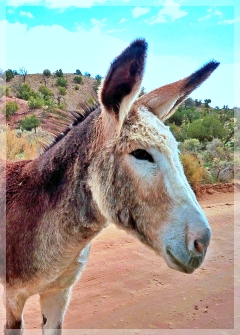 The story is told of a donkey who fell into a deep pit. Unable to get out, the animal brayed loudly until the farmer came to investigate. Seeing no way to get his donkey out of the pit, the farmer decided the only thing he could do was to put the poor animal out of its misery. Since the pit needed to be filled anyway, he got a spade and started to shovel dirt into it. When the donkey felt those first clods of dirt on his back, he lost all hope of rescue and brayed even louder. As he shook the dirt off his back, however, he discovered a growing mound of dirt beneath his feet. Seeing a possible solution, the donkey grew silent as he continued to shake dirt off his back and started tamping it down with his hooves. As the dirt piled up beneath his feet, the donkey got higher and higher in the pit. Paying no attention to the now silent animal, the farmer kept shoveling until he finally stopped for a rest. When he turned around, the man was shocked to see the donkey step out of the pit and trot away. The animal could have chosen to wallow in his misery—simply hung his head and let that dirt cover him up—but he didn’t. Instead, he took steps to change his situation.
 Days bled into weeks, weeks into months, and every day seemed the same for much of the last eighteen months. Life became a series of postponements, rebookings, cancelations, setbacks, inconveniences, letdowns, and disappointments. Visiting Grandma meant waving at her through a window, final farewells were FaceTime calls on a nurse’s cell phone, and we mourned from a distance while attending celebrations of life virtually. Weddings were postponed, family reunions put on hold, shut-downs and travel restrictions kept loved ones apart, theaters and concert halls went dark, vacations were delayed, businesses closed, jobs were lost, and junior year abroad became junior year on Zoom.
 After Jane Marczweski’s stunning performance on America’s Got Talent last June, I posted a devotion (It’s Okay) about her. Known as Nightbirde, the 30-year-old vocalist (and three-time cancer survivor) sang an original song called “It’s Okay” and received the “golden buzzer” from judge Simon Cowell. Last week, the brave young woman had to withdraw from the competition because her health has taken a turn for the worse. In an interview on CNN with Chris Cuomo, she shared that her metastatic breast cancer has now invaded both lungs and liver and her fight with cancer is demanding all of her energy and attention.
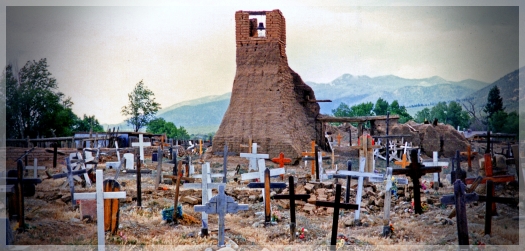 Then he said to me, “Speak a prophetic message to these bones and say, ‘Dry bones, listen to the word of the Lord! This is what the Sovereign Lord says: Look! I am going to put breath into you and make you live again! I will put flesh and muscles on you and cover you with skin. I will put breath into you, and you will come to life. Then you will know that I am the Lord.’” [Ezekiel 37:4-6 (NLT)]
 In our family, the car’s driver controls the music. Since my husband usually drives, that tends to be ‘50s and ‘60s rock. My thrice weekly chiropractor appointments, however, have given me the opportunity to listen to worship music rather than golden oldies. Last week, while alone in the car, I joined with Elevation Worship as they sang of laying the worries of the world, the needs of their loved ones, their hopes and dreams, and every anxious thought at God’s feet. “I will look back and see that you are faithful; I look ahead believing you are able!” Those words are so true and yet I frequently forget to look back to God’s past provision or ahead with trust that He is able to provide exactly what is needed.
