
I will give thanks to the Lord with my whole heart; I will recount all of your wonderful deeds. I will be glad and exult in you; I will sing praise to your name, O Most High. [Psalm 9:1-2 (ESV)]
Enter his gates with thanksgiving, and his courts with praise! Give thanks to him; bless his name! [Psalm 100:4 (ESV)]
 While browsing a bookstore (yes, they still exist), I came across a book offering more than 100 ways to say “Thank you.” It suggested ways to express one’s appreciation for milestone celebrations, business opportunities, assistance, social events, and assorted gifts. It even offered “damage control” for tardy thank you notes. There also were chapters devoted to topics like stationery, envelopes, and internet etiquette. One chapter offered a “thank you thesaurus” complete with several “glowing superlatives and energetic adjectives.”
Like the book’s author, I firmly believe in writing thank you notes and, for the most part, still write them by hand. Nevertheless, I find it difficult to believe anyone needs a 160-page book to help them express their thanks. Granted, I haven’t attended a debutante charity ball nor have I received an ambassador’s invitation to a reception, so I probably travel in a different circle than the author. Nevertheless, if such occasions should arise, I now know where to find the perfect wording for my thank you note.
Some of us may be etiquette-challenged but, fortunately, there’s no official protocol for thanking God. We certainly don’t need a thesaurus or a list of vivid superlatives and adjectives for our prayers. Since God is the one who does the mountain moving, we don’t need the author’s list of “power words that move mountains.” Moreover, we don’t need to know the “do’s and don’ts of using honorifics.” Although we should remember that Jesus does not have the middle initial of “H” and that God’s last name isn’t “Dammit,” simply addressing God by any one of His Biblical names works fine.
I agree with the author that our thanks should be specific; simply saying “thanks for the many blessings” is way too generic for our generous God. Even so, I think God already knows if the pink cashmere sweater looks fantastic with the new beige skirt or that the blender will be put to good use when making our morning smoothie.
Along with guidance in writing thank you notes for things like job interviews, birthday presents, condolences, party invitations, and house visits, the author included ways to express thanks for opportunities, love, friendship, continued loyalty, for “being there” and for “saving me from myself.” While just about every reason to thank people was covered, had she been writing about thanking the Almighty, the author missed a few important occasions. There were no sample letters for disappointments, delays, illness, challenges, difficult people, or pain—the sort of things the Apostle Paul might call “thorns.”
Breaking the author’s rules of proper etiquette, we can tell God we don’t care for His gift, we’d prefer something else, or we’d like to return it for something else. Nevertheless, Scripture tells us we are to give thanks in all circumstances and it’s expressing thanks during the unwelcome things that pose a problem for most of us. Even though it’s not easy, we must have thankful hearts in the midst of all that our loving God has put on our plates!
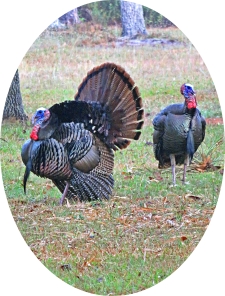
When offering thanks to God, we don’t need to fret about the proper length, right superlative, perfect stationery, ink color, or even our spelling. There are only two rules when thanking Him. The first one is simple: just do it! Never miss an opportunity to give thanks. Praise and thanksgiving are to be a part of our lives—at all times and in all circumstances. Let’s never limit giving thanks to one day a year! Even without the turkey and dressing, every day should be a day of thanksgiving! Second, while our prayers of thanks don’t have to be as eloquent as David’s, they should be as frequent and as heartfelt.
The thankful heart sees the best part of every situation. It sees problems and weaknesses as opportunities, struggles as refining tools, and sinners as saints in progress. [Francis Frangipane]
 Without a globe, I allowed a random number to decide the nation for which I’d pray this week. Number 19 was Benin and I’m embarrassed to admit knowing nothing about this narrow strip of land in West Africa between Nigeria and Togo. These three nations once were part of the kingdom of Dahomey and it was in Dahomey that the ancient practice of voudon/vodun/vodou (commonly called voodoo) began. Now a republic, Benin is a severely underdeveloped nation, rife with corruption, where the life expectancy for men is just 60! A little over 40% of the population are Christian, nearly 30% Muslim, about 17% practice voodoo, and another 10% follow other indigenous/animistic religions. As a side note, ARDA (The Association for Religion Data Archives) stated that many of those identifying as Christian also practice voodoo.
 Yosemite Sam, the cartoon arch enemy of Bugs Bunny, used to exclaim “Jumpin’ Jehosophat!” I was an adult before learning that Jehosophat was the fourth king of the southern kingdom of Judah. It’s ironic that the king said to be jumping in Sam’s pseudo-swear is best known for standing still in 2 Chronicles!
 When Nehemiah arrived in Jerusalem, over ninety years had passed since the first of the exiled Jews had returned to Judah. Although the temple had been rebuilt for seventy years, Jerusalem’s city walls and gates were still in ruins. Nevertheless, within fifty-two days of his arrival, the walls were reconstructed and new gates installed. That Nehemiah managed to accomplish in less than two months what hadn’t been done in ninety years is a case study in Management 101.
 The books of Ezra and Nehemiah tell of the reconstruction of Jerusalem. Nearly fifty years after Jerusalem was destroyed, the first of the exiled Jews returned to the ruined city. Although his brother Hanani returned to Judah, Nehemiah, who served Persia’s King Artaxerxes as cup-bearer, didn’t. While his job included ensuring the safety of the king’s food and drink, Nehemiah was more bodyguard than waiter. In constant contact with the king, he served as both confidant and companion to Artaxerxes. He carried the king’s signet ring and possibly served as his chief financial officer.
 Most trees begin life as a seed in the soil of the forest floor and most trees also observe proper forest etiquette by not killing one another. The strangler fig (Ficus aurea), however, is not your typical tree. Rather than starting in the soil where the fig’s seeds would struggle to germinate in the darkness of the dense forest’s floor, strangler figs usually begin life high up in the forest’s canopy. Blown there by the wind or deposited by animals in their droppings, the sticky fig seed usually begins its life in the bark crevices of a mature tree.
 Devotions of the Heart