COLLATERAL DAMAGE

Steamboat Springs, CO-cropweb
Abijam began to rule over Judah in the eighteenth year of Jeroboam’s reign in Israel. … He committed the same sins as his father before him, and he was not faithful to the Lord his God, as his ancestor David had been. [I Kings 15:1,3 (NLT)]
Nadab son of Jeroboam began to rule over Israel in the second year of King Asa’s reign … But he did what was evil in the Lord’s sight and followed the example of his father, continuing the sins that Jeroboam had led Israel to commit. [I Kings 15:25-26 (NLT)]

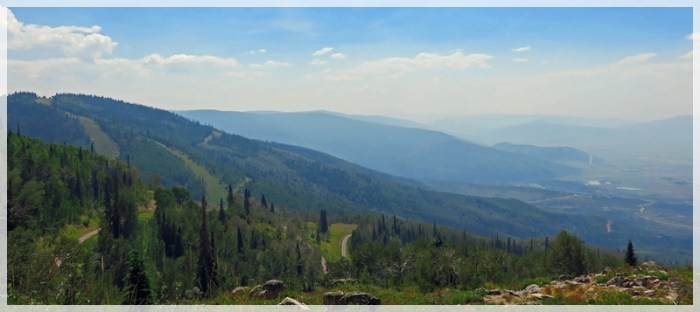
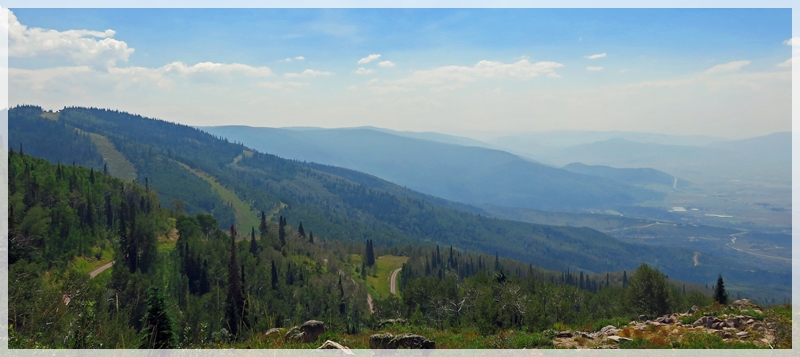
“Where are the Flattops, Hahn’s Peak, or the Sleeping Giant?” we wondered. Smoke and haze from the fire-ravaged Pacific Northwest were obscuring the view of our favorite Colorado landmarks. The mountains and crystal clear skies had disappeared because of fires raging some 1,500 miles away. Reduced visibility from the smoke caused air traffic delays in Denver and posed respiratory problems for cyclists racing through the mountains. Satellite images show that smoke from these fires has covered a portion of at least twenty states. On our return east, the haze was still visible as we passed through Iowa.

Fire has a way of causing far-reaching collateral damage and so does sin. The chronology of kings in Israel and Judah are filled with stories of how a father’s sinful example was followed by his son and led the people to sinfully disregard God’s commands. Today, the abusive father is likely to have an abusive son, the adulterous spouse’s divorce hurts the entire extended family, toxic relationships poison everyone near them, and the children of an alcoholic carry emotional baggage that affects their own children. When the bad stuff hits the fan, it tends to spatter all over innocent people. Well, I’m not abusive, adulterous, toxic or alcoholic so I can’t spread sin, pain and sorrow, or can I? A few poorly chosen words, a sharp retort, a tidbit of gossip, a rude gesture, a bit of spitefulness, impatience and rudeness can also have far-reaching effects. That saleslady with whom I was clearly annoyed might well be irritable with her next customers who then will be short-tempered with the people they meet later. By the end of the day, my thoughtless act of rudeness may have created a negative chain reaction that affected dozens of people.

We talk of paying it forward when doing a kindness that will reverberate with more kindnesses. Unfortunately, it works that way with sin and unpleasantness, as well, and, sadly, paying unkindness forward with more of the same is probably far more likely to happen. Any time we fail to live as Jesus did, any time we allow Satan a foothold in our lives, any time we forget to respond with love, whenever we are inconsiderate of other people, that ugliness, just like the fires in the northwest, can spread far and wide.

Father, guide our words and actions so that the love of Jesus is clearly seen and felt by all whose lives we touch today.

The greatest need in the world is the transformation of human nature. We need a new heart that will not have lust and greed and hate in it. We need a heart filled with love and peace and joy, and that is why Jesus came into the world. [Billy Graham]

He looked out across the plain toward Sodom and Gomorrah and watched as columns of smoke rose from the cities like smoke from a furnace. [Genesis 19:28 (NLT)]

This wickedness is like a brushfire. It burns not only briers and thorns but also sets the forests ablaze. Its burning sends up clouds of smoke. [Isaiah 9:18 (NLT)]

DINNER GUESTS

Now when Job’s three friends heard of all this evil that had come upon him, they came each from his own place. … to show him sympathy and comfort him. And when they saw him from a distance, they did not recognize him. And they raised their voices and wept, and they tore their robes and sprinkled dust on their heads toward heaven. And they sat with him on the ground seven days and seven nights, and no one spoke a word to him, for they saw that his suffering was very great. [Job 2:11-13 (ESV)]

Tanzania sculptureLabor Day weekend at the cottage was to be our last opportunity to enjoy time at the lake until next summer. Family would be visiting most of the time and the little guys were sure to keep us on the run. Closing the house for the season also meant a lot of chores: the house cleaned, sporting equipment brought up from the lake, deck furniture scrubbed and stowed, windows washed, the pantry emptied, and so on. The last thing either of us wanted was more work.

Before the kids and grands arrived, we had one day to quietly (and leisurely) finish up some tasks. It was also the only day we’d be free to spend any time with our neighbors until our return next June. The husband is suffering from a debilitating form of dementia so time with them is precious. By next summer, the man we’ve come to know and love may no longer even remember us. The easiest thing for us would have been to take them to dinner at a local restaurant but the noise would make it difficult for our hard-of-hearing friend and the crowd would cause him discomfort. While dinner at our house was the obvious solution, neither my husband nor I felt we had the time to spend shopping, prepping, cooking and cleaning up.

The Bible is filled with stories of friendship and people who found time for one another: Ruth and Naomi, Jonathan and David, Elisha and Elijah, Abraham and Lot, and Daniel, Shadrach, Meshach, and Abednego. Even Job’s three friends spent several days with him sitting at his side. A friend loves at all times, not just when it is convenient, so we knew we had to spend time encouraging and loving on our neighbors. Somewhat reluctantly, we invited them to dinner. Panic briefly set in as we scoured the kitchen to see what provisions we had. Cheese and homemade cookies for the appetizer and dessert were found in the freezer. We had enough tomatoes for a salad and the refrigerator held the ingredients for two easy make-ahead side dishes. A quick trip into town would provide the entrée in the way of an already prepared rotisserie chicken. Typically, our dinner party preparations are more complex, involving lots of prep work, but the Holy Spirit reminded us that friendship has nothing to do with an impeccably set table or a gourmet meal; friendship is breaking bread together in love. Perfection isn’t necessary in friendship; presence, however, is. Friendship is accepting and loving one another in our imperfection. While it’s good to remember friends in our thoughts and prayers, real friendship actually sits beside them whenever possible. Jesus gave his life for his friends and few of us will ever be asked to do as much as that. A little inconvenience now and then is a small price to pay for the blessings of friendship and the opportunity to share Christ’s love.

Father, thank you for the blessing of friends—brothers and sisters connected to one another, not by blood, but by their love for one another. Thank you for gifting us with people with whom we share good times and bad, sorrow and joy, laughter and tears, health and illness. May we never hesitate to be as generous with our time as our friends are with theirs. Guide us to love in the way we hope to be loved and to do for one another in the way we want to have done for us.

A friend loves at all times, and a brother is born for adversity. [Proverbs 17:17 (ESV)]

Above all, keep loving one another earnestly, since love covers a multitude of sins. Show hospitality to one another without grumbling. [1 Peter 4:8-9 (ESV)]


THE INDIRECT WAY – LESSONS FROM THE TRAIL (2)

When Pharaoh let the people go, God did not lead them on the road through the Philistine country, though that was shorter. For God said, “If they face war, they might change their minds and return to Egypt.” So God led the people around by the desert road toward the Red Sea. [Exodus 13:17-18a (NIV)]

Paul and his companions traveled throughout the region of Phrygia and Galatia, having been kept by the Holy Spirit from preaching the word in the province of Asia. When they came to the border of Mysia, they tried to enter Bithynia, but the Spirit of Jesus would not allow them to. … After Paul had seen the vision, we got ready at once to leave for Macedonia, concluding that God had called us to preach the gospel to them. [Acts 16:6-7,10 (NIV)]

9-3-15_9280web
While hiking up the ski mountain, we discovered that what takes only nine minutes on the gondola takes several hours. A 2,200 vertical rise became a more than five mile hike. When looking at the trail map, it is easy to see why—rather than walking straight up the face and following the path of the gondola, the trail traverses back and forth across the mountain. Geometry taught us that the shortest distance between two points is a straight line yet, sometimes, the most direct way is not always the best way. In actuality, going straight up the face of the mountain is near impossible except for the fittest, most adventurous, and possibly craziest of hikers. Being none of those, we followed the meandering trail. There were moments of discouragement as we crossed back and forth across the face of the mountain, catching a brief glimpse of our destination in the distance, before passing again into the woods and continuing our slow ascent.

Is that what it felt like for the Israelites who spent forty years on a trip that should have taken only a matter of days? The forty years, of course, were tacked on for disobedience, but their initial route, given them by God, wasn’t the shortest one either. The shorter route from Goshen to Canaan, a four or five day’s journey, would have led them through Philistine country and was heavily guarded by a string of Egyptian fortresses. God wisely knew that His people, their spirits broken by years of slavery, were not yet ready for war. Their inexperience and possible cowardice would make them shrink from conflict and want to return to Egypt. Knowing this, God sent them the long way around to the Red Sea, an eleven days’ journey. Then, just as they’d gotten to the edge of the wilderness, instead of going forward, God re-directed them back to make camp by the sea. It probably made no sense to the people but it did to God. Pharaoh, thinking them lost and discouraged, would be lulled into a false sense of confidence. He would pursue them, giving God the opportunity at the Red Sea to prove to the Egyptians (and Israelites) exactly with whom they were dealing: the one true God.

God knows our abilities, our weaknesses and fears. By giving us lesser trials, He prepares us for greater ones, just as he did for the Israelites. Sometimes, the less direct route is necessary for us to gain knowledge and experience and learn to trust, obey and appreciate God and His blessings. Other times, God takes us the less direct route because He has a greater task for us elsewhere. When Paul wanted to go into the provinces of Asia, for example, he was directed instead to Macedonia where he brought the gospel message to Europe. He eventually got back to Asia but one look at his missionary journeys shows us that the Apostle never took the most direct route; instead, he followed God’s plan. Admittedly, when our journey takes longer than expected, it is frustrating to think we’ll never reach our objective. We must remember that God is guiding us to the destination that He has chosen by the path that He wants us to take. It may not be the shortest or easiest trail; it will, however, be the best.

There is a long way which is short and a short way which is long. [Babylonian Talmud, Eruvin 53b]

I know, O Lord, that a man’s life is not his own; it is not for man to direct his steps. [Jeremiah 10:23 (NIV)]

INVITATIONS

The Angel said to me, “Write this: ‘Blessed are those invited to the Wedding Supper of the Lamb.’” He added, “These are the true words of God!” [Revelation 19:9 (MSG)]

IMGa_8372webI love seeing those thick envelopes in my mail that signify a special invitation. Usually included with the invitation is a request to RSVP. In spite of providing the invitees with a stamped pre-addressed envelope and a response card that requires only a name and check mark, most hosts spend several frantic days shortly before the event trying to track down the people who rudely haven’t bothered to reply. Worse manners, however, are exhibited by the guests who accept an invitation and then fail to attend. Justifiably, the host becomes annoyed; he probably has to pay for the absentee guests whether present or not. Moreover, those people may well have taken the place of others who might have truly appreciated the invitation.

Jesus was dining at the home of a Pharisee. When a dinner companion commented that it will be a blessing to feast in the Messianic kingdom to come, Jesus responded with a parable about a man who hosted a great banquet. Although the initial invitation to his feast had already been accepted, when the host sent his servants to tell the guests the banquet was prepared and ready to be served, the invitees used flimsy excuses about being too preoccupied with their everyday lives to attend. This was a major breach of etiquette; they’d already accepted, animals had been butchered, food was prepared and now the guests rejected the invitation! To add insult to injury, that all of the guests declined at the last minute implies some collusion among them to insult the host. Angry at their rejection, the master of the house, determined not to have an empty table, sent his servants out to bring in the poor, blind and lame—the people who normally would never be invited to such a feast. When that was done, since there was still room at the large table, the master sent his servants beyond the city gates to summon everyone else to his banquet. The host also vowed that not one of those who had been invited and rejected him would ever be invited again; they would never be allowed to dine at his table!

This story was Jesus’ way of warning the Jews that, since they didn’t accept His invitation of salvation, everyone else who came to him by faith would be welcome at His table. Anyone who chose to reject His offer, however, would never dine in God’s Kingdom. This parable, while specifically aimed at the Pharisees attending the banquet, still has meaning to us over 2,000 years later. Jesus reassures us that, while we are totally unworthy to eat at God’s banquet, He will welcome us. All we have to do is accept his invitation and show up when we’re called. The parable also serves as a warning if we don’t accept. God has given us an invitation and, being a gracious host, He’s prepared a heavenly banquet for us. How will He feel and what will He do if we reject his generous offer? I’m not planning on being a “no-show,” how about you?

“All things are ready,” come to the feast! Come, for the table now is spread;
Ye famishing, ye weary, come, and thou shalt be richly fed.
“All things are ready,” come to the feast! Come, for the door is open wide;
A place of honor is reserved For you at the Master’s side.
“All things are ready,” come to the feast! Come, while He waits to welcome thee;
Delay not while this day is thine,Tomorrow may never be.
“All things are ready,” come to the feast! Leave ev’ry care and worldly strife;
Come, feast upon the love of God, And drink everlasting life.
[“Come to the Feast” by Charles H. Gabriel]

Taken aback, Jesus said, “I’ve yet to come across this kind of simple trust in Israel, the very people who are supposed to know all about God and how he works. This man is the vanguard of many outsiders who will soon be coming from all directions—streaming in from the east, pouring in from the west, sitting down at God’s kingdom banquet alongside Abraham, Isaac, and Jacob. Then those who grew up ‘in the faith’ but had no faith will find themselves out in the cold, outsiders to grace and wondering what happened.” [Matthew 8:10-12 (MSG)]

THE FIRST MUST BE LAST

He sat down, called the twelve disciples over to him, and said, “Whoever wants to be first must take last place and be the servant of everyone else.” [Mark 9:35 (NLT)]

Jesus’ disciples believed him to be the long-awaited and promised Messiah. Like most of the Jews, they originally believed that the Messiah would bring a new kingdom into this world: a new government for Israel that was not under the rule of Rome. The disciples began to think about their status in this future kingdom, much like close supporters of a presidential candidate start thinking about an ambassadorship or even a place in the presidential cabinet. The gospels tell us that they argued over which of them was the greatest and who deserved the best position in this new realm. The mother of James and John even had the nerve to ask Jesus to give her sons special status in his coming kingdom. She was like a presidential candidate’s financial backer who requests that a family member be given a cushy or high profile job in the new government. It seemed that everyone around Jesus was jockeying for a choice position in his kingdom.

It took a great deal of time and teaching, however, before the disciples truly grasped that the Kingdom of God of which Jesus spoke was not going to be here on earth. Jesus told his disciples that leadership would not be determined by power and influence but by service. The good leader is not the most prominent, ruthless or esteemed person, said Jesus; the good leader is the servant. This was a new concept of leadership: attending to the needs of people instead of using them for your own purposes, caring for others instead of having them care for you. Instead of looking for ways to earn honors and privileges, Jesus tells us that we should be looking for ways to serve others and minister to their needs.

Just because you’re in the driver’s seat … doesn’t mean you have to run people over. [From “The Last Lecture” by Randy Pausch with Jeffrey Zaslow]

But Jesus called them together and said, “You know that the rulers in this world lord it over their people, and officials flaunt their authority over those under them. But among you it will be different. Whoever wants to be a leader among you must be your servant, and whoever wants to be first among you must become your slave. For even the Son of Man came not to be served but to serve others and to give his life as ransom of many.” [Matthew 20:26-28 (NLT)]

FORGIVE US OUR DEBTS

And forgive us our debts, As we also have forgiven our debtors. [Matthew 6:12 (RSV)]

Forgive us as we forgive others. [Matthew 6:12 (GW)]

Various plans for debt relief have been in the news and all over the internet recently. It may be tough to pay back those college loans but being in debt was much tougher in Biblical times. Back then, if someone was unable to pay a debt, he could be thrown into prison or have his family sold into slavery. Jesus told a parable about the forgiveness of debts. When the king decided to bring his financial records up to date, all those who owed him money were brought to him. One servant owed him ten thousand talents and was unable to pay. When the King ordered that he, his family, and everything he owned should be sold to pay the obligation, the man begged the king’s forgiveness; the king showed compassion and generously forgave his servant’s debt.

This servant then went to a fellow worker who owed him only one hundred denarii and demanded immediate payment. His co-worker begged for a little more time, but the man insisted on immediate repayment and had the debtor thrown into prison. Although the king had offered the first servant mercy and forgiveness, this same man was unwilling to offer mercy and forgiveness to someone else. When the king learned of this, he had the unforgiving debtor thrown into prison to be tortured until he’d repaid the original debt.

Jesus then advised His disciples that the same thing would happen if they refused to forgive their brothers and sisters. If they denied forgiveness to others, forgiveness would be denied to them.

It is so much easier to ask God for His forgiveness of our offenses than to offer that same forgiveness to those who have hurt or offended us. God, however, doesn’t hold grudges and Jesus didn’t die on the cross for a select few; He died for all. We are all sinners and our debt was paid by Christ. A refusal to forgive others is a refusal to acknowledge our own sinful natures. It becomes easier to forgive others when we remember how much God (and other people) have already forgiven us.

Forgive as the Lord forgave you. [Colossians 3:13b (GW)]

If you forgive the failures of others, your heavenly Father will also forgive you. But if you don’t forgive others, your Father will not forgive your failures. [Matthew 6:14-15 (GW)]