
“And behold, you will conceive in your womb and bear a son, and you shall call his name Jesus. He will be great and will be called the Son of the Most High. And the Lord God will give to him the throne of his father David, and he will reign over the house of Jacob forever, and of his kingdom there will be no end.” [Luke 1:31-33 (ESV)]
 Most of us breeze through (or skip altogether) the Bible’s genealogies. Nevertheless, when genealogy and all those “begats” seem so important in Scripture, what explanation is there for the difference between the genealogies of Jesus found in Luke and Matthew? Because Jews were meticulous about recording genealogies, it’s inconceivable to have two conflicting yet correct lists of Jesus’ lineage.
The two gospels agree on one important point—neither Luke nor Matthew call Joseph Jesus’ “father”. Matthew refers to him as the “the husband of Mary, of whom Jesus was born, who is called Christ” and Luke simply says that Jesus was enomizeto (considered, thought to be, or assumed) to be Joseph’s son. While the two genealogies agree from Abraham to David, they differ from then on. Matthew says David’s son Solomon was Jesus’ ancestor and Luke says it was David’s son Nathan. While there are a variety of convoluted explanations, most biblical scholars believe these are two different, but equally correct, genealogies—Matthew’s through Jesus’ legal father, Joseph, and Luke’s through His birth mother, Mary.
With his frequent references to the Hebrew Scriptures and emphasis on Jesus’ fulfillment of Messianic prophecies, Matthew’s gospel has a distinctly Jewish viewpoint and it is believed that he directed his gospel to Jews and Jewish believers. Reflecting the importance of the Messiah’s lineage to the Jewish people, Matthew’s gospel begins by calling Jesus “the Messiah, a descendant of David and Abraham” and follows the traditional Hebrew format of going from the past to the present where he again identifies Jesus as the Messiah. Although Joseph was Jesus’ father in name only, he was the Lord’s legal father and scholars believe Matthew provided Jesus’ official (paternal) genealogy from Abraham to David to David’s son Solomon and eventually to Joseph. His list emphasized both Jesus’s legal right to be the king of the Jews as well as His fulfillment of the Messianic prophecies.
On the other hand, Luke addressed his gospel to the “most honorable Theophilus” and his primary audience is thought to have been mostly Gentile Greeks. Luke lists Jesus’ ancestry the Greek way and goes from the present to ancient past. Unlike Matthew, he doesn’t stop with Abraham but continues all the way back to Adam. Scholars believe Luke’s to be Jesus’ actual physical lineage through His mother Mary and her father Heli. While giving a mother’s lineage was unusual, so was a virgin birth! To a Gentile, if Jesus weren’t the physical son of Joseph, there would be no need to know the man’s genealogy. Rather than Solomon, Jesus’ royal lineage comes through a blood relationship with Mary’s ancestor Nathan, another of David’s sons with Bathsheba.
Luke placed Jesus’ genealogy after His baptism when the Holy Spirit descended on Him and a voice from heaven said, “You are my beloved Son; with you I am well pleased.” That heavenly voice established Jesus’ divinity—that He was the son of God. By tracing Jesus’ line all the way back to the first man, Adam, Luke established the dual nature of Jesus—that He was fully human as well as divine. It also emphasized Jesus’ relevance, not just to Jews, but to the entire human race.
We’re left with the problem of Joseph’s father—Matthew says it was Jacob while Luke says Joseph was ”of” Heli. It is believed that Heli was Mary’s father and, with no Greek word for “son-in-law,” scholars posit that Joseph became Heli’s “son” through his marriage to Mary.
Rather than contradicting one another, these two genealogies complement each other by giving us both Jesus’ official and actual lineage. They agree that Mary was Jesus’ mother, that her husband Joseph was not Jesus’ father, and that Jesus descended from the family of Judah as well as the house of David both legally (through Joseph) and by bloodline (through Mary). They show that Jesus fulfilled God’s promise of offspring to Abraham as well as his promise to David that His offspring would sit on his throne forever.
Contradiction is not a sign of falsity, nor the lack of contradiction a sign of truth. [Blaise Pascal]
 After feeding a multitude with little more than a handful of food, Jesus sent the disciples across the Sea of Galilee to Bethsaida. He stayed behind to send the people home and then, exhausted, went into the mountains to pray. During the fourth watch (somewhere between 3:00 and 6:00 AM), Jesus looked out at the water and saw that the disciples were struggling against the wind and waves to keep the boat on course. Seeing their distress, he walked on the water toward them. Seeing Him walking on water, they thought Him a ghost and cried out in terror. Phantoms of the night were said to bring disaster and it was thought that the last thing a boatman saw before drowning in Galilee was a ghost on the water! It’s no wonder they were frightened at first.
 Whenever I asked about her boys, my sister would give a vague answer like, “They’re fine…just doing their own thing” It was several years before I learned “their own thing” meant they were breaking her mama’s heart with their mental illness, addictions, and run-ins with the law. Because she kept her pain concealed, she carried the weight of that burden alone for many years.
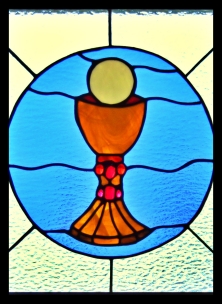 The celebration of the Lord’s Supper/Holy Communion/the Eucharist has been central to Christian worship since the early church. While Protestants think of the Eucharist as the sacrament commemorating the Last Supper with bread and wine, for Roman Catholics and some Orthodox, “Eucharist” specifically refers to the consecrated elements, especially the bread. How ever you define it, the word “eucharist” originally had nothing to do with this beautiful sacrament.
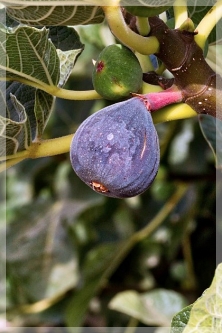 The next morning, while Jesus and the disciples walked from Bethany to Jerusalem for yet another confrontation with Judea’s religious leaders, the disciples saw the tree Jesus cursed the previous day. The disciples had witnessed Jesus cast out demons and still a storm with a just a word but, when they saw the withered and dead fig tree, they were amazed. Normally, trees die slowly from the top down but this tree instantly withered from the roots up. With dead roots, no amount of water or fertilizer would revive it. Having witnessed the tree go from abundance to ruin with just a word from the Lord, rather than asking Jesus to explain cursing the tree, the disciples focused on the speed with which the fig died.
 Mark tells of a time when a hungry Jesus cursed a fig tree and caused it to wither and die simply because it had no figs. As the only destructive miracle done by the Lord, His action is difficult to understand, especially since we’re told “it was too early in the season for fruit.” The same power that brought Lazarus back to life and turned water into wine easily could have given the tree ripe figs, so why did Jesus kill the fruitless tree?
 Devotions of the Heart