IT IS WELL

Some trust in chariots and some in horses, but we trust in the name of the Lord our God. They collapse and fall, but we rise and stand upright. [Psalm 20:7-8 (ESV)]
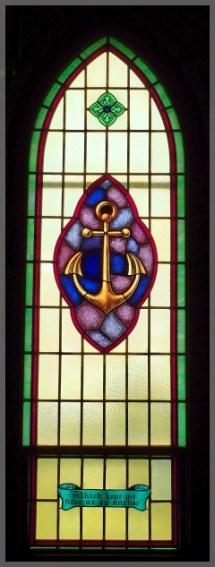
With Hurricane Ian bearing down on us, I finished this devotion in the wee hours of Wednesday morning while I still had power and internet. Whether Ian skirted by our area leaving little damage and minor flooding or left us with a major disaster of ruined homes and business, downed trees, flooded streets, and no power, cell service, or safe water for days, I don’t know. Even if we were left untouched, other Floridians will not be so fortunate.

We certainly were prepared—we stowed the lanai furniture, fueled the cars, had extra propane tanks for the grill, and stocked up with plenty of food and water. Our solar/crank weather-alert radio is ready, the boots and slickers are handy, new batteries are in the flashlights and lantern, the power banks for our phones are charged, and the 5-gallon water jugs are filled.

As for the house, we have aluminum roll-down or accordion shutters covering every window and door. The exterior of our house is made of steel-reinforced poured concrete walls, every roof truss is anchored to the concrete walls, and, with its extra-strong steel track system and twist-resistant framework, the garage door can withstand winds of more than 150 miles-per-hour. If the Three Little Pigs lived here, the Big Bad Wolf wouldn’t stand a chance, no matter how hard he blew!

Nevertheless, we know better than to put our trust in our concrete walls and storm shutters. The 6-feet thick/26-feet high walls of Jericho didn’t save it from Israel nor did Hezekiah’s 22-feet wide/25-feet high wall protect Jerusalem from the Babylonians. Throughout Scripture, we see how people and things can fail. Jeremiah warned against trusting in men and we certainly didn’t base our decision to remain here by trusting the forecasters. Like baseball players, they’re considered excellent when they get it right less than a third of the time! Isaiah warned Judah about putting their trust in Egypt, horses, horsemen, and chariots and Hosea warned the Northern Kingdom about trusting in their own military might so we knew better than trusting our ability to outsmart this storm.

Scripture warns us about putting our trust in people, riches, anything man-made, and even ourselves. Common sense, of course, told us to be prepared for the worst and, because the worst can happen, we did just that. Nevertheless, our trust isn’t in our preparations because our trust is in the Lord. While that doesn’t guarantee we’ll emerge unscathed from this storm, it does mean that whatever happens today, tomorrow, and every day after is in God’s hands alone. Because of that, we can join in Horatio Spafford’s hymn and sing, “When peace like a river attendeth my way, When sorrows like sea billows roll; Whatever my lot Thou hast taught me to say, “It is well, it is well with my soul!” Indeed, in spite of the weather, it is well with my soul!

There is only one secure foundation: a genuine, deep relationship with Jesus Christ, which will carry you through any and all turmoil. No matter what storms are raging all around, you’ll stand firm if you stand on his love. [Charles Stanley]

He who dwells in the shelter of the Most High will abide in the shadow of the Almighty. I will say to the Lord, “My refuge and my fortress, my God, in whom I trust.” [Psalm 91:1-2 ESV)]

Copyright ©2022 jsjdevotions. All rights reserved.

BE PREPARED

When the Son of Man returns, it will be like it was in Noah’s day. In those days before the flood, the people were enjoying banquets and parties and weddings right up to the time Noah entered his boat. People didn’t realize what was going to happen until the flood came and swept them all away. That is the way it will be when the Son of Man comes. [Matthew 24:37-39 (NLT)]

black vulturesLast Friday, there was hardly a spot in the parking lot of a local warehouse club, empty carts were at a premium, and the wait for gas was over 30 minutes. Inside, people were gathered around the fork truck bringing down more generators, packages of batteries were being grabbed by the handful, and cases of bottled water were being snatched right out of the stockers’ hands. The supply of things like toilet paper, garbage bags, bleach wipes, and paper towels was dwindling fast.

June was the official start of hurricane season and even though our Florida newspapers were filled with articles about hurricane preparedness and several days were set aside as sales tax holidays for hurricane supplies, most people did little to prepare until Friday. Up to then, the “spaghetti plots” of Tropical Depression 9 were all over the place but that morning’s weather report showed them coming together over our part of the state. By that afternoon, forecasters predicted a major Category 3 hurricane and warned us to be prepared. By Saturday, the storm had a name (Ian) and the governor had declared a state of emergency for 24 counties!

What part of being prepared didn’t we get back in June when the NOAA warned us to expect an “above average” year of named storms? Perhaps, we were lulled into a false sense of security by the season’s calm beginning and an August without any named storms. Until we see a storm heading straight at us, we tend to ignore the warnings. While better prepared than many, I’m not pointing any fingers; Friday morning, we were filling the gas tank and getting bottled water and batteries!

Thinking of the frenzied crowd at the store and gas pumps, I thought back to Noah. While Genesis focuses on the building of the ark and Noah’s obedience, such an enormous project couldn’t have gone unnoticed. Surely Noah’s neighbors wondered about the massive craft being built in his backyard. Genesis tells us Noah was righteous and blameless and 2 Peter 2:5 tells us that ”Noah warned the world of God’s righteous judgment.“ If he preached the need for repentance and cautioned that God would bring a flood and everything on earth would die, the people ignored his warnings and probably laughed at what seemed an impossibility. When the rain began and the water continued to rise, imagine their panic as the reality of what was happening set in.

In Matthew 24:36-44, Jesus warned of the arrival of another time of judgment and cautioned that the world would be caught off guard as it was in Noah’s day. When that day comes, there will be no spaghetti plots on the weather channel and no chance to run out and get bottled water or batteries. There simply will be two groups—those who are prepared and saved and those who are unprepared and lost.

By Sunday morning, Ian was expected to reach Category 4 intensity once it reaches the Gulf, the “cone of concern” broadened to include the Florida panhandle, and the governor declared a state of emergency for the entire state. With the latest news, the people north of us are now frantically filling gas tanks, water jugs, and sand bags. Jesus, however, wasn’t speaking about hurricane preparedness. He was speaking of His second coming. While many Floridians are fleeing out of the storm’s path, there will be no fleeing when that day arrives. Whether the Last Days or simply our last day here on earth, there will be no way to escape and no place to hide when it comes. Are we prepared?

Therefore, stay awake, for you do not know on what day your Lord is coming. But know this, that if the master of the house had known in what part of the night the thief was coming, he would have stayed awake and would not have let his house be broken into. Therefore you also must be ready, for the Son of Man is coming at an hour you do not expect. [Matthew 24:42-44 (NLT)]

Copyright ©2022 jsjdevotions. All rights reserved.

JUDGING THE PUDDING 

sheep goatsAnd the King will say, “I tell you [the sheep] the truth, when you did it to one of the least of these my brothers and sisters, you were doing it to me!” … Then he will answer them [the goats] saying, “Truly, I say to you, as you did not do it to one of the least of these, you did not do it to me.”  And these will go away into eternal punishment, but the righteous into eternal life.” [Matthew 25:40,45-46 (ESV)]



“The proof is in the pudding” is the shortened version of the original proverb: “The proof of the pudding is in the eating.” In other words, rather than what something claims to be, it must be judged by trying it yourself or seeing it in action. Regardless of its outward appearance or what the label states, the value, authenticity, and quality of something can only be determined by experiencing it or seeing the results!

Jesus probably never tasted the pudding to which the original proverb refers but we know that He frequently told parables illustrating its point. Rather than talking about a seasoned minced meat and grain dish boiled in a bag, He was telling us that the true evidence of our declaration of faith is not found in our words; it is seen in our actions. In His parable of the sheep and goats in Matthew 25, the King separated the sheep from the goats. After doing so, he said to the sheep, “Come, you who are blessed by my Father, inherit the kingdom prepared for you from the foundation of the world.” [25:35] The goats, however, got a vastly different message: “Depart from me, you cursed, into the eternal fire prepared for the devil and his angels.” [25:41]

Since both species are Bovines in the subfamily Caprinae, roughly the same size, have cloven hooves, and chew the cud, the King couldn’t determine their identity with a quick look. Their difference, however, had nothing to do with their appearance: whether they had a groove in their upper lip or wool instead of hair. He wasn’t concerned with the shape of their horns or whether their tails hung down or pointed up.

The King judged the animals’ breed by their actions. While sheep graze and goats browse, their eating habits weren’t what determined their destination because Jesus really wasn’t talking about sheep or goats. He was speaking of the final judgment, specifically of those who claimed to be one of His flock. The parable’s sheep (like true followers of Jesus) fed the hungry, gave drink to the thirsty, welcomed the stranger, clothed the naked, cared for the sick, and visited the prisoner—the very people Jesus called “the least of these.” The goats, however, hadn’t. With His parable, the Lord made it abundantly clear that the way we love one another shows the way we love Him and that our actions have eternal significance.

Jesus wasn’t preaching salvation through works; He was telling us that our actions are evidence of the faith we proclaim! It’s not enough to hear or even to profess; we must obey! We can dress up as sheep and claim to be Christians, but, as the old proverb goes: the proof is in the pudding!

What good is it, dear brothers and sisters, if you say you have faith but don’t show it by your actions? Can that kind of faith save anyone? Suppose you see a brother or sister who has no food or clothing, and you say, “Good-bye and have a good day; stay warm and eat well”—but then you don’t give that person any food or clothing. What good does that do? So you see, faith by itself isn’t enough. Unless it produces good deeds, it is dead and useless. Now someone may argue, “Some people have faith; others have good deeds.” But I say, “How can you show me your faith if you don’t have good deeds? I will show you my faith by my good deeds. You say you have faith, for you believe that there is one God. Good for you! Even the demons believe this, and they tremble in terror. How foolish! Can’t you see that faith without good deeds is useless? [James 2:14-20 (NLT)]

Copyright ©2022 jsjdevotions. All rights reserved.

HEARING

For twenty-three years…the word of the Lord has come to me, and I have spoken persistently to you, but you have not listened. You have neither listened nor inclined your ears to hear. [Jeremiah 25:3a,4a (ESV)]

green heron

As the language of the Scriptures, Jesus spoke and read Hebrew and, as the language of the Roman Empire, He probably spoke some Greek, as well. His everyday spoken language, however, would have been Aramaic. A Semitic language widespread throughout the Middle East by the 7th century BC, Aramaic was adopted by the Jews during their Babylonian exile. By Jesus’ time, Hebrew (considered the “holy tongue”) was reserved for holy matters such as prayer but Aramaic was used for everyday speech. Jesus may have spoken Hebrew in the Temple but, as the common language of people throughout the Middle East, He spoke Aramaic, the rest of the time.

Even though Jesus spoke Aramaic, the words of the New Testament (probably composed between 50 and 100 AD) were written in Greek, the language of scholarship at the time. Since Jewish scholars had already translated much of what we call the Old Testament from Hebrew and Aramaic into Greek, it made perfect sense for the New Testament’s authors to write in Greek, as well. As a result, when we read the Bible, we are reading English words translated from Greek but originally written or spoken in Hebrew and Aramaic. As happens with even the best translation, sometimes the nuance of a word is lost in translation.

For example, consider the Greek word akouwhich simply means “to hear, to be endowed with the ability to hear, or to hear something” and usually is translated into English as “hear” or “listen.” This meaning is sufficient when Jesus heard the Centurion express his faith, Herod heard the Magi say the Messiah had come, Jesus heard that John was imprisoned, John heard about the deeds of Jesus, and Peter heard the rooster crow. Akouό, however, is not sufficient when both the prophets and Jesus spoke of having ears that hear. The words they used had the root word shema/shama and the words “hear” or “listen” don’t catch its full meaning.

In Greek and English, hearing or listening are mental activities but the Hebrew/Aramaic word shema/shama meant more than that. It was as much a physical activity as an intellectual one. Along with hearing, it meant to take heed, submit, obey, and do what is asked. We may hear the television but we expect our children to shema/shama us when we tell them to do their homework!

As an observant Jew, Jesus would have said what is known as the Shema every morning and evening. It begins with the word shema: “Hear, O Israel! The LORD is our God, the LORD alone. You shall love the LORD your God with all your heart and with all your soul and with all your might…”  The Shema continues on to tell the Israelites the rewards of obedience and the consequences of disobedience. Shema/shama is the word prophets used when warning Israel and Jesus used when explaining His parables and the consequences of not “hearing” His words. While hearing is passive, shema/shama most definitely is not. The people of Israel failed to shema God’s words and warnings. Will we make the same mistake?

Just as the weeds are gathered and burned with fire, so will it be at the end of the age. The Son of Man will send his angels, and they will gather out of his kingdom all causes of sin and all law-breakers, and throw them into the fiery furnace. In that place there will be weeping and gnashing of teeth. Then the righteous will shine like the sun in the kingdom of their Father. He who has ears, let him hear. [Matthew 13:40-43 (ESV)]

Copyright ©2022 jsjdevotions. All rights reserved.

HAVING FAITH

It was by faith that Abraham offered Isaac as a sacrifice when God was testing him. Abraham, who had received God’s promises, was ready to sacrifice his only son, Isaac, even though God had told him, “Isaac is the son through whom your descendants will be counted.” Abraham reasoned that if Isaac died, God was able to bring him back to life again. And in a sense, Abraham did receive his son back from the dead. [Hebrews 11:17-19 (NLT)]
lanceleaf arrowhead - duck potato

Since Sunday school days, we’ve read the story of Isaac and Abraham and we know it has a happy ending. Abraham, however, hadn’t read the end of the chapter when he set out for Mt. Moriah. During the fifty-mile journey, the father had three days during which he must have agonized over God’s command to sacrifice his beloved son Isaac. Did Abraham ask God, “Why?” Why would God finally provide the promised child and then take the blessing away? Did he ask God, “How?” How, with his son dead, was he going to have those countless descendants God promised? Did he ask God, “What next?” What would he tell Sarah if he returned home without their dear boy? True faith isn’t blind—it knows exactly what can happen but steps forward anyway and Abraham had seventy-two hours to agonize over the possible consequences of his actions. In his distress, he may even have been tempted to turn back home again.

Shadrach, Meshach, and Abednego knew what happens to flesh in a fiery furnace, Daniel knew what hungry lions do to fresh meat, and, after the deaths of Stephen and James, the rest of the apostles knew what happened to Christians when they dared to share the gospel message. None knew whether they’d die or miraculously escape their fates and yet all boldly acted in faith. If we’ve peeked ahead and know the story ends well, we’re simply being obedient and cooperative. It’s faith when we know full well what could happen but not what actually will. Faith trusts God’s promises. It knows that stepping out in obedience to Him means the story will end, not as we would write it, but as God wants it written.

Scripture tells us Abraham thought God might bring Isaac back to life again but God made no such promise and this was centuries before another resurrection would occur. Abraham may not have known the outcome but the father knew his God so he faithfully obeyed. Him. With confidence, he told his servants that both father and son would return after worshipping on the hill and, when Isaac asked why they had no lamb for their offering, Abraham assured him that God would provide. Still, Abraham had no way of knowing if his words would prove true. As Abraham and Isaac built an altar and piled wood on it, there must have been tears in the father’s eyes. How anxious he must have been as he tied up his son and laid him on the altar and what anguish he must have felt as he picked up his knife and brought it to Isaac’s neck. Nevertheless, Abraham continued in faith and demonstrated that he loved God more than his own flesh and blood.

Faith takes steps knowing that a loving God has given the command and trusting that whatever the result, it is God’s plan. I’ve never been asked to exercise the kind of faith shown by Abraham and the rest of the Bible’s heroes and I pray I never have to do so. I wonder how my faith would stand up at the door of a fiery furnace, the mouth of a lion’s den, in front of a soldier’s sword, facing an angry mob of unbelievers, or if told to sacrifice one of my children. Would I trust God with the outcome or would my faith crumble? Father, forgive me, but I just don’t know.

Faith is not the belief that God will do what you want. It is the belief that God will do what is right. [Max Lucado]

I pray that God, the source of hope, will fill you completely with joy and peace because you trust in him. Then you will overflow with confident hope through the power of the Holy Spirit. [Romans 15:13 (NLT)]

Copyright ©2022 jsjdevotions. All rights reserved.

ONE OUT OF TEN

ducks
Jesus asked, “Didn’t I heal ten men? Where are the other nine?” [Luke 17:17 (NLT)]

In the Old and New Testaments, the Hebrew word tsara’ath and its Greek equivalent of aphe lepras are translated as leprosy. In Biblical times, however, leprosy had a much broader meaning than the condition we now call Hansen’s disease. It included any skin condition that spread over the body. Along with Hansen’s, it could have been anything from psoriasis and dermatitis to impetigo, scabies, or alopecia and, unlike other ailments, it was believed to have been caused by sin. Anyone considered a leper was shunned as an outcast and required to live in camps outside the city. Lepers had to tear their clothing, leave their hair uncombed, cover their mouths, and warn people of their presence by shouting out “Unclean! Unclean!”

On His way to Jerusalem, Jesus was passing between Galilee and Samaria when, rather than shouting, “Unclean!” ten lepers called out, “Master, have mercy on us!” In response to the lepers’ pleas, Jesus simply told them to go and show themselves to the priests. While this seems odd to us in the 21st century, it made perfect sense to the lepers. It was the priests who inspected afflictions and decided whether someone was diseased or healed and could return to society. Being told to see the priests meant they were cured of their affliction. The healing, however, only began when the lepers showed enough faith in Jesus to depart and head into town.

All ten obeyed Jesus by starting out for the priests and they were blessed for their obedience by  healing. Unlike blocked arteries or diabetes, skin conditions like leprosy are recognizable so these men didn’t need to see the priest to know they’d been healed. Imagine their conversation as they walked down the road. After glancing at a fellow leper, one might have exclaimed, “Hey, Uri, wasn’t there a big abscess on your leg? I don’t see it now.” Perhaps Uri responded, “You’re right! And I can feel my toes again and my nose is no longer bleeding. Look at your arm, Asa, what happened to those scabs? Jacob, your eyes are clear and you no longer limp!” Although they needed a priest to officially declare them clean, their clear skin and strong limbs told them they’d been miraculously healed.

Nevertheless, before they could return to their community, they needed a priest to declare them clean and the process, described in Leviticus 13 and 14, would take over a week’s time. After the priests examined the men outside of town, an elaborate ritual involving two birds, a cedar rod, scarlet string, hyssop, a sacrifice, and the sprinkling of blood would be performed. Still not officially clean, the men needed to wash their clothes, bathe, shave, and stay away from their homes for seven more days. It was not until the eighth day, when they made five different offerings and were anointed with oil on the right earlobe, thumb, and big toe that the lepers would be declared clean!

The lepers had several days of rituals ahead of them before returning to society but Jesus and the disciples were just passing through the area. Jesus wouldn’t be around in eight days to receive their thanks. Instead of rushing to the priests, the healed lepers should have turned around and rushed back to thank their healer. It was only one leper, a Samaritan, who thought to return to Jesus and thank the rabbi from Nazareth who showed mercy on him. Anxious to enjoy their return to health and community, the other nine thought first of themselves and kept going.

I don’t know to what the nine attributed their miraculous recovery but the tenth rightly attributed it to God. Shouting “Praise God!” he threw himself at Jesus’ feet and thanked Him. Nine congratulated themselves on their clear skin but one gave all the glory to God. The Samaritan didn’t need a priest to declare him clean—Jesus did that when he said, “Stand up and go. Your faith has healed you.” Moreover, it wasn’t just his leprous body that was restored to health—so was his very soul!

When our lives are blessed, do we thank God or do we just move on with our lives? Are we in such a rush to enjoy our blessings that we fail to thank the Giver of All Gifts? My mother never let me play with any of my birthday or Christmas gifts until I’d written a thank you note to the giver. What if God did the same thing?

What if you woke up today with only the things you thanked God for yesterday? [attributed to Max Lucado]

Give thanks to the Lord and proclaim his greatness. Let the whole world know what he has done. Sing to him; yes, sing his praises. Tell everyone about his wonderful deeds. Exult in his holy name; rejoice, you who worship the Lord. [1 Chronicles 16:8-10 (NLT)]

Copyright ©2022 jsjdevotions. All rights reserved.