
Praise the Lord! Yes, give praise, O servants of the Lord. Praise the name of the Lord! Blessed be the name of the Lord now and forever. Everywhere—from east to west—praise the name of the Lord. For the Lord is high above the nations; his glory is higher than the heavens. [Psalm 113:1-4 (NLT)]
The stone that the builders rejected has now become the cornerstone. This is the Lord’s doing, and it is wonderful to see. This is the day the Lord has made. We will rejoice and be glad in it. … Give thanks to the Lord, for he is good! His faithful love endures forever. [Psalm 118:22-24,29 (NLT)
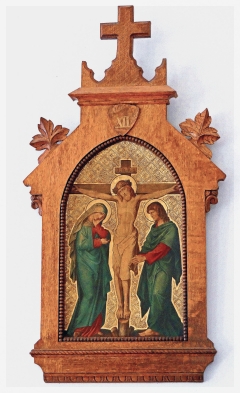 Jesus knew that one would betray Him, another deny Him, and all desert Him. He knew the people He’d fed, healed, taught, and loved—the people who just a few days earlier had greeted him like a king with palm branches and shouts of “Hosanna”—soon would prefer a thief over Him. Because of His anguished prayers later that evening in Gethsemane, we know that He knew the suffering and torment that lay ahead for him. Nevertheless, he sang with the disciples during their Passover meal that last night and it wasn’t a sorrow-filled psalm of lament.
Because it was a Passover feast, at least twice during the evening they would have paused to sing the traditional Passover hymns commemorating Israel’s escape from slavery. Known as the “Egyptian Hallel” and consisting of Psalms 113 through 118, they are joyful hymns of praise and thanksgiving. Hallel literally means praise and the Hebrew phrase Hallelu Yah, meaning “praise the Lord,” is found frequently in these beautiful psalms. The sages understood that Psalm 118, the climax of the Hallel, was about the Messiah and that night in Jerusalem, nearly 2,000 years ago, the Messiah Himself sang those very words. As the disciples gathered in that upper room celebrating Israel’s release from bondage in Egypt, did they realize they really were celebrating man’s release from bondage to sin?
The following day, after three hours on the cross, Jesus cried out, “My God, my God, why have you abandoned me?” After the praise and thanks of the previous night, did He now doubt God? The question was rhetorical because Jesus knew exactly why He was suffering—He was bearing the weight of the sins of the world. What the gospels don’t include is the rest of Psalm 22, the psalm Jesus probably was reciting. Although the psalm begins with the complaint of unanswered prayers and abandonment by God, it is followed by a statement of confidence in Him. A complaint of being forsaken by men comes next but it also is followed by an expression of trust in the Lord.
Although the psalm was written by David, rather than reflecting his experiences, it prophetically presented the future suffering of the Messiah and the next several stanzas clearly depict the crucifixion of Jesus: people mocked and scorned Him, He was in pain, His strength ebbed, His mouth was dry, His hands and feet were pierced, He was dying, and His clothing was divided and lots cast for it. These lines are followed by a cry for deliverance.
By the psalm’s 22nd verse, however, its tone changes and the plaintive cries turn to praise and words of faithful confidence: “I will proclaim your name to my brothers and sisters. I will praise you among your assembled people. Praise the Lord, all you who fear him!” The praise and promises continue throughout the rest of the psalm. These are not the words of a defeated man but the words of the promised Messiah, the Anointed One, the one who fulfilled the promise made to Abraham in Genesis that, “through your descendants all the nations of the earth will be blessed.” Out of what seemed to be defeat came triumph.
The One who’d sung “Hallelu Yah,” the previous night with his disciples again praised the Lord with His last words as He hung on the cross. Hallelujah! Praise the Lord!
The cross was two pieces of dead wood; and a helpless, unresisting Man was nailed to it; yet it was mightier than the world, and triumphed, and will ever triumph over it. [Augustus William Hare]
 Apparently, coffee was not served after dinner in the upper room that Thursday night. Granted, a nap is welcome after a big meal but that evening’s Passover meal was like no other and Jesus had predicted that the disciples would desert Him. After such a warning, you’d think the men would have been extra cautious. Scripture tells us Jesus was troubled and grief-stricken when He asked Peter, James, and John to keep watch with Him. Surely, that should have motivated His closest friends to keep awake, but it didn’t. Three times Jesus went to pray and three times he returned to find the men asleep. It was Jewish custom on Passover night to stay up late and talk of God’s acts of redemption so staying awake this night was something they’d all done on other Passover nights. Nevertheless, even after Peter specifically was cautioned to stay awake while praying to stand strong against temptation, the men slumbered. Shouldn’t the warning that he’d deny Jesus three times before morning been enough at least to keep Peter alert and deep in prayer? While the Lord was in anguish and prayed so intently that He sweat drops of blood, His most trusted friends took an after-dinner snooze. They were asleep on the job.
 As I continued my Lenten fasting, Saturday’s fast was criticism. “A piece of cake,” I thought as I began the day. While criticism can be constructive, it usually is little more than complaint and, as it turned out, I’d blown it by 10:00 AM. Unfortunately, that wasn’t the last time I caught myself being critical. Even though Sundays during Lent are a day free of fasting, I tried going without criticism again Sunday morning. Surely a day without any critical judgment shouldn’t be that hard! I hate to admit, I botched it by 8:00 while watching the news! Granted, I’d already made three hours without complaint but that wasn’t my last criticism of the day. Not every comment was verbalized but whether I said it to myself or to someone else, criticism still is criticism. I continued fasting from criticism yesterday and this fast may turn out to be a year’s work!
 With nearly 20,000 tweets, the 2022 Twitter “Lent Tracker” revealed that the top Lenten fast for Twitter users was alcohol. Twitter and social networking took second and third places followed by Lent, sex, coffee, chocolate, swearing, men and meat. Using Twitter to give up Twitter seems somewhat counter-productive and giving up Lent for Lent makes no sense at all. Then again, since I don’t tweet, Twitter itself doesn’t make sense to me. In a survey by YouGov, people were asked what would be the hardest thing to abstain from for Lent and watching TV or using streaming services was the number one answer in all age groups except for ages 18 to 24. It’s no surprise that the hardest thing to relinquish for that group was social networking!
 Throughout His ministry, it seems that Jesus knew that the cross awaited Him but we don’t know if the human part of Him knew the exact details. Even so, it’s one thing to know what lays in the future but quite another to know it is about to begin within a matter of minutes. That night in Gethsemane, God showed Jesus the cup from which He would drink and He showed it in gruesome detail. Jesus viewed the betrayal, abandonment, sham trials, mocking, beating, flogging, and suffering torture on the cross along with the jeers of the crowd and the heartbreak and tears of His mother and the other women at the foot of the cross. Had Jesus not known exactly what the next 24-hours held, He would have been no different than the lambs brought to the Temple for sacrifice. They weren’t there of their own volition and had no knowledge of what would happen to them when presented to the priest. Rather than willing sacrifices, they were victims! The Lamb of God, however, needed to know the extraordinary cup—the horrible ordeal—that lay before him because, rather than a victim, He was a willing volunteer! His anguished prayers that night, however, tell us He didn’t look forward to it.
 We always knelt for prayer in the church I attended as a girl so I used to think the only way to pray was on my knees with head bowed and hands tightly clasped. While I now pray in a variety of postures, I wondered if Scripture tells us exactly how we should pray.
 Devotions of the Heart