
You shall not covet your neighbor’s house; you shall not covet your neighbor’s wife, or his male servant, or his female servant, or his ox, or his donkey, or anything that is your neighbor’s. [Exodus 20:17 (ESV)]
 Although it sounds like something Satan might say to his demons, it was Alex Dumas, CEO of Hermès, who said “Our business is about creating desire.” It’s not just Hermès (with their $8,500 Della Cavalleria “magical bag”) that is in the business of creating desire; that seems to be the goal of many businesses. The LA Times has a “Coveted” column in their Image magazine featuring a curated list of luxury items (like $950 Gucci sneakers) they claim to be “mandatory” or “must-haves.” The October Vogue featured “coveted street style trends,” (like $1,364 velvet trousers and $600 Levi jeans) while urging its readers to purchase them “before it’s too late.” There’s even an on-line game called “Covet Fashion” in which you build your virtual dream wardrobe and then follow links to purchase the desired items.
With all its sales, catalogs, and advertisements, Christmas easily can become a season of desire and desire is what coveting is all about—a strong desire for something we don’t have or something we think we don’t have enough of. The sin of coveting, however, isn’t just desiring material goods. Coveting is a desire for what we can’t have or what other people do have—everything from that $8,500 Hermès bag to a fashion model’s beauty or someone else’s success to our neighbor’s wife.
The tenth commandment not to covet is unique among the Ten Commandments. The first nine deal with actions such as worshipping idols, keeping the Sabbath, honoring parents, taking the Lord’s name in vain, theft, adultery, or murder, but coveting is not an act. Coveting is a matter of the heart and allows desire for something to replace our desire for God. When we covet, we grow discontented, resentful, and even selfish enough to gain what we want at the expense of others.
By desiring the wrong things—whether other’s people’s lives and possessions or things like beauty, life-style, wealth, or fame—our goals get distorted. We may be willing to sacrifice things of real value—home, integrity, marriage, family, financial security, health, ethics, or faith—to attain what, in the end, has little value in this world and absolutely none in the next. When Eve coveted that forbidden fruit, sin and death entered into the world. When David coveted Bathsheba, he ended up ordering Uriah’s death. As a result, his infant son died, calamity entered his house, murder was a constant threat in his family, and he was publicly humiliated by Absalom. After Achan coveted the spoils of war, his entire family was destroyed. As a result of Ahab coveting his neighbor’s vineyard and Jezebel arranging the man’s death, Ahab and every male in his family died and Jezebel was eaten by dogs. Let’s remember that desiring what God does not mean for us to have will always come with a steep price!
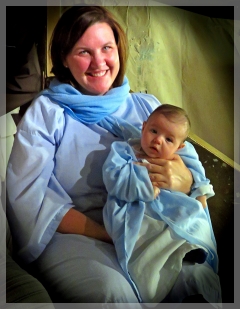 One December evening several years ago, we walked the streets of Bethlehem. Instead of travelling to the Holy Land, however, we traveled back in time at a local church. Our journey began with a stroll through the Christmas story. We walked past Gabriel meeting with Mary, an angel visiting the sleeping Joseph, the shepherds and sheep, Joseph and a very pregnant Mary in a stable, and met the Magi with their camels and gifts. We then went inside the parish hall to the bustling city of Bethlehem. As required by the emperor, we stopped to register for the census and pay our taxes before moving through the crowded marketplace to the shops of the wine merchant, carpenter, leather worker, and oil and spice dealers. After pausing to watch mud bricks being made and fabric being dyed, a young boy took us on a tour through his 1st century Jewish home.
 Apparently speechless when Jesus washed their feet, John records no one objecting to His doing so until Jesus came to Peter. After protesting that Jesus never would never wash his feet, the Lord warned the disciple that unless he allowed Jesus to wash him, Peter wouldn’t belong to Him. Eager to show his devotion to Jesus, Peter then enthusiastically offered the rest of his body for cleansing. Jesus explained that, because Peter already bathed, only his feet needed washing, while adding that not all of those present were clean. Since we know the rest of the story, we know He was referring to Judas. The reference to Judas not being clean, however, tells us that this exchange is about more than washing the filth of Judah’s roads off the disciple’s feet. Since Jesus wasn’t giving a hygiene lesson, what did He mean?
 While researching 1st century dining habits, I learned how guests traditionally were seated. Although da Vinci’s famous mural places Jesus in the middle of the group at a long rectangular table, the position of Jesus (as the host) would have been second from the left on the left side of a U-shaped table. Customarily, a trusted friend was seated to the host’s immediate right and the guest of honor to the host’s immediate left. The rest of the diners were seated to the left starting with the highest-ranking person and proceeding on down to the least important. If a servant were present during the meal, the last seat was his since it was closest to the door. With no servant, it was given to the youngest or lowest ranking guest.
 When picturing the Last Supper, we probably visualize it much like Leonardo da Vinci’s famous mural with the men seated on chairs at one long table. While visually appealing, the picture is inaccurate. Instead of sitting on chairs with their feet concealed under the dinner table, Jews and Romans in Jesus’ day lounged on low sofas or cushions surrounding a low three-sided table called a triclinium. The cushions or couches were placed on the outside of the three sides which left the inside open for serving and entertainment. Diners would recline on their left sides, lean into the bosom of the person on their left, support their heads with their left arms, eat and drink with their right hands, and stretch their legs out to the right.
 While we’re busy decorating our homes, planning holiday menus, finding the perfect gift for everyone on our list, and stressed about supply chain issues and shipping delays affecting the receipt of those gifts, let’s not forget that we’re in the season of Advent. This is a time for us to prepare for the second coming of Christ and to ponder the gifts of hope, love, peace, and joy we received with His first coming.
 Devotions of the Heart