THE DEBT  (Matthew 18:23-35 — Part 1)

Therefore the kingdom of heaven may be compared to a king who wished to settle accounts with his servants. When he began to settle, one was brought to him who owed him ten thousand talents. [Matthew 18:23-24 (ESV)]
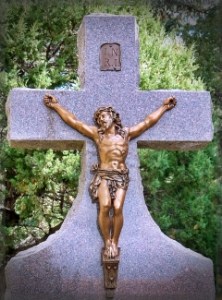
Jesus told several parables about the Kingdom of Heaven and, in Matthew 18, He compared it to a king who wanted to bring his accounts up to date with the servants who owed him money. The parable is pretty straight-forward; the king symbolizes God, the servant each one of us, and the debt our sins. One servant owed the king ten thousand talents but was unable to pay. There were serious consequences for not paying debts so the king ordered that the servant’s home and possessions be sold off and that the man and his family be sold into slavery until the debt was paid.

Jesus often used hyperbole to make his point but, unfamiliar with the talent or tálanton, 21st century readers may miss it, even when the debt is translated as several or even ten million dollars. Weighing about 75 pounds, the talent had the value of 6,000 drachmas or denarii, the Greek and Roman coins used in 1st century Judah. Generally speaking, one denarius was a laborer’s wage for a day. According to Forbes and the Bureau of Labor Statistics, the average hourly wage is about $28 and, figuring an eight-hour day, a denarius would be worth about $224 today. Since 6,000 denarii equaled one talent, a talent would be worth about $1,344,000 (6,000 days of work) in 2024. The servant, however, owed 10,000 talents and  his debt would require 60 million days of work. In today’s dollars, that is more than $13.44 billion. To put his 10,000-talent debt into 1st century perspective, the yearly tax revenue collected by Herod the Great was only about 800 talents!

Moreover, because “ten-thousand” was the largest number used in Jesus’ day, it also meant “beyond measure.” The servant’s debt was so enormous that it was incalculable. Although he promised to make payment, Jesus’ listeners knew the promise was absurd—repayment of such an astronomical amount was impossible!

Jesus deliberately chose such an outrageous number because there is absolutely no way any of us could ever work hard enough or give the Lord enough to repay Him for his never-ending mercies. This illustration makes it clear that, “The wages of sin is death,” because the enormous debt of sin never can be re-paid! Fortunately, the parable doesn’t stop there.

Asking for patience, the man begged for mercy and the king, filled with compassion, released his servant and forgave the debt entirely. The servant did nothing to deserve forgiveness; in fact, he may have incurred that debt through his mismanagement or embezzlement of the king’s funds. Nevertheless, as undeserved as it was, the debt was forgiven because of the king’s grace and mercy. While the wages of sin is death, “the free gift of God is eternal life in Christ Jesus our Lord.” [Romans 6:23]

When the king forgave the debt, however, the debt wasn’t paid; justice had not been served. The king remained 10,000 talents the poorer for it! When God canceled the payment due for our sins, however, justice was served because someone else paid our debt—Jesus! We are no more deserving of God’s forgiveness than was the king’s servant but, out of God’s merciful grace, our sin debt was paid in full by God’s only Son!

When the parable continues, it takes a dark turn but, for now, consider the first part of the story and the size of the servant’s debt—a debt so massive that it was incalculable—but was forgiven. Those, my friend, are our sins—countless sins forgiven by the grace of God!  Thank you, Jesus!

In him we have redemption through his blood, the forgiveness of our trespasses, according to the riches of his grace. [Ephesians 1:7 (ESV)]

And you, who were dead in your trespasses and the uncircumcision of your flesh, God made alive together with him, having forgiven us all our trespasses, by canceling the record of debt that stood against us with its legal demands. This he set aside, nailing it to the cross. [Colossians 2:13-14 (ESV)]

Copyright ©2024 jsjdevotions. All rights reserved.

PLODDING

Have mercy upon me, O God, according to thy lovingkindness: according unto the multitude of thy tender mercies blot out my transgressions. [Psalm 51:1 (KJV)]

snailI suspect we would prefer a eulogy that shines a light on our victories and accomplishments but the man known as “the father of modern missions” chose otherwise. When William Carey [1762-1834] was asked what text he wanted for his funeral sermon, he chose today’s verse. The humble man wanted to shine a light on God’s lovingkindness and great compassion rather than his personal accomplishments.

Convinced that Jesus’ words in the Great Commission were a binding command on every generation of Christ’s followers, Carey contended that 18th century Christians were as called to take the gospel to foreign lands as were the 1st century Apostles. While this may seem obvious to us today, back in 1786 the prevailing view was that God would bring the nations to Christ without human assistance. Told by some that God didn’t need (or want) his help in converting the “heathens,” others argued that distance, barbarism, dangers, supply issues, and unintelligible languages made foreign missions unfeasible. Carey, however, remained determined to spread the gospel abroad. Eventually, what became known as the Baptist Missionary Society was formed and, in 1793, William Carey and John Thomas were appointed missionaries to the East Indies.

When they arrived in colonial Calcutta, the men faced stiff opposition from the East India Company along with poverty, illness, loneliness, domestic issues, and the deaths of friends and family, but Carey never lost heart. Determined to spread the gospel, he wanted more than converts; Carey wanted to develop apostles! To that purpose, in 1818 he and his colleagues founded Serampore College in West Bengal. While the college’s primary goal was to train indigenous ministers, both believers and unbelievers from all castes were welcome. Fierce critics of the caste system, infanticide, and suttee (widows burning themselves upon their late husbands’ funeral pyres), the missionaries labored tirelessly for the welfare of all Indians. Carey’s greatest contribution to Christ was his work as a translator. A cobbler by training, this self-taught man (whose only degree was an honorary one) translated the entire Bible into six Indian languages and portions of Scripture into 29 others! Carey’s approach to missions combined evangelism with translation, education, social reform, and health care. That same holistic approach remains a model for Christian missionaries today.

William Carey served 41 years in India without a furlough but, even before his death, his name was well known and people started collecting mementos of him. Carey’s contemporary, John Newton (evangelist, abolitionist, and author of “Amazing Grace”) said of him, “I look to such a man with reverence. He is more to me than bishop or archbishop; he is an apostle.” Yet, when this man who was a legend before his time lay dying in 1834, he gave a fellow missionary these instructions: “When I am gone, say nothing about Dr. Carey. Speak about Dr. Carey’s Savior.”

Suspecting that someday his biography would be written, Carey gave his nephew this criterion for judging its correctness: “If he give me credit for being a plodder, he will describe me justly. Anything beyond this will be too much. I can plod. I can persevere in any definite pursuit. To this I owe everything.”

Indeed, Carey was a plodder—it took him seven years to get support for his mission and another seven years passed before he baptized his first convert! Nevertheless, he never lost faith in God’s call to him. Twelve years after establishing the Mission Press in Serampore, the print shop and office burnt to the ground. Type sets for fourteen different languages, vast quantities of paper, dictionaries, and Carey’s entire library along with his completed Sanskrit dictionary, part of his Bengal dictionary, two grammar books, and ten translations of the Bible were destroyed. Even that setback did not deter the plodder. “The loss is heavy” he said, “but as traveling a road the second time is usually done with greater ease than the first time, I trust the work will lose nothing of real value. We are not discouraged…. We are cast down but not in despair.” Indeed, within a few months, the resilient man set up shop and started over again!

A plodder, Carey converted one soul at a time, learned new languages one word at a time, translated the Bible one verse at a time, paid the bills one rupee at a time, and walked the road God set before him one step at a time. God doesn’t call us to be fast; He calls us to be faithful! As Charles Spurgeon said, “By perseverance the snail reached the ark.” Can we do any less?

When reading about William Carey, I couldn’t help but wonder at how easily we allow disappointment, disillusionment, and setbacks to intimidate, dishearten, and overwhelm us in our daily walk as believers. But, for William Carey, it never was about him—it always was about Jesus! He kept his eyes on Christ as he plodded along; let us do the same.

I feel it my duty to plod on while daylight last. [William Carey]

Therefore, my beloved brethren, be ye steadfast, unmoveable, always abounding in the work of the Lord, forasmuch as ye know that your labour is not in vain in the Lord. [1 Corinthians 14:58 (KJV)]

And let us not be weary in well doing: for in due season we shall reap, if we faint not. [Galatians 6:9 (KJV)]

Copyright ©2024 jsjdevotions. All rights reserved.


NEW TERRITORY – New Year’s Day 2024

The land that you are going over to possess is a land of hills and valleys, which drinks water by the rain from heaven, a land that the Lord your God cares for. The eyes of the Lord your God are always upon it, from the beginning of the year to the end of the year. [Deuteronomy 11:11-12 (ESV)]

The Israelites were camped on the east side of the Jordan River, in view of Canaan, when Moses addressed them. After spending the last forty years as nomads in the wilderness of the Sinai Peninsula, can you imagine their excitement at the thought of finally having a place to call their own and their eagerness for a new beginning in a new land? There must have been some apprehension, as well. They weren’t naïve; they knew there would be conflict, battles, and even loss before Canaan was conquered.

Moses was not addressing the original generation of adults he brought out of Egypt—they died in the wilderness because of their disobedience the first time Israel approached Canaan. This was the second generation of adults—the ones who had been under twenty when their parents refused to enter the Promised Land. This generation were eye-witnesses to God’s power and provision. As children, they witnessed the plagues God visited on Egypt. They were there when the waters of the Red Sea parted and watched Pharaoh’s soldiers drown. They experienced Israel’s defeat of the Amalekites at Rephidim, enjoyed God’s provision of quail, and observed water pouring out of a rock more than once. They beheld the glory of the Lord fill the Tabernacle and knew that God faithfully provided them with manna for forty years.

At the same time, this generation also knew the consequences of disobedience. They survived the plague God sent because Israel worshiped the golden calf, saw the earth split open and swallow the men (and their families) who rebelled against Moses, and spent most of their lives as nomads because of their parent’s defiance. They had first-hand knowledge of God’s discipline as well as His faithfulness, provision, compassion, and mercy.

As Canaan was for the Israelites, so a new year is for us. Like a new land, the new year means a fresh start but, like the Israelites, we wonder what trouble the year may bring. Will there be more dark valleys than sunny hilltops? Will our journey be challenging or easy, rocky or smooth, crooked or straight? Will obstacles or detours cause us to lose our way? Will we encounter times of plenty or famine, profit or loss? Will there be storms or sunshine, floods or drought, abundance or scarcity? Rather than being attacked by Amorites, Hittites, or Jebusites, will cancer, divorce, or job loss strike? Just as those Israelites knew that both challenges and blessings lay ahead in Canaan, we know that the new year will bring its share of both grief and joy, chaos and calm, hardship and ease, loss and gain.

Moses told the people not to fear the inhabitants of Canaan because God was with Israel. They didn’t go into new territory alone and neither do we. God was with them and He is with us. While we haven’t gathered manna in the morning, seen bitter water become sweet, experienced God’s victory over Midian, or followed a pillar of cloud or fire through the Sinai wilderness, we know God did all that and more for Israel. Moreover, we have firsthand experience of the many ways He has been faithful to us. In previous years, He transformed discord into harmony, heartbreak into joy, chaos into order, defeat into victory, unhappiness into contentment, and scarcity into enough! God’s faithfulness and power in the past tells us there is nothing to fear in the days ahead!

While we don’t know what 2024 holds, we do know the One who holds the new year in His hands. Let us stride confidently into the challenges of the future knowing that, “The eyes of the Lord your God are always upon it, from the beginning of the year to the end of the year.”

New Year’s Day is a good time to fix one’s eyes on the only One who knows what the year is to hold. [Elisabeth Elliot]

Be strong and courageous. Do not fear or be in dread of them, for it is the Lord your God who goes with you. He will not leave you or forsake you. [Deuteronomy 31:6 (ESV)]

Copyright ©2024 jsjdevotions. All rights reserved.

MORE THAN MEETS THE EYE

But you must not forget this one thing, dear friends: A day is like a thousand years to the Lord, and a thousand years is like a day. The Lord isn’t really being slow about his promise, as some people think. [2 Peter 3:8 (NLT)]

Along the road to the Serengeti, somewhere near the Olduvai Gorge in Tanzania, is a crescent-shaped sand dune. Measuring about 30-feet in height and 328-feet long along its curves, it is known as the Shifting Sands. Rich in iron and highly magnetized, the sand sticks to itself when tossed in the air. When the wind blows, its particles fall back on the dune rather than get carried away by the breeze. The dune, however, is constantly on the move as the prevailing winds slowly move the entire thing across the land. Moving about 50-feet a year, it’s believed that the Shifting Sands have been traveling the savannah for more than three thousand years, sometimes changing both shape and direction. Of course, the dune moves so gradually that you don’t see its motion. Nevertheless, stakes in the ground indicate its location in previous years.

Like the Shifting Sands, God often appears to be standing still. David was anointed king as a boy but he didn’t rule over all of Israel until he was 37 years old. After being promised a son, Abraham and Sarah waited 25 years before Isaac’s birth. It was 22 years between Joseph’s prophetic dream that his brothers would bow to him and the day they did! Think of the centuries that passed between God’s promise of Canaan to Abraham’s descendants and Israel’s arrival there. By the time Jesus was born, thousands of years had passed since God’s first promise of a Savior in Genesis 3, one thousand had passed since God’s promise in 2 Samuel that David’s line would continue eternally, and about 700 years had elapsed since the many Messianic prophecies found in Isaiah, Hosea, and Micah! God wasn’t quick but He made good on His promises—God always does!

God moves at His own pace—and it often seems undetectable at the time. Just because we don’t see Him move, however, doesn’t mean He’s standing idly by, forgotten His promises, or ignoring His children. God works in the unseen and just because we can’t see His hand at work doesn’t mean it isn’t happening! I never saw the Shifting Sands move and yet I know they moved 1½ to 3 inches the day I was there!

Like Tanzania’s moving dune, more is happening in God’s realm than meets our mortal eyes. As Christians, we must “live by believing and not by seeing,” and “walk by faith, not by sight.” [2 Corinthians 5:7] We live by believing in God’s promises—rather than what we think we see (or don’t see) in our world! God often seems incredibly slow but His time is not the same as ours and His perspective is far broader than ours! More is happening than meets the eye! God’s promises never fail and He always is right on time!

Faith shows the reality of what we hope for; it is the evidence of things we cannot see. [Hebrews 11:1 (NLT)]

So we don’t look at the troubles we can see now; rather, we fix our gaze on things that cannot be seen. For the things we see now will soon be gone, but the things we cannot see will last forever. [2 Corinthians 4:18 (NLT)]

Copyright ©2023 jsjdevotions. All rights reserved.

INCARNATION DAY

And the Word became flesh and dwelt among us, and we have seen his glory, glory as of the only Son from the Father, full of grace and truth. [John 1:14 (ESV)]

The Almighty appeared on earth as a helpless human baby, needing to be fed and changed and taught to talk like any other child. The more you think about it, the more staggering it gets. Nothing in fiction is so fantastic as this truth of the Incarnation. [J.I. Packer]

During the children’s Christmas program at our northern church, the tots would sing “Happy Birthday, Jesus!” by the manger and then return to their room to enjoy birthday cake. Like them, most people would say that Christmas commemorates the birthday of Jesus but that’s not quite correct. Jesus doesn’t really have a birthday! He was God and, as God, He always was, always is, and forever will be. Although Mary gave birth, “incarnation” is the more accurate term for what began in Nazareth nine months earlier and culminated in Bethlehem. Coming from the Latin incarnare, meaning to make flesh,” the word “incarnation” embodies the meaning of John 1:14: “the Word became flesh and dwelt among us.” Put simply, when Jesus came into the world, God the Son took on a human body and a human life like ours. The One who was there before the stars were hung in the sky, the One who was spirit and without physical body, came to earth clothed in human flesh.

When Jesus became incarnate, His nature changed but His position didn’t. He still was fully God and we see His “Godness” in His actions and words. He fulfilled over 350 Messianic prophecies—something no mere mortal could do. He was born of a virgin, had the authority to forgive, knew the future, stilled storms, healed miraculously, brought the dead back to life, and knew what was in people’s hearts. Jesus walked on water, cast out demons, and demons recognized Him. He accepted people’s worship (which would have been blasphemous were He not God) and He resurrected from the dead! Jesus claimed He fulfilled prophecies and existed before Abraham and said, “I am in the Father and the Father is in me.” [John 14:11] Indeed, Jesus was Immanuel—God with us!

Although Jesus was fully divine, at the same time, He also was fully human. He may have been conceived miraculously, but He developed in a woman’s womb like any other human baby. When Jesus entered the world through a birth canal, He took His first breath into his human lungs and cried like a baby. He grew into manhood the same way every other boy does—with skinned knees and bruises. Looking like any other Galilean of His day, Scripture tells us that Jesus ate, walked, spoke, read, listened, learned, and even paid His taxes. He wore clothing, went to the Temple, prayed, perspired, and bled. He grew thirsty and drank, grew tired and slept, was vulnerable to physical harm, experienced temptation, and could both touch and be touched. He experienced betrayal and abandonment and expressed human emotions like anger, joy, curiosity, sorrow, and disappointment. Even though He was fully God, Jesus chose to suffer as a man and die a mortal man’s physical death.

When Jesus became incarnate, He willingly gave up the majesty, glory, and divine attributes of God (apart from the direction of God the Father) to take on the limitations and pains of human life. He laid aside his “Godness” to live as a man with all the pain, discomfort, weakness, bodily functions, and limitations that accompany our bodies! Even though He wasn’t “born,” He was human in every way but one. Unlike every person since Adam and Eve, in spite of being tempted, Jesus managed to live a sinless life. He lived the life we should live (but can’t) and died the death we all deserve (but won’t receive). That’s what Christmas is all about!

Let us all celebrate the glorious day “the word became flesh” all year long!

The true light, which gives light to everyone, was coming into the world. He was in the world, and the world was made through him, yet the world did not know him. He came to his own, and his own people did not receive him. But to all who did receive him, who believed in his name, he gave the right to become children of God, who were born, not of blood nor of the will of the flesh nor of the will of man, but of God. [John 1:9-13 (ESV)]

Copyright ©2023 jsjdevotions. All rights reserved.

UNEXPECTED

For a child is born to us, a son is given to us. The government will rest on his shoulders. And he will be called: Wonderful Counselor, Mighty God, Everlasting Father, Prince of Peace. [Isaiah 9:6 (NLT)]

Come, thou long expected Jesus, born to set thy people free;
from our fears and sins release us, let us find our rest in thee.
Israel’s strength and consolation, hope of all the earth thou art;
dear desire of every nation, joy of every longing heart. [Charles Wesley]

I imagine the shepherds probably were more concerned with making it through the night warm, safe, and without losing any sheep than they were with the eventual arrival of the promised Messiah. They certainly never expected an angel to appear to announce His birth nor did they anticipate a host of angels singing God’s praises. Nevertheless, it was shepherds who received the good news that a child was born—a child who would be their Savior, Messiah, and Lord.

Shouldn’t this news have been given to the wealthy, powerful, or religious rather than a group of shepherds in a field?  Shepherds, especially those charged with the night watch, were among the lowest of the low. Considered disreputable, rough, dirty, ritually  unclean, and possibly dangerous, it hardly seems logical that outcast shepherds were the first ones to get Jesus’ birth announcement!

Then again, everything about the Christmas story is contrary to expectations. In fact, the Christmas story doesn’t even begin with Jesus; it begins with an angel, an old priest named Zechariah, his barren wife Elizabeth, a miraculous pregnancy, and a prophecy. When it finally gets to Jesus, we find an angel visiting the Galilean village of Nazareth, a place so insignificant that it’s not even mentioned in the Old Testament, Talmud, or even the historic writings of Josephus! It was hardly the hometown of a king! One would expect God to select a royal princess as the mother of His only Son instead of a young peasant girl. As a virgin, Mary certainly never expected a pregnancy before marriage nor did her fiancé Joseph.

Although Micah prophesied that the promised Messiah would be born in Bethlehem, Joseph and Mary were in Bethlehem only because of a census. When Mary’s time came, she gave birth to God’s Son in a borrowed stable, farm animals served as midwives, and the Prince of Peace lay in a feed trough instead of a splendid crib. Rather than royal courtiers, the King of Kings was surrounded by lowly shepherds and, instead of extravagant robes, the Lion of Judah was wrapped in rags. Other than the shepherds, it seems that the only people who took notice of Christ’s arrival were pagan astrologers from the East. Then, once the child’s presence became known to Herod, He was hunted instead of welcomed and His family fled in terror to Egypt! None of this fits the way we’d expect a Messiah’s story to go if we were writing it. Fortunately, we weren’t!

Yes, Messiah had been long expected but He came in a most unexpected way! None of this seems to makes sense until we understand that God didn’t come for the rich and mighty; He came for the poor and the lowly. He came for shepherds and lepers and the crippled, hungry, and poor. He came for the woman with the blood disorder, blind Bartimaeus, the woman caught in adultery, the Samaritan woman at the well, Mary Magdalene, and the Gentile demoniac in the Gerasenes. He came for tax-collectors like Zacchaeus and Matthew/Levi, zealots like Simon, and fishermen like Peter, John, James, and Andrew.  He came for the thief on the cross, the widow of Nain, Jarius and his daughter, the Syrophoenician woman and her daughter, and the Roman centurion. He even came for Pharisees like Nicodemus and rich council members like Joseph of Arimathea. Jesus came for people like you and me—the  ordinary, flawed, and sinful beings that we are.

The people of Judah expected a conquering king who would overthrow the Romans but what the world got was a King who overthrew Satan and conquered sin and death!

God never just meets our expectations; He surpasses them as only God can do! Thank you, God!

Born thy people to deliver, born a child and yet a King,
born to reign in us forever, now thy gracious kingdom bring.
By thine own eternal spirit rule in all our hearts alone;
by thine all sufficient merit, raise us to thy glorious throne. [Charles Wesley]

His government and its peace will never end. He will rule with fairness and justice from the throne of his ancestor David for all eternity. The passionate commitment of the Lord of Heaven’s Armies will make this happen! [Isaiah 9:7 (NLT)]

Copyright ©2023 jsjdevotions. All rights reserved.