OH COME, IMMANUEL (4) – HE WILL RETURN

As my vision continued that night, I saw someone like a son of man coming with the clouds of heaven. He approached the Ancient One and was led into his presence. He was given authority, honor, and sovereignty over all the nations of the world, so that people of every race and nation and language would obey him. His rule is eternal—it will never end. His kingdom will never be destroyed. [Daniel 7:13-14 (NLT)]

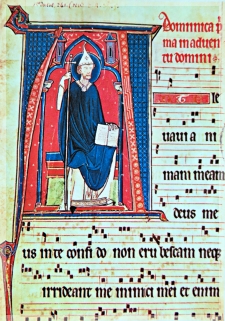
13th-century music manuscript

I began this series by saying that the Jews of the 1st century easily could have sung the words “O come, O come, Immanuel, and ransom captive Israel,” but those words weren’t sung by Jews. They were chanted in Latin over 1,200 years ago by Benedictine monks. In the 1800s, their words were translated into English, the verses rearranged, and the new version set to the melody of a 15th century French requiem mass processional.

The monk’s original version had seven verses and a verse a day was sung in the week before Christmas. Calling for God to come, each verse referred to a Messianic name found in the Hebrew Scriptures: Wisdom, Adonai (the Hebrew word for God), Root of Jesse, Key of David, Dayspring, King of the Gentiles, and Immanuel.

This Gregorian chant, however, was as much about the future as it was about the past. While celebrating our Savior’s birth, it also prepared the monks’ hearts for the day Jesus would return. You see, the first letter of each of the Latin names of God formed an acrostic. When put together in order, they spelled SARCORE but, when put together backwards, they spell Ero cras, which, in Latin, means “I shall be with you tomorrow.” While declaring the first Advent, this hymn is an urgent prayer expressing mankind’s longing for the second Advent when Jesus returns.

Scripture is neither vague nor equivocal on the promise of Christ’s return. His return is a major theme in the prophecy of both Old and New Testaments. 23 of the 27 New Testament books reference His return as do 17 books of the Hebrew Scriptures. According to Bible teacher David Jeremiah, references to Christ’s second coming outnumber references to His first by eight to one!

Jesus Himself promised His return. In Matthew 24:30-31, He spoke of a time people would, “see the Son of Man coming on the clouds of heaven with power and great glory. And he will send out his angels with the mighty blast of a trumpet, and they will gather his chosen ones from all over the world—from the farthest ends of the earth and heaven.”

On the night of His betrayal, Jesus promised His disciples, “I will come back and take you to be with me that you also may be where I am.” [John 14:3] After His ascension into heaven, two angels told the disciples, “This same Jesus, who has been taken from you into heaven, will come back in the same way you have seen him go into heaven.” [Acts 1:11]

Advent is far more than a time to look forward to celebrating Messiah’s birth and prepare for Christmas. It is as much a time to look forward to and prepare for Christ’s return! Many people missed His first coming but no one will miss His second!

And there will be strange signs in the sun, moon, and stars. And here on earth the nations will be in turmoil, perplexed by the roaring seas and strange tides. People will be terrified at what they see coming upon the earth, for the powers in the heavens will be shaken. Then everyone will see the Son of Man coming on a cloud with power and great glory. So when all these things begin to happen, stand and look up, for your salvation is near! [Luke 21:25-28 (NLT)]

Copyright ©2023 jsjdevotions. All rights reserved.

OH COME, IMMANUEL (3) – THE FIRST ADVENT

Listen! It’s the voice of someone shouting, “Clear the way through the wilderness for the Lord! Make a straight highway through the wasteland for our God! [Isaiah 40:3 (NLT)]

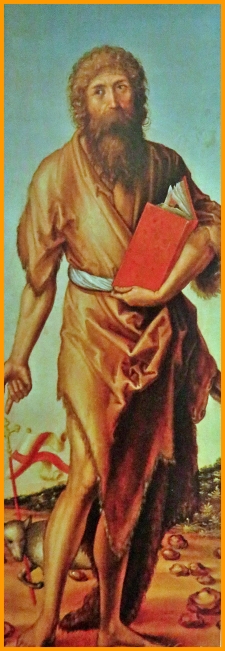
John the Baptist [Georg Pencz (1500-1550)]

Conquered and oppressed for centuries, the 1st century Jews were despondent. From its beginning in Genesis to its end in Malachi, their Scriptures were filled with prophecies of Israel’s deliverance and some 500 verses pointed to, described, or referenced the coming Messiah. Where was the descendant of David who would reward the righteous and punish the wicked? 1,000 years had passed since God’s covenant with David and 2,000 since His covenant with Abraham but God’s chosen people still weren’t free from their enemies and oppression. The Jews of Palestine easily could have sung the words, “Oh come, oh come, Immanuel, and ransom captive Israel.”  Where was he?

Where was the Messenger prophesied by both Malachi and Isaiah—the one who would prepare the way of the Lord and tell the towns of Judea. “Here is your God!”? And, where was the Messenger of the covenant?

The first Advent or coming of the Messiah occurred quietly the night Jesus was born in Bethlehem and only a few shepherds and some pagan astrologers took notice. When the first Messenger’s voice was heard, it was that of John the Baptist. Calling the people of Judah to repent, John told them the time of the promised “Messiah” was at hand. The promised Messiah, however, was not what the people expected.

Except for the 79 troubled years under the Hasmoneans, Judah had been governed by foreign Gentiles for over 600 years. It’s understandable that they longed for a king who would redeem them from foreign rule—a king who would sit on an earthly throne. But, with Jesus, the world got a king who redeemed them from sin and sits on a heavenly throne. Judah, however, wanted someone to liberate them from foreign rule, not sin! They were looking for the Lion of the tribe of Judah, not the Lamb of God and, because they expected a conqueror, they didn’t recognize the suffering servant God promised in Isaiah 53.

With that first advent or coming, God made a new covenant with His people—one prophesied in Jeremiah: “But this is the new covenant I will make with the people of Israel after those days…. I will put my instructions deep within them, and I will write them on their hearts. I will be their God, and they will be my people.…. And I will forgive their wickedness, and I will never again remember their sins.” [Jeremiah 31:33-34 (NLT)]

Jesus confirmed this new covenant while eating with His disciples in the upper room at His last Passover when, “He took a cup of wine and gave thanks to God for it. He gave it to them and said, ‘Each of you drink from it, for this is my blood, which confirms the covenant between God and his people. It is poured out as a sacrifice to forgive the sins of many.’” [Matthew 26:26-28]

In this new covenant, we receive the forgiveness of sins and God’s empowering Spirit to help us live lives full of self-giving (rather than self-serving) love. Jesus paid the ransom only God could pay and, by his death and resurrection, He freed us forever from Satan’s tyranny. Because the shedding of His blood paid our debt and purchased our forgiveness, we are secure as God’s adopted children. As the light of the world, Jesus banished hopelessness, rescued us from hell and unlocked the doors to heaven.

Our redemption only began when Jesus brought His light into the world. Death, disease, decay, and calamity remain and our enemy Satan continues to prowl. Jesus’ work is not finished and there still are Messianic prophecies to fulfill.

My servant grew up in the Lord’s presence like a tender green shoot, like a root in dry ground. There was nothing beautiful or majestic about his appearance, nothing to attract us to him. He was despised and rejected—a man of sorrows, acquainted with deepest grief. We turned our backs on him and looked the other way. He was despised, and we did not care. [Isaiah 53:2-3 (NLT)]

Copyright ©2023 jsjdevotions. All rights reserved.

OH COME, IMMANUEL (2) – THE SILENT YEARS

The Spirit of the Sovereign Lord is upon me, for the Lord has anointed me to bring good news to the poor. He has sent me to comfort the brokenhearted and to proclaim that captives will be released and prisoners will be freed. He has sent me to tell those who mourn that the time of the Lord’s favor has come, and with it, the day of God’s anger against their enemies. [Isaiah 61:1-2 (NLT)]

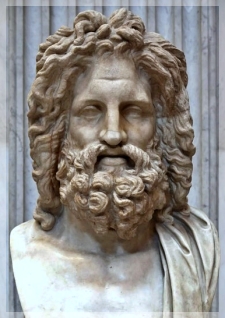
Greek god Zeus

While the Bible is silent about the centuries separating the Hebrew Scriptures from the New Testament, history is not. During those hundreds of years, Judah suffered. Although they were allowed to worship Jehovah under Persian rule, the pagan nation ruled them, required their political obedience, and demanded exorbitant taxes to support its king, court, armies, and self-serving foreign governors. When Persia weakened and fell to Alexander the Great in 331 BC, Judah simply traded one set of foreign rulers for another.

When Alexander died, the Greek Empire was divided among his generals. Ptolemy the 1st and his descendants ended up controlling the Jews. Under Ptolemaic rule, as long they maintained order and paid their taxes, Judeans were free to worship and Judaism thrived. Nevertheless, Judah was an occupied country and, for twenty years, the people were caught in a violent cross-fire between the Ptolemies and their rivals, the Syrian Seleucids. When the Seleucids defeated the Ptolemies, the Jews ended up with rulers who mercilessly persecuted them. The Temple was robbed, Jerusalem’s walls destroyed, Scripture burned, sacrifices to Jehovah banned, circumcision outlawed, Jews were forced to eat pork, and observing the Sabbath and feast days was prohibited. Statues of Greek gods and idols were placed in every town and those who refused to worship them were put to death.

The Jews must have wondered what became of God’s covenant with David as well as the one He made with Abraham promising that Israel would be a great nation, that He’d bless Abraham’s descendants and curse his enemies, and that Canaan would belong to his descendants. God even confirmed that same promise to Isaac and Jacob. But now, Israel’s promised homeland belonged to Greece and they were ruled and persecuted by their enemies. If anything, Abraham’s descendants were the ones cursed. Was Jehovah a liar?

When the Seleucid ruler, Antiochus Epiphanes, rededicated the Temple to Zeus and sacrificed a pig on the altar, Judah finally rebelled and a guerilla army was formed. Three years after the Temple’s desecration, the Syrians were defeated and the Temple recaptured and rededicated. Tonight is the first night of Hannukah which celebrates the eight-day miracle following that event. Even though the Temple was reclaimed, Judah remained a Syrian province and fighting continued between Syrian and Jewish forces for twenty more years.

Eventually, the constant fighting between the various Greek city-states weakened the Greek Empire and Judah’s independence was realized in 142 BC. Simon Maccabee became head of state and the Hasmonean dynasty was established. For the first time since the fall of Jerusalem in 586, a Jew sat on the throne but the prophecies hadn’t been fulfilled. He wasn’t from the tribe of Judah and David’s lineage, his realm didn’t extend from sea to sea, and peace did not reign. The Hasmoneans’ time in power was troubled by corruption, political infighting, terrorism, and violent clashes between the Pharisees and Sadducees. The nation became divided and weak.

After the Roman general Pompey defeated the Greeks, he had no trouble extending control over the divided nation of Judah and, in 63 BC, Rome conquered Jerusalem. Once again God’s chosen people were subservient to a foreign power. When the New Testament opens, rather than a descendant of David’s, it was Herod the Great, a descendant of Esau, who sat on the throne!

The people of Judah wondered when Jehovah would fulfill His promises. Would the time of His favor ever come? When would His anointed king avenge His people?

It is I, the Lord, announcing your salvation! It is I, the Lord, who has the power to save! … For the time has come for me to avenge my people, to ransom them from their oppressors. [Isaiah 63:1,4 (NLT)]

Copyright ©2023 jsjdevotions. All rights reserved.

OH COME, IMMANUEL (1) – PROMISES MADE

Rejoice, O people of Zion! Shout in triumph, O people of Jerusalem! Look, your king is coming to you. … I will destroy all the weapons used in battle, and your king will bring peace to the nations. His realm will stretch from sea to sea and from the Euphrates River to the ends of the earth. [Zechariah 9:9,10 (NLT)]

O come, O come, Immanuel, and ransom captive Israel
that mourns in lonely exile here until the Son of God appear.
Rejoice! Rejoice! Immanuel shall come to you, O Israel.

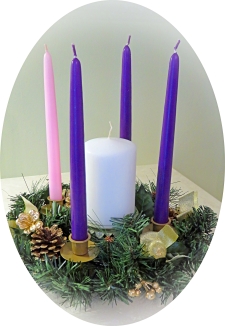
Advent wreathYesterday was the first Sunday in Advent—a season when Christians throughout the world prepare for the coming of Christ. For most of my life, I attended liturgical churches where, on each of the four Sundays in this season, we’d sing “Oh, Come, Oh Come, Immanuel” as the Advent candles were lit. Although this song is sung by 21st century Christians, its words easily could have been sung by 1st century Jews. Immanuel means “God with us” and, after centuries of being subject to pagan nations, they yearned for God to come and ransom their captive land.

They certainly wondered when God would fulfill the promise made to David 1,000 years earlier. Found in 2 Samuel 7, God promised David a secure homeland for the people of Israel; assured him of a never-ending dynasty; that one of his descendants would build God a house and sit on the royal throne; and that the descendant would have a Father/son relationship with God. God’s promise ended with these words: “Your house and your kingdom will continue before me for all time, and your throne will be secure forever.”

“Forever” meant the promise was eternal and absolute. With no restrictions placed upon the promise’s fulfillment, it didn’t depend on the obedience of David or Israel. This promise rested solely on God’s faithfulness and it was this promise that became the basis for Israel’s hope of a Messiah—the anointed one who would deliver Israel from God’s enemies.

No timeline for the fulfillment of God’s promise was given and, in the thousand years that followed, Israel was anything but free of enemies and opposition. The nation divided, its two kingdoms fought one another, the northern kingdom was exiled to Assyria, the southern to Babylon, and David’s earthly dynasty ended.

When the exiles returned after Persia defeated Babylon, no heir of David sat on the throne and Judah was just a tiny part of Persia’s vast empire. The Old Testament leaves Jewish history around 432 BC in the books of Ezra and Nehemiah with the Temple rebuilt and Jerusalem’s walls reconstructed and closes with the prophetic voices of Zechariah and Malachi.

Prophesying about Israel’s future, Zechariah spoke of a coming king and the restoration of God’s people. God promised, “I will strengthen Judah and save Israel; I will restore them because of my compassion. It will be as though I had never rejected them, for I am the Lord their God, who will hear their cries.” [10:6] The prophet Malachi relayed God’s promise of two messengers. The first would prepare the way for the Lord and the second, the one for whom the people longed, would be the messenger of the covenant—the Lord Himself.

Because only one page in our Bibles separates the book of Malachi from that of Matthew, we may not realize that about 500 years pass in the turn of that page. There were nearly five centuries of silence from God and His prophets until we hear a voice like that of Elijah, in the Judean wilderness, preparing the way of the Lord.

Look! I am sending my messenger, and he will prepare the way before me. Then the Lord you are seeking will suddenly come to his Temple. The messenger of the covenant, whom you look for so eagerly, is surely coming. [Malachi 3:1 (NLT)]

Listen! It’s the voice of someone shouting, “Clear the way through the wilderness for the Lord! Make a straight highway through the wasteland for our God!” [Isaiah 40:3 (NLT)]

Copyright ©2023 jsjdevotions. All rights reserved.


REACH FOR THE CROWN

Do you not know that in a race all the runners run, but only one receives the prize? So run that you may obtain it. Every athlete exercises self-control in all things. They do it to receive a perishable wreath, but we an imperishable. So I do not run aimlessly; I do not box as one beating the air. But I discipline my body and keep it under control, lest after preaching to others I myself should be disqualified. [1 Corinthians 9:24-26 (ESV)]

Like their parents, my youngest grands like to race and recently did this year’s 5K “Hot Chocolate” run. When Paul referred to running, he wasn’t referring to fun runs like theirs or a marathon like the one their parents ran nor were his boxing and wrestling references to the sports we know today. His allusions were to the Panhellenic games and Olympics which were well known throughout the Roman Empire in his day.

The modern Olympics are a secular event but the ancient Olympics were as much a religious festival as a sporting one. Held to honor Zeus, cheating was an offense to the gods and breaking any rule was a sacrilege. The athletes (along with their brothers, fathers, trainers, and judges) vowed before an enormous statue of Zeus that they’d observed all the rules of training for at least ten straight months and would use no unfair means to win. Just as those athletes did not want to dishonor Zeus, Paul did not want to dishonor Jesus with his “race” and he wrote of conducting himself honorably so he wasn’t disqualified.

Paul’s mention of self-control takes on deeper meaning when we consider the athletes’ rigorous training and the discipline and self-denial required to maintain their strict diet and demanding physical regimen for ten straight months. Some athletes even remained celibate during training. If they are going to finish their race, Christ’s followers need that same level of self-discipline, diligence, obedience, effort, focus, and full commitment to God and His kingdom but for a lifetime rather than ten months! Ancient athletes competed in the nude and barefoot on a sand surface. Even though we run our faith race in clothing, let’s remember that we are completely naked before God and nothing is hidden from Him!

The marathon is a modern Olympic event and the ancient foot races were much shorter, ranging from about 210 yards (the length of the stadium) to 2.8 miles (less than a 5K run). Such short races meant there was little chance to catch up if one fell behind. Since any race longer than the length of the stadium meant runners had to make a sharp 180-degree turn around a post, no runner wanted to be caught in the pack when making that turn! Runners had to start strong and push forward with all their might. While our faith race lasts longer, Christians need to strain forward and press on with that same intensity if we hope to reach our goal.

In a special race called the hoplitodromos, men ran from a quarter to a half mile while wearing a soldier’s  helmet, shield, and greaves which meant carrying an additional 17 to 30 pounds. Depending on the race’s length, runners made one to three sharp turns and they often fell when their shields got entangled at the post. Knowing about the hoplitodromos gives deeper meaning to the admonition in Hebrews 12 to “lay aside every weight” slowing us down.

The brutal combat sports had no rest periods, water breaks, or time limits and bouts could last hours. Fighters risked injury, disfigurement, and even death. Other than biting, eye gouging, or attacking the genitals, just about everything else was allowed. With no holds barred and no weight classes, a wrestling match usually ended with broken bones. Boxers wore just a pad of leather over their knuckles and a man could be hit when down. The winner wasn’t determined by points or decision but by the complete submission or incapacitation of his opponent. When Paul referred to boxing, his readers knew that the fighter who shied away from his opponent or punched at air would not survive!

Testing an athlete’s ability to endure pain as much as his fighting skill, the pankration combined wrestling and boxing. In this brutal bloody contest, even groin kicks and hits were allowed. When Paul wrote of wrestling against the forces of evil or fighting the good fight of faith, he wasn’t talking about fighting under the Queensbury rules. He was speaking of a no-holds-barred-knock-down-drag-out brawl in harsh conditions—a battle that ended only when the opponent—Satan—was defeated!

With no teams, weak athletes couldn’t be carried to victory by stronger members of the team. Even though Christians collectively are the Church and the body of Christ, each person is responsible for running their individual race and fighting their individual battles. In the end, like the ancient Olympic athletes, we alone are responsible for how we run the race and fight the fight.

Even though my grands weren’t the first to cross the finish line in their recent 5K, they received medals along with a huge cup of cocoa, a banana, Rice Krispie treats, chocolate dip and a cookie (along with a hoodie)—which is more than the ancient Olympic athletes got! Back then, there was only one winner in each event and all he received at Olympia was a crown of olive leaves. For the chance to get one of those perishable crowns, athletes spent nearly a year training for a race less than the one my grands ran or for a fight that probably left them injured or disfigured. Only victors were honored by their home cities. As for the others—regardless of how honorably they competed, they returned home with their heads hanging in disgrace.

As Christians, no matter how slowly we run or often we stumble and regardless of how battered we get or frequently we’re knocked to the ground, if we are still running the race and fighting the fight until our dying breath, we will have won! Instead of being called up to the judge’s seat to receive a perishable crown of leaves, we will be called up to receive an imperishable crown of righteousness from the Lord Himself! Rather than returning to our hometowns with heads hanging in shame because we weren’t the strongest or fastest, we will go to our heavenly home as victors in Christ!

Brothers, I do not consider that I have made it my own. But one thing I do: forgetting what lies behind and straining forward to what lies ahead, I press on toward the goal for the prize of the upward call of God in Christ Jesus. [Philippians 3:13-14 (ESV)]

I have fought the good fight, I have finished the race, I have kept the faith. Henceforth there is laid up for me the crown of righteousness, which the Lord, the righteous judge, will award to me on that day, and not only to me but also to all who have loved his appearing. [2 Timothy 4:7-8 (ESV)]

Copyright ©2023 jsjdevotions. All rights reserved.

ENDURANCE 

Therefore, since we are surrounded by such a huge crowd of witnesses to the life of faith, let us strip off every weight that slows us down, especially the sin that so easily trips us up. And let us run with endurance the race God has set before us. [Hebrews 12:1 (NLT)]

Last October, we went north to watch our son and daughter-in-law run the Chicago Marathon. This 26.2-mile race passes through 29 Chicago neighborhoods and the city’s streets were lined with spectators ringing bells, beating drums, holding signs, cheering, and applauding as the runners ran past. Like us, some were there to cheer on specific runners but many were there to encourage all who were running. When we saw Sam and Nina, they were nine miles into their run and had stripped off the jackets, gloves, and hats they’d been wearing earlier that morning. The whole scene reminded me of today’s verse from Hebrews in which the author likens Christian living to running a race with endurance.

Of course, when Hebrews’ author refers to witnesses, he’s referring to the heroes of faith mentioned in Hebrews 11 rather than spectators. Nevertheless, like marathon runners who can grow discouraged as the miles take their toll, we all need encouragement as we face trials and troubles in our faith journey. Rather than onlookers cheering from the sidewalk, it’s our brothers and sisters in Christ who encourage and pray for us in our challenges. Instead of discarding extra clothing or water bottles as do runners, we must strip off the hindrances and burdens—things like doubt, resentment, wealth, unbelieving friends, and guilt—that can cause us to stumble in our run.

When telling his readers to run their race with endurance, the writer used hupomoné, a Greek word describing someone who remains loyal to their purpose and refuses to veer off from it even when faced with great trials and suffering. Although running 26.2 miles is no easy task for even elite athletes, we saw runners of all ages, shapes, and sizes. There were blind runners with guides and several runners who were missing limbs. Some people raced in their wheelchairs while others raced while pushing loved ones in wheelchairs. Some runners wore tee shirts celebrating their recovery from cancer and one man, wearing a leg brace, wore a tee saying he’d broken his leg in February! Each runner faced their own unique challenges and, even at the 9-mile point where we stood, some were struggling to continue. Nevertheless, in spite of their individual trials, more than 98% of the day’s 48,944 runners had enough endurance to finish the race.

Little did we know when we saw the first runners speed by that we were witnessing the breaking of a world record. In only his third marathon, Kenyan runner Kelvin Kiptum completed the 26.2 miles in two hours (2:00:35)! His closest competition was nearly 4 minutes behind him and wasn’t even in view when Kiptum crossed the finish line! Kiptum certainly exhibited endurance in his run as did Sam and Nina in their four-hour run. But, when reading about the race later, I discovered the real meaning of hupomoné in a story about a woman named Gabriela who ran her seventh marathon that day.

Kiptum, Sam, and Nina had crossed the finish line by the time this 57-year-old passed the 9-mile mark. By then, the spectators had departed, the streets were being opened for traffic, and she had to continue her run on the sidewalk. Nevertheless, Gabriela persisted as she has for the last seven years. One year, it took her ten hours to complete the race and, by the time she got to the finish line, it wasn’t there and nobody remained to applaud her effort or award her a medal. Nevertheless, finishing dead last didn’t deter Gabriela and she continued to do the marathon. This year, the determined woman finished in time to get a medal and achieved her personal best with a 6:56:19! Her optimistic advice to other marathoners is simple: “Keep going, never quit, and maybe next year will be better!” To Gabriela, it’s not about being the fastest—it’s simply about finishing the race—even if it means finishing in last place! Although Kelvin Kiptum, Sam, and Nina exhibited endurance in their runs, it is Gabriela’s example that defines hupomoné.  She showed that it’s not about how fast we run; it’s about never giving up!

Motivation is enough to start the race but it is endurance that finishes it! Indeed, “let us run with endurance the race God has set before us.”

I have fought the good fight, I have finished the race, and I have remained faithful.  And now the prize awaits me—the crown of righteousness, which the Lord, the righteous Judge, will give me on the day of his return. And the prize is not just for me but for all who eagerly look forward to his appearing. [2 Timothy 4:7 (NLT)]

Copyright ©2023 jsjdevotions. All rights reserved.