CONCEIT AND COMPARISON (Galatians 6:2-5 – Part 3)

Carry each other’s burdens; that’s the way to fulfill the Messiah’s law. If you think you’re something when you are not, you deceive yourself. Every one of you should test your own work, and then you will have a reason to boast of yourself, not of somebody else. Each of you, you see, will have to carry your own load. [Galatians 6:2-5 (NTE)]
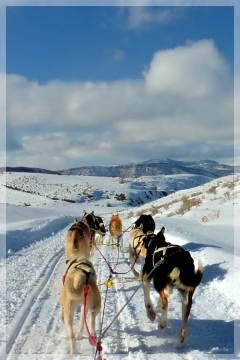
sled dogs mushingThese last few days, I’ve been discussing Paul’s instructions both to carry one another’s burdens and to carry our own loads. In between those two directives, we find a warning about the things that can prevent us from doing that: conceit and comparison.

Conceit is thinking we’re better than we are. In carrying another person’s burden, we must never think ourselves too good to help nor should we think ourselves morally or spiritually superior to someone in their weakness and need. Comparison can lead to competition as we try to determine who is the better Christian by carrying his load better! The Lord has given each of us a task and equipped us with a specific set of skills and spiritual gifts to achieve it. The load given us is our responsibility just as the tasks and talents given to others are theirs. Moreover, we must never compare our virtues with other’s imperfections (leading to pride) or our flaws with others’ accomplishments (leading to jealousy). If we’re going to compare ourselves to anyone, it should be to Jesus!

Oddly, this reminds me again of the Alaskan huskies I wrote about on Monday. Like us, each dog on the team has his own strengths (and weaknesses) and is assigned a position and a specific task that fit his attributes. Because they must follow the musher’s commands, set the pace, and keep the gangline taut, the lead dogs are the most intelligent on the team. No less important, however, are the swing dogs behind them. After the lead dogs make a turn, their critical task is to pull the sled in an arc that keeps the other dogs on the trail. They’re responsible for getting the musher and sled safely around curves and corners. Next are the team dogs—the brawn of the team who pull the sled and maintain the speed. Last, but hardly least, are the wheel dogs. Often the largest members of the team, as the first to take on the sled’s weight when starting out or going uphill, they play a crucial role in pulling and steering the sled.

Like us, each dog has a different skill set and position. Nevertheless, regardless of their position, no dog is more important than another and each is essential to the team. Just as the dogs’ responsibility is to the musher, ours is to God. The Apostle Paul tells us to examine ourselves (not others) to make sure we’re doing the work given to us by God. Like the sled dogs, we must be committed to doing our task well without conceit or comparison, Let us faithfully carry our own phortions and always be willing to carry one another’s baros.

Don’t think of yourselves more highly than you ought to think. Rather, think soberly, in line with faith, the true standard which God has marked out for each of you. As in one body we have many limbs and organs, you see, and all the parts have different functions, so we, many as we are, are one body in the Messiah, and individually we belong to one another. [Romans 12:3-5 (NTE)]

Copyright ©2021 jsjdevotions. All rights reserved.

EXCUSES – Matthew 15:14-30 (Part 1)

Don’t excuse yourself by saying, “Look, we didn’t know.” For God understands all hearts, and he sees you. He who guards your soul knows you knew. He will repay all people as their actions deserve. … People who conceal their sins will not prosper, but if they confess and turn from them, they will receive mercy. [Proverbs 24:12, 28:13 (NLT)]

Excuses—we all make them but I don’t think God much likes them.

giant swallowtail butterflyIn 1 Samuel 15, after Samuel confronts Saul for disobeying God’s clear commands regarding the Amalekites, Saul makes excuses—first by denying his sin, then by justifying his disobedience, and finally by blaming others. It is only after Samuel tells him the consequences of his sin—the loss of his kingship—that Saul reluctantly admits the truth. In contrast, we have Nathan confronting David regarding his sinful behavior with Bathsheba and Uriah. Immediately after the rebuke, David confesses. It would have been easy for David to blame Bathsheba for seducing him, Uriah for hampering his cover-up scheme, or Joab for his part in Uriah’s death, but he didn’t. Acknowledging his guilt, the repentant David confessed.

In Jesus’ Parable of the Three Servants (told in Matthew 15:14-30), the master entrusts each servant with a share of his wealth proportionate to their abilities. When the master returns, he asks them for an accounting. In my NLT Bible, the reports from the two servants who faithfully fulfilled their responsibilities take only sixteen words each. The third servant, the one who buried his master’s money, uses forty words to make excuses for his failings. In fact, by calling his master a harsh man, the servant tries to cast some of the blame back on him. Nothing in the parable, however, leads us to think the master was overly demanding, hard to please, or cruel. The negligent servant was just making excuses. I wonder what would have happened if he’d simply echoed David’s words to Nathan: “I have sinned against the Lord.” [2 Samuel 13:13]

One of the hardest things for us to do is admit our sins without making any excuses. We frequently deny, minimize, refuse responsibility, cast blame, defend our motives, justify our actions, or even rationalize that it couldn’t be wrong since everyone else does the same thing. Whether we call it a momentary lapse or an error of judgment, wrong is wrong and a sin is still a sin. A sincere confession takes only six words but most excuses take forty or more! Remember—when we honestly confess, it’s not as if we’re telling God anything He doesn’t know. We confess so that we know! It’s only when we honestly acknowledge our sins as sins that we can repent of them and get right with God.

In failing to confess, Lord, I would only hide you from myself, not myself from you. [Augustine]

If we claim we have no sin, we are only fooling ourselves and not living in the truth. But if we confess our sins to him, he is faithful and just to forgive us our sins and to cleanse us from all wickedness. If we claim we have not sinned, we are calling God a liar and showing that his word has no place in our hearts. [I John 1:8-10 (NLT)]

Copyright ©2021 jsjdevotions. All rights reserved.

EXPECT TROUBLE

alligator - CREWThen Jesus, full of the Holy Spirit, returned from the Jordan River. He was led by the Spirit in the wilderness, where he was tempted by the devil for forty days. [Luke 4:1-2a (NLT)]

We must not count temptation a strange thing. “The disciple is not greater than his master, nor the servant than his lord.” If Satan came to Christ, he will also come to Christians. [J.C. Ryle]

One of my favorite trails is an old tram road through a maple-cypress swamp. After a short walk on a crushed shell path and a boardwalk, we come to a slightly raised grassy trail originally used for logging. It is on this narrow path, with water on both sides of it, that we frequently encounter an alligator sunning himself on the trail! Since it’s a swamp, we should expect gators, snakes, raccoons, otters, and birds but seeing an alligator directly in our path is disconcerting. More alarming, however, was when I stepped out of the car at another park and found an alligator sunning himself just a few feet away from my feet! A gator in the swamp should be expected but one in the picnic area is an unpleasant surprise (as are the alligators that occasionally move into the lake by our home or rest amid the flowers at the botanic garden).

Following his baptism, Jesus was led by the Holy Spirit into the wilderness. Had He been led to a pagan temple or the 1st century equivalent of a bar or gentleman’s club, Satan’s presence could be expected but you’d think the wilderness would be a temptation-free zone. Perhaps that’s why the Spirit specifically led Him there to be tempted—it’s a vivid reminder that we don’t have to be where we don’t belong or doing what we shouldn’t be doing to have Satan come looking for us. Going where the Spirit leads is no guarantee that Satan won’t try to follow. Like alligators, he’s no respecter of boundaries and will show up where least expected.

In various mythologies, evil supernatural beings like vampires can’t enter your house unless they’re invited inside. Make no mistake about it, Satan doesn’t wait for an invitation and he’ll show up when and where we least expect him. Eve didn’t ask that serpent into the garden nor did the naïve woman expect the evil one to lie. But, he lied to her, he lied to Jesus, and he’ll lie to us.

Here in Florida, we don’t have to be walking in a swamp to encounter danger; wherever there’s brackish or fresh water, alligators should be expected. Whether or not we see them, they’re there. The same can be said for Satan—he’s lurking somewhere near and we don’t have to be in the equivalent of a swamp. Satan and alligators are opportunistic and both will quickly lunge at prey should the opportunity arise. The gator’s preferred method of hunting, however, is to patiently stalk his prey, silently sneak up, and then attack. Satan works much the same way. We must walk cautiously whether in a swamp or a garden because no place is truly safe. When we happen upon a gator, we keep our distance, turn around, and go the other way. When we encounter Satan, with the power of the Holy Spirit, like Jesus, we’ll stand our ground, rest on the Word of God, and send him packing.

As the most dangerous winds may enter at little openings, so the devil never enters more dangerously than by little unobserved incidents, which seem to be nothing, yet insensibly open the heart to great temptations. [John Wesley]

When the devil had finished tempting Jesus, he left him until the next opportunity came. [Luke 4:13 (NLT)]

There he told them, “Pray that you will not give in to temptation.” [Luke 22:40 (NLT)]

Copyright ©2021 jsjdevotions. All rights reserved.

TAKE THE WEIGHT OFF! (Hebrews 12:1-2 – Part 2)

What about us, then? We have such a great cloud of witnesses all around us! What we must do is this: we must put aside each heavy weight, and the sin which gets in the way so easily. We must run the race that lies in front of us, and we must run it patiently. We must look ahead, to Jesus. He is the one who carved out the path for faith, and he’s the one who brought it to completion. [Romans 12:1-2 (NTE)]

When Alexander the Great’s army was advancing on Persia, his troops were so weighted down by the spoils of war they’d taken in earlier campaigns that they moved too slowly to be effective in combat. At one critical point, it seemed that defeat was inevitable. As much as the greedy Alexander desired the silver, gold, and other treasures they’d pillaged, he ordered that all the plunder be thrown into a heap, burned, and left behind. Although his troops complained bitterly, they did as directed. Once unencumbered by the excess weight of their treasure, his army saw the wisdom of Alexander’s command when their campaign turned from impending defeat to victory. “It was as if wings had been given to them—they walked lightly again,” said one historian.

While I’m not sure of the truth of this story, it makes an excellent illustration of what the writer of Hebrews means when he tells us to lay aside every weight that slows us down. He didn’t say “some” of the weight; using the word pas, he meant every bit of it—the whole enchilada! Using the word ogkos, which meant a bulk or bulging mass, he was referring to any hindrance, burden or impediment. While there’s a specific mention of sin, other things can weigh as down, as well: disappointment, grief, shame, fear, worry, and material possessions. Not every weight, however, is as obvious. The excess weight in our lives could be seemingly harmless distractions like constantly checking email or social media, surfing the Internet, Netflix, TikTok, YouTube, gaming, shopping, or even crafting.

How do we know what’s hindering us? If it isn’t helping; it’s hindering! For example, Walt Disney was ruthless when it came to cutting anything from a film that interfered with its pace. One animator worked for nearly eight months on a four-and-a-half minute sequence in Disney’s Snow White. In it, the dwarfs made soup for Snow White and nearly destroyed the kitchen in the process. Disney liked the scene but he cut it—not because it was bad but because, rather than adding to the narrative, it slowed it down. If it didn’t help move the story forward, Disney knew it hindered!

As we begin this new year, now is a good time to ask God (and ourselves) what might be hindering our progress. Along with the multitude of “bad” things we need to lay aside in order to make room for all the great things God has in store for us, this also is the time to ask if there might be some “good” things that should be eliminated, as well.

Runners in the ancient Olympics ran naked and, while I’m not advocating stripping down quite that much, they knew what it meant to rid themselves of any extra weight! Let us follow their example and run the race God sets before us as if we’re in it to win it!

It is a most lamentable thing to see how most people spend their time and their energy for trifles, while God is cast aside. He who is all seems to them as nothing, and that which is nothing seems to them as good as all. It is lamentable indeed, knowing that God has set mankind in such a race where heaven or hell is their certain end, that they should sit down and loiter, or run after the childish toys of the world, forgetting the prize they should run for. [Richard Baxter (Puritan theologian)]

Don’t you know that when people run on the race-track everybody runs, but only one person gets the prize? Run in such a way that you’ll win it. Everyone who goes in for athletics exercises self-discipline in everything. They do it to gain a crown that perishes; we do it for an imperishable one. [1 Corinthians 9:24-25 (NTE)]

Copyright ©2021 jsjdevotions. All rights reserved.

ANOTHER SONG OF MOSES

Take to heart all the words of warning I have given you today. Pass them on as a command to your children so they will obey every word of these instructions. These instructions are not empty words—they are your life! By obeying them you will enjoy a long life in the land you will occupy when you cross the Jordan River. [Deuteronomy 32:46-47 (NLT)]

queen anne's laceYesterday I wrote about the Song at the Sea or Song of Moses found in Exodus 15. There is another psalm known as the Song of Moses. Found in Deuteronomy 32, it was sung forty years after that first one, when the Israelites were again preparing to enter Canaan. With Moses’ death imminent, God had appointed Joshua as the nation’s new leader. Knowing that the people would turn their back on Him once in Canaan, the Lord met with Moses and dictated the words to this song. God’s words were ones of warning and Moses was to teach this song to the Israelites as a reminder of the consequences of disobedience.
Starting with praise for their “glorious God…a faithful God who does no wrong” [32:4], it moved into a brief history of the people and God’s faithfulness in bringing them out of bondage. Taking a prophetic turn, it then spoke of Israel’s future ingratitude, idolatry and apostasy, God’s resulting anger that “blazes forth like fire and burns to the depth of the grave,” [32:22] and the judgments of abandonment, disasters, famine, and terror that would be inflicted on Israel by their enemies because of their sin.

Even though the song ends on a note of hope, with God promising vengeance on Israel’s enemies and salvation for his people, it’s a grim prophecy and one we know comes true. We know that God’s clear warnings in this song were not heeded any more than His promise of victory in the first song was believed. We know of Israel’s idolatry and alliances with pagan nations, the divided kingdom, the northern kingdom’s defeat and removal to Assyria, and Judah’s fall and exile to Babylon. We know that, when the Jews finally return to Jerusalem, they are ruled by a foreign nation and that the temple will be destroyed and Judah cease to exist in 70 AD. We know that nearly two thousand years will pass before Israel again is a nation.

God is not like a sadistic teacher who springs a final exam on us without warning. Throughout Scripture, like a good parent, He’s warned his children about disobedience and its consequences. Will we heed His words? Will we learn from those who’ve walked before us?

Be careful then, dear brothers and sisters. Make sure that your own hearts are not evil and unbelieving, turning you away from the living God. You must warn each other every day, while it is still “today,” so that none of you will be deceived by sin and hardened against God. For if we are faithful to the end, trusting God just as firmly as when we first believed, we will share in all that belongs to Christ. Remember what it says: “Today when you hear his voice, don’t harden your hearts as Israel did when they rebelled.” [Hebrews 3:12-15 (NLT)]

Copyright ©2021 jsjdevotions. All rights reserved.

THE SHADOW KNOWS

The Lord is watching everywhere, keeping his eye on both the evil and the good. [Proverbs 15:3 (NLT)]

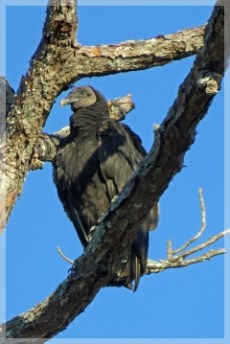
black vultureAfter eating the forbidden fruit, Adam and Eve hid from God in the garden. Did they think God wouldn’t know what they had done and come looking for them? Did they really think trees could hide them or that fig leaves would cover their transgressions? We’re not much different. I remember when my brother used his questionable artistic skills to crudely enhance the illustrations in one of my mother’s favorite art books. Thinking she’d never look for it, he then hid the defaced book at the back of the bookcase. She, of course, did find it; like God, parents have a way of discovering our misdeeds!

While Adam, Eve, and my brother failed at hiding their transgressions, sometimes people appear to be successful at covering theirs. I have a friend with a “lead foot” who brags of talking his way out of numerous speeding tickets with such heart-breaking stories (none of which are true) that policemen are usually comforting him by the end of his tale. We all have ways of trying to conceal our wrongdoings, deny culpability, or avoid punishment. A word of caution: while our methods may work with people, concealment, rationalization, misrepresentation, and deceit will never work with God.

In the introduction to The Shadow, an old-time mystery radio program, this question was asked: “Who knows what evil lurks in the hearts of men?” Said with an ominous laugh, the answer was, ”The Shadow knows!” At the end of each melodramatic episode, the Shadow’s eerie voice reminded listeners that, “The weed of crime bears bitter fruit. Crime does not pay…The Shadow knows!” While I have my doubts about the invincible crime fighter knowing what’s in our hearts, I know who does see the evil lurking there: God. We can hide, conceal evidence, lie, and deny responsibility, but we can’t fool God. We must never forget that He sees us all, all of the time.

Father, forgive us our sins and for foolishly thinking we can conceal them from you. Thank you for watching over us, for holding us accountable, and for your beautiful gift of forgiveness.

In failing to confess, Lord, I would only hide You from myself, not myself from You. [Saint Augustine]

O God, you know how foolish I am; my sins cannot be hidden from you. [Psalm 69:5 (NLT)]

Copyright ©2021 jsjdevotions. All rights reserved.