CONVERSATIONS WITH ESHA (1) – IT’S NOT ALL THE SAME

There may be so-called gods both in heaven and on earth, and some people actually worship many gods and many lords. But for us, there is one God, the Father, by whom all things were created, and for whom we live. And there is one Lord, Jesus Christ, through whom all things were created, and through whom we live. [1 Corinthians 8:5-6 (NLT)]

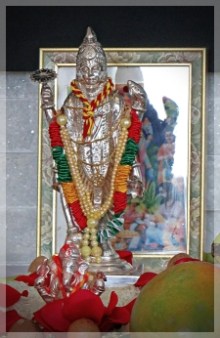
I recently met Esha while walking and we occasionally stop to chat. Although the bindi (mark) on her forehead told me she is a Hindu and the cross I wear told her I am Christian, our different faiths have not prevented us from talking about God and our beliefs. My younger son’s marriage brought many Hindus into our extended family and I try to understand this complicated religion.

When talking with my Hindu friends like Esha, they often say, “It’s all the same God.” While there is, indeed, only one God, the true God is not the one about whom they speak. Esha, like most Hindus, believes in one supreme god (often called Brahman) who manifests himself in a sort of hierarchy of lesser gods. Different Hindus worship different gods according to their own needs and perspective. One person may worship Ganesha while another Vishnu or Shiva.

Christians, however, believe that there is just one God and, as diverse as Christians are, we all worship the same God. While God is one in essence, He has three persons: God the Father, God the Son, and God the Holy Spirit. As Father, He is creator of all things, all-powerful and all-knowing; as Son, He is Jesus Christ: God in human form who lived on earth; and, as Holy Spirit, He is invisible, yet present in people and across the world. These three persons, however, are not lesser gods or worshipped apart from one another. While each personage is distinct and fully and completely God, they are simultaneously and eternally just one. Christians worship one true God who eternally exists as Father, Son, and Holy Spirit.

Although most Hindus see their supreme god as genderless, the lesser gods are viewed as being male, female, androgynous, or even gender-fluid. Although God presented as a man with Jesus’ incarnation, God is a spirit and, as such, has no bodily parts, size, or weight. In spite of speaking of God as “our Father” and referring to Him with male pronouns, God is genderless. That we’re created in God’s image doesn’t refer to His physical characteristics. We are made in God’s image because He endowed us with His spiritual characteristics—we have mind, intellect, emotions, will, and moral capacity.

My friend Esha often speaks of God being everywhere and we agree on that point. God is omnipresent. He is everywhere all at once—throughout the entire universe—from the deepest depths of the ocean to beyond the farthest star known to man! He fills every part of heaven and earth with His holy presence. While there is no place God does not inhabit, Esha and I disagree on exactly how God does that. As a Hindu, she believes that God is in everything and everything is in God. To her, God is some sort of transcendent force or energy. Since this energy inhabits the universe, the universe is God and anything found in the universe is God. As a result, if the universe should cease to exist, so would God.

While Esha and I agree on God’s omnipresence, we disagree on His nature. Rather than  some sort of supernatural force or energy, God is a being! While evidence of God’s character and magnificence is found in His creation, He is as distinct from His creation as a painter is from his painting. God doesn’t need the universe to exist. As its creator, God would exist even if the universe ceased to exist!

There is only one true God, but the gods of faiths like Hinduism, Islam, Jainism, Confucianism, and a host of other isms are not Him! That does not mean that we can’t be friends and respectful of one another’s beliefs. Let us remember that the same God made us and, regardless of our beliefs, we all are God’s children. Nevertheless, let’s never fall for the line that “It’s all the same God!” when it isn’t God at all.

And we know that the Son of God has come, and he has given us understanding so that we can know the true God. And now we live in fellowship with the true God because we live in fellowship with his Son, Jesus Christ. He is the only true God, and he is eternal life. [1 John 5:20 (NLT)]

Copyright ©2023 jsjdevotions. All rights reserved.

BROWSERS, CONSUMERS, & INVESTORS

And all the believers met together in one place and shared everything they had. They sold their property and possessions and shared the money with those in need. They worshiped together at the Temple each day, met in homes for the Lord’s Supper, and shared their meals with great joy and generosity—all the while praising God and enjoying the goodwill of all the people. And each day the Lord added to their fellowship those who were being saved. [Acts 2:44-47 (NLT)]

Galena ILOur cottage was near a charming little town known for its history, architecture, and resorts. A popular summer destination, its Main Street was flooded on weekends with tourists checking out the various stores. Chef I’s shop usually was bursting with browsers enjoying samples of his salsas, hot sauces, mustards, BBQ sauces, seasonings, rubs, marinades, fruit preserves, salad dressings, and dips. Although some tasters purchased a jar or two to take back home, they were just browsers. Having purchased something on a whim, they wouldn’t return unless they happened to come back to town.

Sometimes, we have people who are browsers in our churches. While they may pause for a sample, possibly show up on Easter and Christmas, or return when the mood hits, they are simply passing through. A church can’t count on the browsers to keep its doors open!

A little lunch café in our town was regularly patronized by Ron. Although it offered a wide variety of menu items, Ron went there specifically for their “Pig n’ Pineapple” sandwich (pork cutlet, pineapple slice, bacon, mozzarella, onion, and mayo). When the diner stopped serving it, Ron stopped patronizing them. Although he’d gone there regularly, he wasn’t a loyal regular. He didn’t care about the café—only the sandwich—and Ron never returned.

In our churches, we have people who are consumers like Ron. They find one thing they like but, rather than a sandwich, it may be the choir, music, youth group, vacation Bible school, worship time, food bank, or afternoon Bible study. If, for some reason, that thing changes, stops, or they no longer need or want it, like Ron, they disappear. For example, when our church met at the beach, some people regularly stopped and worshipped with us before taking their place in the sand immediately after service. Of course, we only saw them on good beach days and, when hurricane Ian closed the beach and dislocated us, they disappeared! We haven’t moved far, still meet outside, and have a lovely setting overlooking a lake but, since they were consumers who came more for the location than anything else, they didn’t follow us! Just as Ron abandoned a restaurant for lack of a sandwich, they abandoned our church for lack of a beach! They were no more committed to us than Ron was to that café. They were looking to be served rather than serve and to use rather than develop. A church needs more than consumers, it needs commitment.

My friend Maria started as a browser at a resort-wear shop known for its distinctive prints but, after trying on the clothing, she turned into a consumer. Even though everything wasn’t always to her liking, she became loyal to the brand. In fact, Maria became so committed to the store that she started working there. Taking advantage of her employee discount, she became a walking advertisement for the brand. Better than the discount, however, was discovering her knack for helping customers find the perfect outfit and her joy in doing so. Finding the business true to its core values of things like excellence, integrity, continued improvement, making the world a brighter place, and having fun in the process, Maria even took some of her earnings to purchase stock in it.

A church can’t survive on browsers and consumers—it needs people like Maria—people who become committed—who invest their time, talents, and finances in its success. Rather than mere consumers, they become participants, workers, and shareholders in their church. Like Maria, they may not find everything to be a perfect fit or design; nevertheless, they remain committed. Rather than discovering and employing hidden talents as did Maria, they can discover and use their spiritual gifts! Instead of receiving an employee discount or a dividend, people’s cups will overflow with spiritual blessings when they become shareholders in the church. Rather than being a walking advertisement for a clothing brand, they become walking advertisements for Christ and His church.

We are the “living stones” of God’s spiritual temple but we’re no more than bits of gravel when all we do is browse or occasionally stop and shop! Are you a browser, consumer, or a shareholder in God’s kingdom?

And you are living stones that God is building into his spiritual temple. What’s more, you are his holy priests. Through the mediation of Jesus Christ, you offer spiritual sacrifices that please God. [1 Peter 2:5 (NLT)]

Copyright ©2023 jsjdevotions. All rights reserved.

PUT AWAY YOUR CALCULATORS AND CALENDARS! (Revelation – Part 3)

blood moon - lunar eclipse

Photo Courtesy Dennis Johnson


However, no one knows the day or hour when these things will happen, not even the angels in heaven or the Son himself. Only the Father knows. [Matthew 24:36 (NLT)]

I couldn’t finish writing about Revelation without a caution to beware of end times predictions. If someone claims to have secret knowledge or frightens you with their teaching—abandon them ASAP! If Jesus didn’t know when the end would occur, I can guarantee that no mortal will!

Nevertheless, in 1994, radio evangelist Harold Camping predicted the world would end on September 6. When it didn’t, explaining his mistake was a mathematical error, Camping got out his calculator again and predicted the apocalypse would begin precisely at 5:59 PM, May 21, 2011. At that time, those chosen by God would ascend to heaven in the Rapture and cataclysmic earthquakes would rock the earth. After finding himself still here May 22, Camping admitted his understanding of God’s plan was slightly off but continued predicting the world’s end on October 21. When October 22 dawned, the evangelist confessed such predictions were “incorrect and sinful” and finally conceded that God might not tell people the date of Christ’s return. Camping’s apology, however, was little comfort to his followers who’d given up jobs and families to warn people of God’s coming judgment!

Because Joel 2:31 and Revelation 6:12 describe the sun growing dark and the moon turning red as blood before the great day the Lord arrives, we frequently read of “blood moon” predictions! A “blood moon” is a total lunar eclipse during which we see the moon slowly darken and change color from bright white to an orange-red coppery color. Not a rare event, one occurred last November and another will in 2025. On September 28, 2015, however, the fourth such lunar eclipse occurred within two years (a “tetrad event”) and coincided with the Jewish celebration of Sukkot. The concurrence isn’t surprising since Sukkot always occurs on the first full moon following the autumn equinox. Nevertheless, this caused some Christian evangelists to warn of imminent world-shaking events or that the Four Horsemen of the Apocalypse would reveal their missions. They didn’t! Nevertheless, we’ll probably hear more tribulation prophecies in 2033 when the last full moon in the tetrad occurs on October 8—the first day of Sukkot!

Because Revelation calls “666” the number of the Beast, people try to use 666 to predict the end. Although Revelation’s message shouldn’t frighten believers, many Christians in 17th-century Europe feared the world’s end in 1666. When the Great London Fire that year destroyed much of the city, they thought it the end of the world but, since it lasted only four days and left only ten dead, that wasn’t much of an end!

To determine the Beast’s name, some people use gematria (a system of assigning numeric values to letters or words in the Hebrew language). Although originally limited to Hebrew, they also use Greek, Latin, English, or whatever suits them. Depending on the language, whether first and/or last name is used, and the number of mathematical applications employed, just about any name can be made to total 666 (including Nero Caesar, Julius Caesar, Domitian, Vespasian, Caligula, Mohammed, Pope Benedict IX, Luther, Ronald Reagan, and Mikhail Gorbachev). Don’t fret about 666 or its meaning. We aren’t going to know the Beast’s identity until it appears but we’ll recognize the Beast by the mark!

Last week I wrote about the Episcopal priest Jeopardy contestant and his easy dismissal of Revelation. His dismissal is understandable. False prophecies, outlandish predictions, and farfetched interpretations of Revelation bring shame and ridicule to John’s vision and, by extension, to Jesus. False rapture and end-of-the-world predictions do more than embarrass and discredit the false prophet, they dishonor the Lord and the Christian doctrine of Christ’s return!

It is only by studying Revelation that we can maintain both our hope in the return of Jesus and dispel the doomsday delusions of today’s false prophets. Let us remember that God doesn’t want us to speculate about the timing of His return; He wants us to remain faithful, righteous, watchful, and ready. In the meantime, rather than being sign watchers, we should be disciple makers!

So when the apostles were with Jesus, they kept asking him, “Lord, has the time come for you to free Israel and restore our kingdom?” He replied, “The Father alone has the authority to set those dates and times, and they are not for you to know. But you will receive power when the Holy Spirit comes upon you. And you will be my witnesses, telling people about me everywhere—in Jerusalem, throughout Judea, in Samaria, and to the ends of the earth.” [Acts 1:6-8 (NLT)]

Copyright ©2023 jsjdevotions. All rights reserved.

LITERAL OR FIGURATIVE (Revelation – Part 2)

Above all, you must realize that no prophecy in Scripture ever came from the prophet’s own understanding, or from human initiative. No, those prophets were moved by the Holy Spirit, and they spoke from God. [2 Peter 1:20-21 (NLT)]

columbineThe Apostle Peter tells us that true prophecy isn’t a product of the prophet—prophets only speak God’s revelation. Directed by the Spirit, their words communicate the message the Lord wants sent. Sometimes, however, prophecy is difficult to understand and interpretations of Revelation go from one extreme to the other. Some, like that priest in Monday’s devotion, dismiss it as completely symbolic. To them, Revelation is an allegory about the conflict between good and evil with good winning in the end. On the other extreme, we find obscure theories, convoluted correlations, and implausible explanations of every symbol and metaphor along with sensationalism and unchecked speculation connecting Revelation to current events.

A simple rule of thumb in hermeneutics (the interpretation of Scripture) is, when it obviously is literal, we should accept it as such. The key to understanding Revelation is to interpret it as literally (and simply) as possible. Extra meaning shouldn’t be given to words or phrases if they can be understood as written. For instance, we shouldn’t assume 1,000 years means anything else. Moreover, when a description is of something we’ve never seen, such as cherubim or heaven, we shouldn’t immediately dismiss it as totally figurative. Nevertheless, we can’t read Revelation as we might a newspaper. When a passage clearly uses figurative language or obviously is symbolic, we should interpret it as such.

At the same time, we should be careful about finding extra meaning in John’s figurative descriptions. For example, Revelation 4:3 describes the One sitting on the throne “like a jasper stone and a sardius in appearance; and there was a rainbow around the throne, like an emerald in appearance.” Although the word “like” clearly indicates a simile, many commentators ascribe extra meaning to the descriptions, e.g. the stones allude to the high priest’s breast plate, the red sardius signifies God’s righteous anger or Jesus’ blood, the green denotes God’s mercy and grace, or the rainbow means God’s won’t depart from His covenant with Israel. To understand John’s words, we don’t need to get bogged down in possible symbolic meanings when what we’re being told clearly is that there was a spectacular radiance to the One (God) sitting on the throne.

Revelation, like other apocalyptic prophecy, often has bizarre imagery. John describes such things as locusts wearing armor with wings that roared like an army of chariots and horses with heads like lions with fire, smoke, and burning sulfur coming from their mouths. While these horrifying things may have been living demonic creatures, they also could be weaponry like helicopters, drones, missiles, or tanks. Prophecy describes the future and, not knowing what he saw, John may have used metaphors to describe their size, power, and noise. Whatever he saw was unfamiliar, frightening, and capable of mass destruction and his imagery conveys that perfectly.

While meant for all believers, John specifically wrote to the seven churches in Asia and many of his allusions make sense in historical context. When he describes a woman sitting on seven hills, his 1st century readers easily would have known he was referring to Rome (a city built on seven hills). Moreover, because concepts and symbols from the entire Bible echo throughout Revelation, John’s allusions must be put in scriptural context. Without ever making a direct quote, 278 of Revelation’s 404 verses make at least one allusion to the Old Testament. For example, after one of the elders points out “the lion from the tribe of Judah, the Root of David,” John sees a “Lamb, standing as if slaughtered.” John’s original readers easily would have recognized Messianic descriptions found in Isaiah and Genesis.

With events taking place simultaneously in heaven and on earth, Revelation doesn’t follow a strict chronology and can be challenging to follow. With its wars, famine, and disasters, it can be distressing and, with its allusions and figurative language, it can be confusing. But, as God’s word, Revelation can’t be ignored or treated as fictional fantasy.

Because Revelation was written for the servants of Christ (that’s us), it seems unlikely that God expected us to have theology degrees to understand its message. Nevertheless, understanding Revelation is easier with a good study Bible, a commentary or two, and a study guide or group, along with prayers for the Spirit’s guidance.

Revelation shows us God’s amazing patience as He gives mankind opportunity after opportunity to repent and plenty of reasons to do so! For those who choose not to believe, Revelation is a book of dire warning but, for those who believe, it is a beautiful book of hope. Spoiler alert—Jesus wins!

The big picture of Revelation is clear: Jesus returns, people must be ready, evil is defeated…. With the rest of the details, there is room for disagreement. [Scott McConnell]

Then the angel said to me, “Everything you have heard and seen is trustworthy and true. The Lord God, who inspires his prophets, has sent his angel to tell his servants what will happen soon.” [Revelation 22:6 (NLT)]

Copyright ©2023 jsjdevotions. All rights reserved.

WHATEVER IT TAKES

But you will receive power when the Holy Spirit comes upon you. And you will be my witnesses, telling people about me everywhere—in Jerusalem, throughout Judea, in Samaria, and to the ends of the earth. [Acts 1:8 (NLT)]

Church of Columba - Spiez

“We will do anything short of sin to reach those who don’t know Christ,” was frequently said by the pastor of the mountain church at which we worshiped during our Colorado winters. His passionate words reflect the sort of zeal that mountain church has for reaching the unreached.

In Mark’s gospel, we find four men willing to do anything (short of sin) to bring someone to Christ. Jesus was in Capernaum where he previously healed the sick and demon-possessed. Upon hearing the news that Jesus had returned, these four men placed their paralyzed friend on a mat and carried him to the house where the Lord was preaching. Unfortunately, but the house was so mobbed that they couldn’t even get in the door! Unwilling to let a crowd of people keep their sick friend from Jesus, the men carried him up to the roof. While they didn’t sin, I’m not so sure they didn’t break the law when they dug up the thatch and dry mud, removed the tiles, and made a hole in the roof through which they lowered their paralyzed friend to Jesus’ feet.

Timothy certainly went “the extra mile” when the young man underwent circumcision just to become a more effective evangelist to the Jews. In obedience to the Spirit’s direction to go south to the Gaza road, Philip actually walked an extra 42 miles before even getting to that desert road and finally meeting the Ethiopian! His miles, however, pale in comparison to Paul’s! New Testament scholar Dr. Eckhard Schnabel estimates that Paul logged over 15,500 evangelism miles before arriving in Rome in 60 AD. 6,800 of those miles were by sea and another 8,700 were on land (presumably done on foot). Along with the blisters and callouses resulting from all that walking, Paul endured things like imprisonment, shipwrecks, being adrift at sea, whippings, beatings, imprisonment, and being stoned along with bandits, hunger, thirst, bad weather, and attacks from Jews, Gentiles, and false believers. Nevertheless, even when imprisoned, the Apostle relentlessly continued to spread the gospel of Christ in his letters.

Even after Herod ordered James’ death “by sword,” the first believers never stopped doing all they could to bring people to Christ. When Stephen was called before the high council, he knew his words would provoke them. Nevertheless, he courageously witnessed for Jesus until his last breath. Although Peter and John were beaten, imprisoned, and told to stop preaching, they continued to lead people to Jesus. The early church was determined to bring people to the Lord.

Jesus gave us a “great” commission (not a small one) when he told us to go into the world and preach the good news of God’s grace and love. Rather than a suggestion, that was an order and meant to be obeyed! When fulfilling His command, we’re not likely to endure things like circumcision, beatings, imprisonment, bandits, shipwreck, breaking through rooftops, or martyrdom. We don’t have to log over 15,000 travel miles or even walk 42 miles out of the way. Philip didn’t go far to bring Nathanael to the Lord and the woman at the well just ran back into town to bring people to Jesus!

The first believers were willing to do whatever it took to bring people to the Lord. Are today’s believers willing to do the same? Are we willing to leave our own personal comfort zone to bring light into darkness? Great things happened when Andrew invited his brother (Simon Peter) to meet Jesus. Are we even willing to ask our neighbors to church?

Evangelism is not a professional job for a few trained men, but is instead the unrelenting responsibility of every person who belongs to the company of Jesus. [D. Elton Trueblood]

Jesus came and told his disciples, “I have been given all authority in heaven and on earth. Therefore, go and make disciples of all the nations, baptizing them in the name of the Father and the Son and the Holy Spirit.” [Matthew 28;18-19 (NLT)]

Copyright ©2023 jsjdevotions. All rights reserved.

WAS IT HYPOCRITICAL? 

Timothy was well thought of by the believers in Lystra and Iconium, so Paul wanted him to join them on their journey. In deference to the Jews of the area, he arranged for Timothy to be circumcised before they left, for everyone knew that his father was a Greek. [Acts 16:2-3 (NLT)]

green heronIn Acts 16, we meet Timothy, the son of a Greek Gentile and a devout Jewish woman. Paul probably met him several years earlier when he preached in Lystra or Derbe. Both Timothy and his mother were Christ followers and it was from his mother that Timothy became knowledgeable in the Hebrew Scriptures. By the time Paul returned to Lystra, Timothy was a young man who was well-regarded by the churches in Lystra and neighboring Iconium. Seeing his potential, Paul asked the young man to join him on his second missionary journey. Before departing, however, Paul asked Timothy to be circumcised.

Considering the Apostle’s vehement disagreement with the legalists in Antioch, his appeal to the Jerusalem Council, and his letter to the Galatians that clearly stated his opposition to making circumcision a requirement for salvation, Paul’s strange request seems the height of hypocrisy to a 21st century Christian. It certainly did to me until I considered Paul’s request from a 1st century Jewish point of view.

Making the transition from an exclusive group united by blood, language, Torah, tradition, and circumcision into a group that was expansive and inclusive could not have been easy for the Jewish believers. Mosaic law purposely set apart Israel from the pagan nations around them. The Torah regulated what could be eaten, how it was to be butchered, what could be done on the Sabbath, and designated what was clean and unclean. Unlike Gentiles, Jews had mezuzahs on their doorposts, were to recite the Shema twice a day, and say grace after meals. Most important, as the outward physical sign of the eternal covenant between God and Abraham, circumcision was seen as essential to being one of the covenant people.

Finding it difficult to set aside their Hebrew heritage, most new Jewish believers continued to observe Jewish customs and laws after becoming followers of Christ. A problematic group were the legalists and Judaizers with their false doctrine that circumcision and observance of the Law were necessary for salvation. Other new believers, however, were separatists. While not insisting that Gentiles observe the law, they continued to faithfully observe it themselves and distanced themselves from Gentile believers. There also were traditionalists among these new believers. Although they associated with Gentile believers, they continued to observe the familiar customs of Judaism. Even Paul, who mixed with and preached to Gentiles, continued to live as an observant Jew and urged others to “remain as you were when God called you.” [1 Co. 7:17] For Paul, being a good Christian didn’t mean he had to be a bad Jew!

As a believer, Timothy was saved, so Paul’s request wasn’t a matter of his salvation; it was a matter of Timothy’s ability to evangelize. The young man was the product of a mixed marriage—something frowned upon by Jews. Although his father was a Gentile Greek, his mother was a Jew which meant Timothy was a Jew and, as a Jew, he should have been circumcised! Without this rite, other Jews would view Timothy as an apostate Jew or a Gentile. Paul often preached in synagogues where neither apostate Jew nor Gentile would be welcome. Paul’s request wasn’t theological; it was pragmatic. Out of dedication to his calling and respect for the Jews, the young man was circumcised so that he could witness for Christ in the synagogues. Timothy became a “Jew” to the Jews so that he could bring the Jews to Jesus!

Even though I am a free man with no master, I have become a slave to all people to bring many to Christ. When I was with the Jews, I lived like a Jew to bring the Jews to Christ. When I was with those who follow the Jewish law, I too lived under that law. Even though I am not subject to the law, I did this so I could bring to Christ those who are under the law. When I am with the Gentiles who do not follow the Jewish law, I too live apart from that law so I can bring them to Christ. But I do not ignore the law of God; I obey the law of Christ. [1 Corinthians 9:19-21 (NLT)]

Copyright ©2023 jsjdevotions. All rights reserved.