
Jesus told him, “I am the way, the truth, and the life. No one can come to the Father except through me.” [John 14:6 (NLT)]
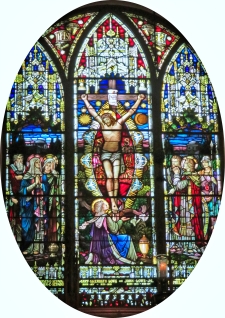 Pope Francis recently visited Singapore and, when speaking to young people at an interfaith meeting, he is reported to have said “All religions are paths to God.” After comparing the various religions to “different languages that express the divine,” he added, “There is only one God, and each of us has a language to arrive at God. Some are Sheik, Muslim, Hindu, Christian, and they are different paths [to God].” While the pontiff was encouraging interfaith dialogue, his words are troubling. I will not presume to know the Pope’s meaning or intention with his comments. Nevertheless, I find it important to address how the world understood the pontiff’s message.
Jesus is not one of many ways to God; He is the one and only way! He spoke of Himself as the only path to heaven. He said His words are life, called Himself the ”bread of life,” and promised that His believers would have eternal life. Jesus is the only one who came down from Heaven, lived a perfect sinless life, fulfilled the Law and the Prophets, sacrificed Himself for mankind’s sins, and conquered death! As Christians, we believe salvation comes through Christ alone and that the Bible teaches us everything we need to know about God. At best, all any other religion offers is an incomplete, inaccurate, and deceptive understanding of God and His creation.
From where we live, there are no direct flights to my son’s home in San Diego. Although we have a choice of routes and airlines, we must change planes in Atlanta, Houston, Dallas, Charlotte, Chicago, or Washington. While there are different ways to get to California, if we stay in a connecting city, we’ll never get there. If we hope to see our son, we need to board the right plane—the one headed for San Diego. If, by mistake, we get on a plane going to Paris, we’d land more than 5,600 miles away from our son’s home. But, if we landed in Tijuana, we’d only be 20 miles away. Nevertheless, whether 5,600 miles or only 20 away from our destination, we wouldn’t find our son waiting there to welcome us to his home! While some flights might get us close to our journey’s end, there only is one correct place to land! It’s said that “close only counts in horseshoes and hand grenades.” That’s important to remember when it comes to both airports and God! Unless we get on another plane headed for San Diego, we won’t be seeing our boy. If we want the Son to welcome us to His heavenly home, we eventually must take the only path that leads to Him!
If we believe Christianity’s claims are true, then the claims of other religions must be wrong wherever they contradict it—and there are plenty of contradictions. For example, Islam’s condemnation of the Trinity and its rejection of the deity of Jesus, His death, resurrection, ascension, and atonement for our sins along with its denial of His Holy Spirit and the salvation of His believers don’t seem remotely close to our path. Islam seems more like deliberately heading to Paris when you’re supposed to be going west to San Diego!
While we may find wisdom and inspiration in Hinduism’s Bhagavad Gita, the Buddha’s words in the Dhammapada, the Chinese philosophy of the Tao Te-Ching, and in the rabbis’ discourse in the Talmud, we know those texts are not sacred and the words in them are man’s, not God’s. Christianity doesn’t allow for a mingling of faith in other philosophies or gods.
Saying we all worship the same God is what David Limbaugh calls “intellectual laziness.” The claim that all paths can lead to God is a statement we should never make or accept. It’s an insult to Jesus. As God incarnate, He came, suffered, and died on the cross for our sins—something totally unnecessary were there any other way to God. Whether you call them languages or paths, all religions do not lead to God. Then again, no “religion” leads to God; only faith in Jesus Christ does!
Jesus is not one of many ways to approach God, nor is he the best of several ways; he is the only way [A.W. Tozer]
 Several years ago, I purchased a beautifully drawn coloring book featuring scenes from the Colorado mountain town that had been part of our lives for thirty-five years. Since it was a gift for one of my grands, I asked the artist to sign the book. She added these words to her signature: “Don’t be afraid to color outside the lines!” Was the artist’s advice limited to her book or was it about something more?
 Because most of the disciples hailed from Galilee where fishing was fundamental to the area’s economy, Jesus’ parable comparing the Kingdom of Heaven to a fishing net gave them a beautiful visual image of the Kingdom when the final judgment occurs. Since we’re not Galilean fishermen, however, our picture of a fishing net might be like the hand-held ones used for trout or bass fishing. Jesus, however, used the word sagéné, meaning dragnet; its English equivalent is seine.
 Today’s verses are from the Tree of Life Version (TLV) that was produced by a diverse team of Christian and Messianic Jewish scholars. With the possible exception of the book of Job, all the Bible’s writers were Jews and Jesus was a Hebrew-speaking Jewish rabbi. No matter how good the translation, there are times English doesn’t capture the fullness of the original words used and this translation embraces the rich Hebrew roots of Christianity. To help the reader better understand the intent of the original manuscripts, some original Hebrew names, like Adonai (Lord) and Elohim (God), Ruach ha-Kodesh (Holy Spirit), and Messiah Yeshua (Jesus Christ) were used and some Hebrew terms, like shalom, amen, hineni, matzah, and mikveh (ritual bath), were restored. Fortunately, this translation offers a glossary for its Gentile readers.
 On June 19, Louisiana’s Governor Jeff Landry signed legislation requiring all public K-12 classrooms and state-funded universities to display a poster-sized version of the Ten Commandments in “large, easily readable font” in every classroom next year. As expected, a lawsuit has been filed to block what some say is an unconstitutional requirement. I’ll leave the arguments about civil liberties and constitutional law to the lawyers and courts; Louisiana’s law is troubling for other reasons.
 Devotions of the Heart