
Then Herod, when he saw that he had been tricked by the wise men, became furious, and he sent and killed all the male children in Bethlehem and in all that region who were two years old or under, according to the time that he had ascertained from the wise men. [Matthew 2:16 (ESV)]
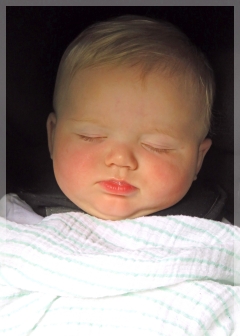
Ruthless and paranoid about possible usurpers to his throne, King Herod the Great killed three of his sons, several uncles and cousins, and one each of his wives, mothers-in-law, and brothers-in-law to protect his regime and keep his crown. Having been crowned “King of the Jews” in 40 BC by the Roman Senate, it’s not likely a man like that would be willing to share his title with an infant the Magi described as “the king of the Jews!” When Herod realized he was duped by the Magi and had no way to identify the infant king, the merciless man safeguarded his reign by ordering the wholesale slaughter of all Bethlehem’s boys two and under.
While there is no historical evidence of this slaughter, the story is plausible. It’s easy to believe that Herod, the Kim Jung-un/Joseph Stalin/Mao Zedong of the ancient world, would order the death of innocent children. When he was dying, the heartless king hatched a diabolical plan to gather all of the Jewish leaders and execute them upon his death. By doing this, he guaranteed that, instead of people rejoicing at his death, the entire nation would mourn. Massacring innocent children was right up his alley!
Perhaps, because the early church grossly inflated the number killed by Herod’s men to between 14,000 and 144,000, historians question its historicity. Bethlehem’s population at the time was somewhere between 300 and 1,500 so there probably would have been no more than two dozen children under the age of two (about half being girls). While the death of even one child is a tragedy, the deaths of 12 to 15 baby boys in a time of high infant mortality probably wasn’t newsworthy. Those innocent children may have gone unnoticed by ancient historians but they had names and mothers and their loss was noticed by all who knew them.
The first Christian martyr wasn’t Jesus on Calvary or even the sainted Stephen; it was a nameless baby boy in Bethlehem. St. Augustine called these murdered children the “flowers of the martyrs” and “the first buds of the Church killed by the frost of persecution,” while pointing out that “they died not only for Christ but in His stead.” They died for the one who would die for all!
Around 485 AD, Herod’s massacre of these innocent children was commemorated in a feast day called Holy Innocents or Childermas. For the Western church, yesterday was this often-overlooked feast day. Just three days after singing “All is calm, all is bright,” we’re singing of Herod slaying children. Instead of picturing Mary peacefully holding Jesus in her arms, we picture Herod’s soldiers tearing babies out of their mother’s arms. This day is the dark side of Christmas. It serves as a poignant reminder of the vulnerability of the innocent and the depths of human cruelty; it is a day to reflect on the sanctity of all human life.
As we recall Herod’s victims, we thank God for the children with which we have been blessed. May we also remember the holy innocents of the twenty-first century. Not just children, but all who are trafficked or abused, refugees or homeless, hungry or disenfranchised. Today’s holy innocents are all who are victimized, poverty-stricken, vulnerable, or casualties of war. Both young and old, all are God’s precious children. How can we protect them from the Herods of today?
We remember today, O God, the slaughter of the holy innocents of Bethlehem by King Herod. Receive, we pray, into the arms of your mercy all innocent victims; and by your great might frustrate the designs of evil tyrants and establish your rule of justice, love, and peace; through Jesus Christ our Lord, who lives and reigns with you, in the unity of the Holy spirit, one God, for ever and ever. Amen [Collect for Holy Innocents from the Book of Common Prayer]
Then was fulfilled what was spoken by the prophet Jeremiah: “A voice was heard in Ramah, weeping and loud lamentation, Rachel weeping for her children; she refused to be comforted, because they are no more.” [Matthew 2:17-18 (ESV)]
Copyright ©2025 jsjdevotions. All rights reserved.

 When writing about nitroglycerin recently, I realized there’s something else in our lives much like this strange chemical that is both helpful and harmful. Like nitroglycerin, man’s capabilities are a dichotomy between good and evil, constructive and destructive, and beneficial or detrimental. The same mind capable of creating a vaccine that saves thousands of lives is capable of creating a nuclear bomb that can take those lives. James speaks of this incongruity when writing about the way we use our words, “We use our tongues to praise our Lord and Father, but then we curse people, whom God made like himself. Praises and curses come from the same mouth! My brothers and sisters, this should not happen.” [3:9-10]
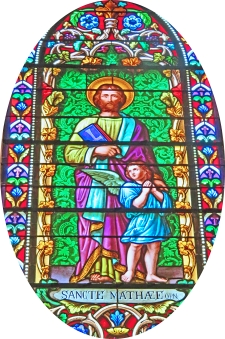 Proof of the truth is no substitute for our faith; nevertheless, it is important to know the truth of what we believe. At some point, we will ask ourselves how we can believe the validity of what we’re reading in our Bibles. Fortunately, we have Christian apologists to help us see its truth. Rather than offering apologies for the wrongs committed by evil people in the name of Jesus, apologists share the objective reasons and evidence that Christianity is true and should be believed. The Apostle Paul was probably the first apologist when he showed that Jesus’ fulfillment of Scripture’s prophecies proved He was the Messiah. Paul knew that the truth could stand up to scrutiny and it still does today. As for those prophecies: by conservative estimate, Jesus fulfilled at least 300 prophecies while on earth.
 I came across an article questioning whether we have to believe certain things to be a Christian or is it enough just to trust God. The author believed that Christians don’t have to “assent intellectually” to the facts of traditional Christian teaching or agree with the Christian creeds. “Faith” to the author is simply placing one’s confidence in “Spirit” (not the Holy Spirit) and following Jesus’ teaching is more important than believing certain things about Him. Having nothing to do with dogma or creeds, Christianity was seen as a wisdom tradition and way of life rather than a belief. Claiming they were “man-made” and date from the 4th century and Emperor Constantine, the author believed Christianity’s creeds should be disregarded.
 Those four verses are some of the most confusing ones in Scripture. Who are the sons of God, the daughters of men, the Nephilim, and how did they come to be mighty men (or as some translations say giants)? The Nephilim appear to be a race of formidable beings associated with extraordinary physical stature and fearful reputation. Mentioned briefly twice in Scripture, we find them in Genesis, just before the flood, and again in Numbers (post flood). Nephilim comes from naphal, meaning to fall. One school of thought holds that the “sons of God” were fallen angels who mated with human women (the daughters of man) and produced a hybrid race of giants called Nephilim. The apocryphal book of Enoch claims these offspring were giants standing thee hundred cubits (450 feet) tall. They had such insatiable hunger that they ate humans as well as one another. Having taught humans medicinal magic, astrology, divination, and other sinful practices, it was their evil ways that caused the flood! Written around 300-100 BC, the book of Enoch never was accepted as part the Hebrew Scriptures and never has been in the Christian canon.
 Devotions of the Heart