ADAPTING AND CONFORMING

If the world hates you, remember that it hated me first. The world would love you as one of its own if you belonged to it, but you are no longer part of the world. I chose you to come out of the world, so it hates you. Do you remember what I told you? “A slave is not greater than the master.” Since they persecuted me, naturally they will persecute you. And if they had listened to me, they would listen to you.” [John 15:18-20 (NLT)]

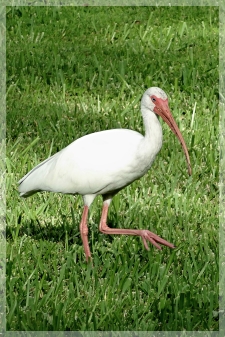
A century of dike-building, agricultural development, and population growth has destroyed much of Florida’s wetlands and threatened the survival of dozens of animals like Florida panthers, Snail Kites, and Wood Storks. The White Ibis, however, is an exception. Having adapted to the new urban landscape, large groups of ibis happily graze the lawns of subdivisions, parks, and golf courses. They’ve found it easier to poke at the soil for a predictable buffet of grubs, earthworms, and insects than to forage in the remaining wetlands for aquatic prey like small fish, frogs, and crayfish. Once wary of humans, these urbanized ibis pay little or no attention to people as they follow one another across our lawns.
While conforming to a world of diminishing wetlands may be beneficial to the ibis, the Bible makes it clear that Christ’s followers are not to conform to the world around us. As the salt of the earth, we are to bring a distinctive taste, look, and smell to the world rather than take on the flavor of the world in which we live. Nevertheless, like the ibis, Christ’s church appears to be acclimating and adjusting to the world surrounding it.

In an effort to fill the pews and keep the coffers filled, we’re seeing His church adapting and conforming to today’s culture. Social media, politics, fashion, popular music, celebrities, advertisements, movies, television, politics, and politicians seem to be infiltrating and influencing our attitudes, worship, instruction, and doctrine. We’re beginning to shape values, use words, understand events, and determine right and wrong through the eyes of the world rather than the Bible. Jesus, however, was anything but popular, politically correct, or entertaining and His Church was never meant to be cool, trendy, fashionable, or fun to an unbelieving world; it is meant to be like Christ!

Just as the Israelites were not to succumb to the influence of the pagan nations around them, we are to remain apart and distinct from the corrupting influences of the world around us. While sinners should be welcome in the church, sin should not. Nevertheless, afraid of offending anyone—we creatively reinterpret or ignore Scripture, turn a blind eye to sin, or refuse to speak of sin at all. Are we seeking the world’s approval or God’s?

If we go back to the beginning of the Church, it’s estimated there were only about 1,000 Christ followers in the Roman Empire. By AD 100, however, there were about 7,500. By AD 150, there were 40,000 believers and, by 350, 34 million people (more than half the Roman Empire) followed Christ! Although the early church grew by about 40% each decade, the numbers are going in the opposite direction today. According to the Pew Research Center,  90% of Americans identified as Christian just 50 years ago but, in 2023, that number was only 64%! While adapting to the world around them may be working for the ibis, it doesn’t seem to be working for today’s church. In actuality, the church the looks and acts like the world around it, is not Christ’s church.

The early church didn’t grow because it lived as Rome did—it grew because it lived as Jesus did. The early believers had an uncompromising faith that transformed the pagan world around them. Let us do the same!

Don’t copy the behavior and customs of this world, but let God transform you into a new person by changing the way you think. Then you will learn to know God’s will for you, which is good and pleasing and perfect. [Romans 12:2 (NLT)]

Copyright ©2024 jsjdevotions. All rights reserved.

PRAYING FOR BENIN

Don’t let anyone capture you with empty philosophies and high-sounding nonsense that come from human thinking and from the spiritual powers of this world, rather than from Christ. For in Christ lives all the fullness of God in a human body. So you also are complete through your union with Christ, who is the head over every ruler and authority. [Colossians 2:8-10 (NLT)]

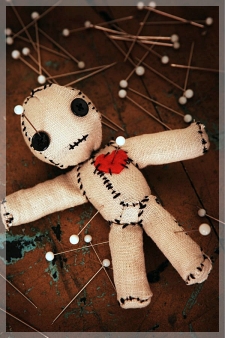
voodoo dollWithout a globe, I allowed a random number to decide the nation for which I’d pray this week. Number 19 was Benin and I’m embarrassed to admit knowing nothing about this narrow strip of land in West Africa between Nigeria and Togo. These three nations once were part of the kingdom of Dahomey and it was in Dahomey that the ancient practice of voudon/vodun/vodou (commonly called voodoo) began. Now a republic, Benin is a severely underdeveloped nation, rife with corruption, where the life expectancy for men is just 60! A little over 40% of the population are Christian, nearly 30% Muslim, about 17% practice voodoo, and another 10% follow other indigenous/animistic religions. As a side note, ARDA (The Association for Religion Data Archives) stated that many of those identifying as Christian also practice voodoo.
Since my limited knowledge of voodoo comes from bad movies with zombies, hexes, and pins stuck into dolls, I did some research. The voodoo of movies and fiction bears little resemblance to real voudon beliefs or practices. Rich with proverbs, songs, and folklore, voudon includes belief in a universal energy, many spirits, a soul that can leave the body during dreams, spirit possession, and folk medicine. Nevertheless, even without the gruesome zombies, voodoo (no matter how you spell it) is incompatible with Christianity.

Voudon came to the New World with enslaved West Africans and is the only traditional African religion to survive here. While it’s the primary religion of a little over 2% of the Haitian population, ARDA noted that a much larger number of people identifying themselves as Christian continue to practice it. ARDA also found that a number of Christians in the Dominican Republic secretly practice witchcraft (brujería) or voodoo.

Converting isn’t easy and it’s not just voudon practitioners who have difficulty completely abandoning their culture’s traditions for Christianity. I had a Japanese friend who struggled to find a way to honor her ancestors without praying to them as she’d done for decades before converting.

Back in Paul’s day, the Colossians had difficulty preventing their new faith in Christ from becoming a mixed religion combining Christianity with elements of their Jewish roots and the popular philosophical movement of Gnosticism. What they ended up with were human traditions, circumcision, a requirement to observe both the Sabbath and the annual and monthly Jewish holy days along with dietary laws, the worship of angels, and even self-abasement—none of which were compatible with Christianity.

Rather than voodoo or Gnosticism, it’s belief in things like Kabbalah, tarot reading, astrology, manifesting, reincarnation, the spiritual energy of objects, psychic mediums, channeling, and crystals that have found their way into American Christians. Often called “new age,” there’s nothing new about them. While they may seem “spiritual” or self-affirming, they cut us off from God’s divine sovereignty, power, and purpose. Nevertheless, in 2018, Pew Research found that 61% of Americans identifying as Christian also believed in at least one of these things: reincarnation, astrology, psychics, or that spiritual energy can be in physical things.

Christianity doesn’t come with an ala carte menu. We don’t get to pick and choose individual dishes according to our preferences, make substitutions, or add a few extra sides because they’re intriguing, trendy, or promise earthly rewards. Christianity comes with a table d’hôte or prix fixe menu. Additions or substitutions aren’t allowed because the menu was set by God and Christ is all-sufficient.

Salvation is offered to everyone but, in Matthew 7, Jesus warned us that God’s gate isn’t wide enough for the addition of other beliefs! He continued with his caution when He said that some who expected to enter the Kingdom wouldn’t be allowed entrance; a similar warning is found in Luke 13. Those who identify as Christian but also follow voodoo or other non-Scriptural beliefs probably expect to enter through that narrow gate. I suspect they are mistaken and will find it shut tight.

As I prayed for Benin, I also prayed for all people who’ve combined false doctrine or pagan practices with their belief in Jesus. May they know and understand that the broad road leading to the wide gate is the road to destruction!

He replied, “Work hard to enter the narrow door to God’s Kingdom, for many will try to enter but will fail. When the master of the house has locked the door, it will be too late. You will stand outside knocking and pleading, ‘Lord, open the door for us!’ But he will reply, ‘I don’t know you or where you come from.’ Then you will say, ‘But we ate and drank with you, and you taught in our streets.’ And he will reply, ‘I tell you, I don’t know you or where you come from. Get away from me, all you who do evil.’” [Luke 13:24-27 (NLT)]

Copyright ©2023 jsjdevotions. All rights reserved.

LIKE KUDZU

Don’t let down your guard lest even now, today, someone—man or woman, clan or tribe—gets sidetracked from God, our God, and gets involved with the no-gods of the nations; lest some poisonous weed sprout and spread among you, a person who hears the words of the Covenant-oath but exempts himself, thinking, “I’ll live just the way I please, thank you,” and ends up ruining life for everybody. [Deuteronomy 29:18-19  (MSG)]

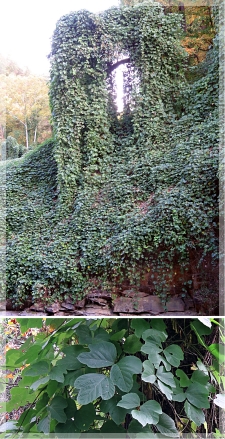
kudzuLast month we took a driving trip through Virginia and North Carolina to enjoy the fall colors in the Blue Ridge and Smoky Mountains. While taking a train ride along the Nantahala River Gorge, we commented on the beautiful vines covering the hillside. Our seat-mate told us this lovely looking plant is a destructive weed called kudzu. Native to Asia, this semi-woody vine was introduced to the U.S. back in 1876 during the Philadelphia Centennial Exposition. Originally advertised as an ornamental plant, kudzu’s ability to grow up to a foot day (and up to 60-feet a year), overtake, grow over, and smother just about anything in its path, has given it a new name: “the vine that ate the South.”
Thinking that kudzu would revitalize the land, reduce erosion, and add nitrogen to the soil, the government once offered up to $8 per acre as incentive for farmers to plant it. Giving no thought to the long-term effects of planting over 3-million acres with such a fast-growing plant, more than 85-million seedlings were given to southern landowners from the 1930s to the 50s. Spreading through runners with vines that can grow to 100-feet, kudzu ended up stifling agriculture production and timber growth, killing native plants, and causing loss of animal habitat and biodiversity.

As I learned about kudzu, I couldn’t help but see parallels to sin. Like a kudzu seedling, a sin may seem little and inconsequential but it can take over our lives and negatively impact the lives of those around us at an even faster pace. When David allowed the seed of lust to grow in his heart, he never thought his tryst with Bathsheba would lead to a pregnancy, murder, his child’s death, fratricide, and rebellion in his household. The ramifications of his sin were felt for generations! Like kudzu, sin is destructive.

Like kudzu, with its large lobed leaves and long clusters of fragrant violet flowers, sin often looks quite beautiful, innocent, and inviting. Looks, however, are deceiving; kudzu doesn’t look like the killer it is, the seductive Delilah seemed harmless enough, and that forbidden fruit in Eden was most inviting! If sin and evil looked like the invasive weeds they really are, we wouldn’t be so easily tempted to plant them in our lives!

Able to weather dry hot periods, kudzu is opportunistic. With climate change leading to warmer weather and more drought, it’s taking over where native plants can’t survive and is spreading from the southeastern U.S. to the Midwest, Northeast, and even Oregon. Sin is equally opportunistic. Satan tried to vanquish Jesus when He was hungry and weak after fasting in the wilderness for forty days, he tempted Joseph with Potiphar’s wife at a low point in the young man’s life, and he tempted Job after he’d lost family, health, and wealth!

Whether just a little kudzu or a lot of it, the weed must be kept from expanding and the same goes for sin! A little flirtation may seem harmless but it can turn into adultery in an instant. Although goats, persistent mowing, and applying herbicide can keep kudzu under control, the best way to defeat it is the hard labor of hand pulling, digging out, and removing the plants’ root crowns. Sin can be as difficult to defeat but it can be done. Rather than goats, we use the Holy Spirit to convict and guide us along with persistent prayer. We continually apply God’s word to our actions and labor to eradicate sin’s root from our lives! Of course, the best way to deal with both an invasive plant like kudzu and sin is to prevent it from taking root as soon as it’s recognized!

Blossoming flowers look beautiful before they’re cut or picked, but without soil or water they wither more quickly than grass. That’s what happens to all who forget God—all their hopes come to nothing. … Or they’re like weeds springing up in the sunshine, invading the garden, spreading everywhere, overtaking the flowers, getting a foothold even in the rocks. But when the gardener rips them out by the roots, the garden doesn’t miss them one bit. The sooner the godless are gone, the better; then good plants can grow in their place. [Job: 8:12-19 (MSG)]

Copyright ©2023 jsjdevotions. All rights reserved.

THE STRANGLER FIG

The seed cast in the weeds is the person who hears the kingdom news, but weeds of worry and illusions about getting more and wanting everything under the sun strangle what was heard, and nothing comes of it. [Matthew 13:22 (MSG)]

But blessed is the man who trusts me, God, the woman who sticks with God. They’re like trees replanted in Eden, putting down roots near the rivers—Never a worry through the hottest of summers, never dropping a leaf, Serene and calm through droughts, bearing fresh fruit every season. [Jeremiah 17:7-8 (MSG)]

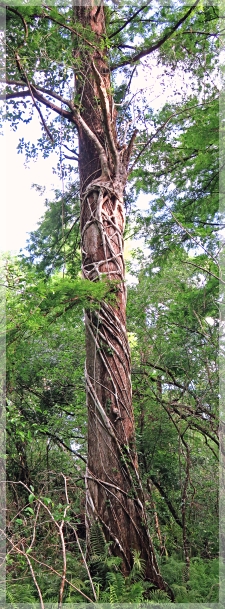
strangler figMost trees begin life as a seed in the soil of the forest floor and most trees also observe proper forest etiquette by not killing one another. The strangler fig (Ficus aurea), however, is not your typical tree. Rather than starting in the soil where the fig’s seeds would struggle to germinate in the darkness of the dense forest’s floor, strangler figs usually begin life high up in the forest’s canopy. Blown there by the wind or deposited by animals in their droppings, the sticky fig seed usually begins its life in the bark crevices of a mature tree.
Starting out as what’s called an epiphyte or air plant, the fig seedling gets its nutrients from the sun, rain and any leave litter on its host. As the seedling matures, it sends aerial roots down the host tree’s trunk to the soil while, at the same time, it sprouts upward towards the light and sends out branches. With a potential height of over 70-feet and spread as wide as 70-feet, the fig frequently becomes bigger than its host. Its roots and branches wrap themselves around its host constricting its trunk like a boa constrictor. While strangling its host, the fig also starves it. Its lush foliage steals the host’s sunlight and rain and its complex root system steals its nourishing ground water.

Like a tiny fig seed that eventually can destroy a giant cypress, worry can do the same to us if we allow it to take root. Like fig seeds, worries are opportunistic—when they find a niche, they move right in and start growing. They seem harmless enough at first but, once they take root, they dig into us and branch out into even more worries. Rather than wrapping around our trunk, worry wraps around our spirit. Just as the fig’s massive canopy of bright green leaves steals the sunlight from its host, worry robs the light and joy from our lives. The fig embeds itself into its host and worry entrenches itself in our hearts. A silent assassin like the fig, worry attacks our roots with doubt, starves our spirit, and tries to rob us of the living water of Jesus. Figs can live centuries and, while it may take decades for the murderous tree to assassinate its host, worry is just as lethal, but it works a whole lot faster. Worry not only kills our joy, vitality, strength, spirit, and faith, but it also strangles the life right out of us with high blood pressure, heart disease, and other stress related diseases.

As destructive as they are, figs aren’t all bad but there’s no plus side to worry. At least figs produce fruit that feeds the forest’s residents but worry can keep us from bearing fruit in our lives. The fig tree’s many nooks and crannies offer homes to critters like frogs, bats, and lizards but worries only offer hospitality to nasty things like anxiety, fear, doubt, and tension. Before killing their hosts, figs may even help them survive the high winds of tropical storms. The framework of fig roots and branches surrounding the host can stabilize the tree and keep it from being uprooted. Worry, however, destabilizes us and makes it that much harder to survive the storms of life.

The forest’s oaks, cypress, and palms have no choice in the matter when a fig takes root. Fortunately, as Christians, we do have a choice when worry tries to invade our lives! We have a divine Gardener who can rid us of worry, but only if we trust Him to do His work. Before we allow worry to take root, we must prayerfully hand our concerns to God as soon as they drop into our lives. It’s only by trusting God with tomorrow that we can bear fruit today.

Perhaps what our Father would have us learn is that worry is not for Him to take away, but for us to give up. [Kathy Herman]

In simple humility, let our gardener, God, landscape you with the Word, making a salvation-garden of your life. [James 1:21 (MSG)]

Copyright ©2023 jsjdevotions. All rights reserved.

DESIGNED WITH A PURPOSE

You made all the delicate, inner parts of my body and knit me together in my mother’s womb. Thank you for making me so wonderfully complex! Your workmanship is marvelous—how well I know it.  [Psalm 139:13-14 (NLT)]

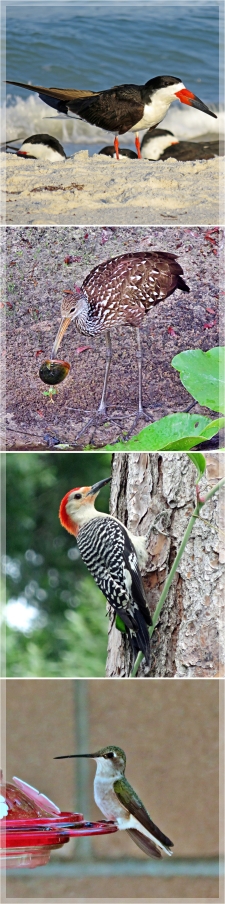
Effortlessly skimming over the water, the bird occasionally dipped its bill into the water before gracefully rising, circling the pond, and returning to skim along the water again. Even though I’d never seen one inland, the bird’s large bill, distinctive black and white coloring, and unique flight identified it as a black skimmer. Although skimmers usually spend their lives around sandy beaches and coastal islands, sometimes they feed in inland lakes during nesting season and I was thrilled to watch several skimming over our lake just before sunrise.

The skimmer’s beak is unique because its lower part is longer than its upper. As it skims over the water, the bird drags the bottom half of its beak through the water to collect small fish. When it contacts its prey, the skimmer bends its head forward and snaps the upper bill closed to catch its meal! Hunting solely by touch rather than by sight, skimmers feed from late evening until dawn when the waters are calm and the fish are closer to the surface.

Continuing my morning walk, I came upon a limpkin—another one of God’s creatures gifted with a unique and perfectly-designed beak. These wading birds eat snails and their bills are bent and twisted at the tip. With a gap just before the tip, the bill acts like tweezers. Curved slightly to the right, it easily slips into the right-handed curve of a snail’s shell.

I then spotted one of our resident brown pelicans nose-dive into the water for its breakfast and witnessed another one of God’s specialized bills. Unlike the skimmer who fishes by feel, a pelican can spot a fish from 60-feet up. When it plunges into the water, a large fibrous skin pouch dangling from its lower beak immediately opens and two to three gallons of water (along with any fish) are sucked in. The bird closes its beak, hangs its head down to let the water drain out the sides, and then flips up its beak and swallows the fish! God even provided the bird with a little hook on the tip of its upper beak to help it grip onto slippery fish!

Noticing a woodpecker drilling on a tree to get at insects under the bark, I saw how God tapered its beak to form a chisel perfectly designed for its task. With beaks clearly on my mind, I considered the aptly named roseate spoonbill with its spoon-like beak that serves as a strainer while it forages in the ponds; the hawk with its sharp hooked beak that enables it to catch, kill and tear up its prey; and the tiny hummingbird who can eat three times its body weight in a day. Its long needle-like bill fits deep into tubular flowers while its tongue darts in and out of the nectar about 13 times a second! God designed each of their bills with a specific purpose in mind.

While we people look more alike than do a skimmer and a spoonbill or hummingbird, God has endowed each one of us with unique capabilities perfectly designed for our specific purpose in life. Rather than a specialized beak, we have unique traits, talents, strengths, and abilities that set us apart from one another. Just as the bills of the skimmer and hummingbird were designed for the roles they play in the ecosystem, we have been specifically designed for the role that God has assigned us in the world—a role unlike that of anyone else.

Whether teacher, pastor, chef, clerk, janitor, farmer, dishwasher, programmer, carpenter, maintenance worker, musician, mail carrier, or barista, no one is insignificant. The very hairs on our head are numbered and Jesus told us we’re more valuable than a flock of sparrows (whose short cone-shaped beaks are perfectly designed to crack open seeds). The God who designed the spear-like bill of the anhinga to impale fish and the whimbrel’s curved bill to fit into a fiddler crab’s burrow knew exactly what He was doing when He designed each and every one of us. Designed for a purpose, we are one-of-a-kind creations made by the hands of God. May we serve Him well!

You are who you are for a reason.
You’re part of an intricate plan.
You’re a precious and perfect unique design,
Called “God’s special woman or man.”
You look like you look for a reason.
Our God made no mistake.
He knit you together within the womb,
You’re just what He wanted to make!
[Russell Kelfer]

For we are God’s masterpiece. He has created us anew in Christ Jesus, so we can do the good things he planned for us long ago. [Ephesians 2:10 (NLT)]

Copyright ©2023 jsjdevotions. All rights reserved.

DAMAGED GOODS

But when the teachers of religious law who were Pharisees saw him eating with tax collectors and other sinners, they asked his disciples, “Why does he eat with such scum?” When Jesus heard this, he told them, “Healthy people don’t need a doctor—sick people do. I have come to call not those who think they are righteous, but those who know they are sinners.” [Mark 2:16-18 (NLT)]

pipevine swallowtail butterflyWhile editing photos, I came to one of a pipevine swallowtail. Seeing it on my computer rather than the camera’s viewfinder, I realized it had seen far better days. Its once beautiful wings were tattered and torn, only one “tail” remained, an antenna was missing, and, with many of its scales gone, its wings were more translucent than iridescent blue. Perhaps it had a close call with a predator, the wind had tossed it around, or it simply was old. In any case, it was damaged goods and no longer beautiful.

We tend to discard broken things, battered items, and damaged goods without giving them a second thought and I was ready to delete the less than perfect butterfly. What if God tossed us away because of our imperfections, scars, and defects? What if He stopped caring for us because we were scratched, broken, dented, or wearing out? Unlike the butterfly, it’s not birds, hail, or blowing twigs that leave us ragged and torn; its things like illness and injury, betrayal, loss, dysfunctional families, abuse, mental illness, broken relationships, addiction, financial crises, and sin. Even though the resulting damage isn’t always visible, we’re marred with pain, shame, regret, rejection, disappointment, disgrace, anger, apathy, loneliness, and fear. No one gets through life without getting a few bumps and bruises along the way and we all are damaged goods. Our scuff marks, scars, and brokenness may not be as obvious as the butterfly’s; nevertheless, they are there.

Jesus came for the less than perfect. Think of the people he loved, touched, healed, welcomed, and forgave. Sinners all, they included hated Samaritans and disparaged Gentiles, pariahs like lepers and the bleeding woman, the blind and crippled, an adulterous woman, some traitorous taxmen, political zealots, people with sordid pasts, the demon-possessed, a repentant thief, a prostitute, the disciple who denied Him, the one who doubted Him, and even the one He knew would betray Him! Jesus didn’t come for the perfect; He came for the defeated, damaged, disheartened, and sinful. While the butterfly’s wings will never heal, Jesus can heal the brokenness in our hearts and souls.

Originally, I hadn’t detected the butterfly’s damaged state because it flitted about so quickly that I barely had time to focus before it flew off to another flower. While it may have been damaged, that pipevine certainly wasn’t defeated. In God’s wisdom, He made butterflies more resilient than they appear. While the loss of an antenna means they have some trouble navigating, the loss of scales changes their aerodynamics, and the loss of much of their wings makes flight slower and more demanding, butterflies can thrive and survive, as that battered pipevine proved! It never allowed its tattered wings to deter it from making the most of the sunny day or the remaining days God allotted it. Instead of hiding under a leaf feeling sorry for itself and complaining about the unfairness of life, it was dancing in the flowers and sipping sweet nectar! Rather than being deleted, it belonged in a butterfly hall of fame.

Now, whenever I come across a damaged butterfly, I’m reminded that God loves all of His beautiful children, imperfect and broken creatures that we are. No matter how flawed, He will never discard us or toss us in the trash heap! God made us even more resilient than a fragile butterfly. Because of His power, we never need surrender to life’s challenges. We may be battered by this world but, because God’s grace is more than sufficient, we can carry on. If tattered wings can carry a battered butterfly through the flowers, we know that God can carry us through anything.

That is why we never give up. Though our bodies are dying, our spirits are being renewed every day. For our present troubles are small and won’t last very long. Yet they produce for us a glory that vastly outweighs them and will last forever! So we don’t look at the troubles we can see now; rather, we fix our gaze on things that cannot be seen. For the things we see now will soon be gone, but the things we cannot see will last forever. [2 Corinthians 4:16-18 (NLT)]

Copyright ©2023 jsjdevotions. All rights reserved.