WHAT WILL IT TAKE?

Jesus responded, “Why are you afraid? You have so little faith!” Then he got up and rebuked the wind and waves, and suddenly there was a great calm. The disciples were amazed. “Who is this man?” they asked. “Even the winds and waves obey him!” [Matthew 8:26-27 (NLT)]

“Are you the Messiah we’ve been expecting, or should we keep looking for someone else?” Jesus told them, “Go back to John and tell him what you have heard and seen—the blind see, the lame walk, the lepers are cured, the deaf hear, the dead are raised to life, and the Good News is being preached to the poor.” [Matthew 11:3-5 (NLT)]

Jesus had cast out evil spirits, made lepers clean and healed the centurion’s servant from afar. Even Peter’s mother-in-law had received healing from him. Blind people had been given their sight, the paralyzed had walked and a girl had been brought back to life. He’d calmed the storm and still the disciples wondered, “Who is this man?” They’d heard his words and radical gospel: love God, love your enemies and turn the other cheek. They’d left their homes and families to follow Him. Certainly they thought they knew who He was: the promised Messiah. It was not until he’d walked on water, however, that they truly knew what he was: the Son of God – God in flesh – God incarnate! Then, the disciples worshipped him.

What will it take to convince us?
When they climbed back into the boat, the wind stopped. Then the disciples worshiped him. “You really are the Son of God!” they exclaimed. [Matthew 14:32-33 (NLT)]

IS GOD REAL?

“I am a God who is near. I am also a God who is far away,” declares the Lord. “No one can hide so that I can’t see him,” declares the Lord.  “I fill heaven and earth!” declares the Lord. [Jeremiah 23:23-24 (GW)]

Just because it seems impossible to understand God doesn’t mean that He isn’t tangible or real. For many, “God” is more of a vague abstract concept than an actual being: an impersonal entity or force that simply orchestrates events with no apparent purpose. They picture God as an all-powerful transcendent “something.” God, however, isn’t a “something”; God is a “someone” with whom we have a personal relationship, with whom we can talk every day, all day long. He knows our names as well as we know His; He plans our lives more carefully than we schedule our own calendars; He loves us more than even our parents did. God keeps track of our sorrows, collects our tears and forgives our sins. Yes, He is all-powerful, all-knowing, ever-present, and truly beyond our limited comprehension, but He is a being. There is nothing abstract or theoretical about Him. We are connected to Him and made in His image. We may not be able to understand, see or touch Him, but He is real.

God’s riches, wisdom, and knowledge are so deep that it is impossible to explain his decisions or to understand his ways. “Who knows how the Lord thinks? Who can become his adviser?” Who gave the Lord something which the Lord must pay back? Everything is from him and by him and for him. Glory belongs to him forever! Amen! [Romans 11:33-36 (GW)]

TRUST THE ONE YOU FEAR

All you who fear the Lord, trust the Lord! He is your helper and your shield. … He will bless those who fear the Lord, both great and lowly. [Psalm 115:11,13 (NLT)]

Even though we know that the words “Fear the Lord” don’t necessarily mean we have to cower in terror, we may still find that phrase troubling when used in reference to our relationship with God. Many of us were afraid of people in our own families so we may carry some heavy baggage when we see the word “fear” in our Bible reading. There are some who grew up in homes where there were arguments instead of discussions and shouting instead of speaking. While punishment was readily handed out, forgiveness wasn’t readily offered. Perhaps there were more tears than laughter and more hostile silences than words of comfort. Children were afraid to approach their parents with a problem because, instead of a solution, they would get a lecture on how their failures brought on the difficulty in the first place. There may even have been outright abuse.

Psalm 115 tells us that, if we fear the Lord, we can trust Him and He will bless us. How are we supposed to trust a god who frightens or terrorizes us as a parent or someone else in authority might have done in the past? If you find it troubling when the word “fear” is used in the context of your connection to God, look to other translations. For example, instead of the word “fear,” the Easy-to-Read Version often uses the word “respect,” the Good News Translation frequently uses the words “honor” and “obey,” and the Message Bible uses “worship.”

God does not want us filled with terror at his presence nor does He does want us cowering in a corner, afraid to seek him. He wants to have a relationship with us, one that is based on love not dread, trust not anxiety, and reverence not fright.

You must fear the Lord your God, serve him… [Deuteronomy 6:13a (GW)]

Revere the Lord your God, serve him… [Deuteronomy 6:13a (CEV)]

Respect the Lord your God and serve only him.… [Deuteronomy 6:13a (ERV)]

Honor the Lord your God, worship only him… [Deuteronomy 6:13a (GNT)]

When you are full, don’t forget to be reverent to him and to serve him… [Deuteronomy 6:13a (TLB)]

SOMETHING NEW

7-14-14 09201 WEB2History merely repeats itself. It has all been done before. Nothing under the sun is truly new. Sometimes people say, “Here is something new!” But actually it is old; nothing is ever truly new. [Ecclesiastes 1:9-10 (NLT)]

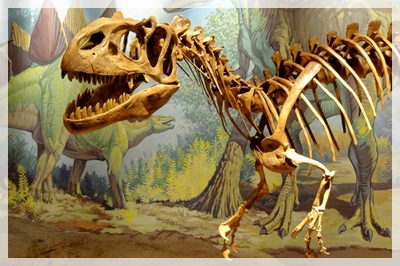
Paleontologists in Argentina recently discovered fossils of a new species of dinosaur called the titanosaur. From the size of its bones, it’s estimated to have been 65-feet high and more than 130-feet-long; it probably weighed 155,000 pounds. Technically, Solomon was right: ”Nothing under the sun is truly new.” There is, however, a great deal in this world that is new to us! It may exist but we haven’t yet seen it.

One would think that by now there’s not much left to discover. It’s not just fossils that are unearthed; more than 10,000 new species are found every year! In fact, scientists believe that about 85% of land animals and 90% of sea animals have yet to be discovered and identified. In late June, the California Academy of Sciences announced the discovery of a new species of elephant shrew; it looks like a mouse but is genetically related to the elephant! That’s just from the zoologists; the news from the world of the botanists and the astronomers is similar.

dragonfly (halloween pennant) - FP3412-WEBFrom a creature that weighed 77 tons and could easily look into the window of a six-story building to the recent discovery of a frog the size of a pea when full grown, the variety of God’s creation is beyond belief. Why, when a few moths would probably do, are there more than 150,000 different kinds? Why didn’t God stop at a thousand birds instead of the 10,000 he made? Personally, I could have done with a few less than the 950,000 species of insects He gave us!

The diversity and richness of His creation confirm that we have an awesome God. He is unrestricted and certainly unrestrained. A God of vision and creativity, He is extravagant beyond belief. He has given us gifts so numerous that we can’t even find them all, let alone count them. The most precious (and most extravagant) gift of all, however, was His son and our salvation!

Thank you, God, for lavishing us with your many gifts, both large and small.

God spoke: “Swarm, Ocean, with fish and all sea life! Birds, fly through the sky over Earth!” God created the huge whales, all the swarm of life in the waters, and every kind and species of flying birds. God saw that it was good. … God spoke: “Earth, generate life! Every sort and kind: cattle and reptiles and wild animals – all kinds.” And there it was: wild animals of every kind, cattle of all kinds, every sort of reptile and bug. God saw that it was good. [Genesis 1:20-21,24-25 (MSG)]


THE MIRACLE IS OUR SALVATION

Because of the miraculous signs Jesus did in Jerusalem at the Passover celebration, many began to trust in him. But Jesus didn’t trust them, because he knew human nature. No one needed to tell him what mankind is really like. [John 2:23-25 (NLT)]

People were impressed by his miracles and, as long as Jesus provided them with the spectacular miracles they desired, they believed. Are we a bit like the people of Jerusalem? Is our belief predicated on the miracles of Jesus and what he can do for us? Jesus, however, knew how fickle people are and that many of those who professed belief would later call out, “Crucify him.” They wanted a messiah who would save them from Rome, not a savior who would give them eternal life. They wanted a messiah who would make life easier for them, not one who told them to turn from their sinful ways and take up their crosses.

As long as life goes smoothly, as long as God heals us and provides for our physical needs, it’s easy to believe in Him. But, if God doesn’t answer our prayers the way we want, does our faith falter? If He doesn’t produce miracles for us, do we stop believing? The reason for faith in Christ is not to get something from God but, rather, to be reconciled to God.

Jesus replied, “I tell you the truth, you want to be with me because I fed you, not because you understood the miraculous signs. But don’t be so concerned about perishable things like food. Spend your energy seeking the eternal life that the Son of Man can give you. For God the Father has given me the seal of his approval. [John 6:26-27 (NLT)]

A BOY’S LIFE

          His parents didn’t know what to think. “Son,” his mother said to him, “why have you done this to us? Your father and I have been frantic, searching for you everywhere.”
          “But why did you need to search?” he asked. “Didn’t you know that I must be in my Father’s house?” But they didn’t understand what he meant.
          Then he returned to Nazareth with them and was obedient to them. And his mother stored all these things in her heart. Jesus grew in wisdom and in stature and in favor with God and all the people. [Luke 2:48-52 (NLT)]

Do you suppose Mary and Joseph “grounded” Jesus (or the 1st century equivalent of grounding) once they got back to Nazareth?

In the gospels, Jesus seems to jump from babyhood to manhood in one fell swoop so we rarely think of Jesus as a boy. Except for this story of his staying behind in Jerusalem at the age of twelve, we know nothing of his youth. Since he was a boy, however, it is quite likely that he had skinned knees, bloody noses, bumps and bruises. He probably had stomach upsets and fevers; he knew what it was to be hungry and tired. He played and laughed and cried and experienced the full range of human emotions. In spite of being the Son of God, he was obedient to his earthly parents. In spite of being the Prince of Peace, he lived in obscurity in a humble home in a small village. His tears were dried by Mary as she held him in her arms and he learned the art of carpentry at Joseph’s side. And, through the years, he “grew in wisdom and in stature and in favor with God and all the people.”

Though he was God, he did not think of equality with God as something to cling to. Instead, he gave up his divine privileges; he took the humble position of a slave and was born as a human being. When he appeared in human form, he humbled himself in obedience to God and died a criminal’s death on a cross. [Philippians 2:6-8 (NLT)]