
I will meditate on your precepts and fix my eyes on your ways. I will delight in your statutes; I will not forget your word. … The law of your mouth is better to me than thousands of gold and silver pieces. … How sweet are your words to my taste, sweeter than honey to my mouth! [Psalm 119: 15-16, 72, 103 (ESV)]
The more you read the Bible; and the more you meditate on it, the more you will be astonished with it. [Charles Spurgeon]
 Psalm 119, the longest of the psalms, is a song in praise of the Word of God. Since we don’t read this psalm in its original Hebrew, we fail to appreciate its intricate construction. Each of its twenty-two sections begin with a letter of the Hebrew alphabet in sequence. Each of the eight verses in those twenty-two sections begin with the letter that introduced it. For example, the first word of the first section begins with alef, as do the next seven verses. In the second section, every line begins with beth. The psalm continues that way up to the 22nd (and last) section where every line begins with the final letter of the Hebrew alphabet, tav.
Using a variety of synonyms (such as words, ways, precepts, testimonies, commandments, path, and law), the psalmist mentions God’s word no less than 183 times! Believed to have been written by David, Jeremiah, Daniel or Ezra, the psalm’s author refers to himself as God’s servant and claims to praise God seven times a day. Whoever it was, penning a 176-line song about delighting in God’s word as an acrostic was a true labor of love.
I thought of this psalm when reading author Ann Voskamp’s description of the joy with which a nomadic tribe in Northern Kenya reacted when Bibles arrived in their village. Packed in cardboard boxes, God’s Word arrived on the back of a camel and was greeted by more than a thousand Rendille tribespeople along with dozens of their distant neighbors. After waiting 30 years for this day, the Rendille finally had Scripture’s words written in their own language. Having written praise songs specifically for the celebration, the women sang, “We give thanks to the Lord. The Word of God is like a pillar in our life. We give thanks to the Lord for this day for it is the first time we have the Bible in our own language.” Voskamp described how several women even slept with their Bibles under their pillows, “because it was treasured. They had nothing more valuable or priceless in their entire lives than God’s Word.” For these followers of Christ, their newly translated Bibles were better than “thousands of gold and silver pieces.”
Unlike the Rendille people, we’ve had God’s word in our own language since William Tyndale’s translation of the New Testament in 1525; ten years later, the entire Bible was available in English. As the best-selling book of all time, Lifeway reports that about 85% of American homes have a Bible and the average household owns between four and five! While I suspect those Rendille tribespeople regularly read their Bibles, the Barna Group found that only about 35% of Americans ever read any of it and 36% of Americans never read at all! Yet, last year, the American Bible Society found that 71% of Americans are curious about the Bible and/or Jesus. There seems to be a disconnect here! If we’ve got questions about cooking, investing, bitcoins, or a medical condition, we research those topics. But, when we’re curious about the Bible or Jesus, those four plus Bibles in our homes remain unopened!
Both the psalmist and Rendille tribespeople celebrated God’s beautiful gift of Scripture. Finding it as “sweet as honey” and better than gold, they treasured this lamp to their feet and light for their path. After witnessing the Rendille’s enthusiastic response to the Bibles’ arrival along with their gratitude and joy in the Word, Voskamp asked herself, “How many Bibles do I have that are on my shelf collecting dust? Do I treasure God’s Word like this?”
Hers is a valid question and one we all should ask ourselves. Do we cherish and appreciate God’s word as did the author of Psalm 119? Do we receive God’s love letter to His people with the enthusiasm of the Rendille people? We should! After all, other than Jesus, it is the best gift God gave to man! Scripture’s words belong in our hearts rather than collecting dust in our bookcases!
I venture to say that the bulk of Christians spend more time in reading the newspaper than they do reading the Word of God. [Charles Spurgeon]
 Most of us breeze through (or skip altogether) the Bible’s genealogies. Nevertheless, when genealogy and all those “begats” seem so important in Scripture, what explanation is there for the difference between the genealogies of Jesus found in Luke and Matthew? Because Jews were meticulous about recording genealogies, it’s inconceivable to have two conflicting yet correct lists of Jesus’ lineage.
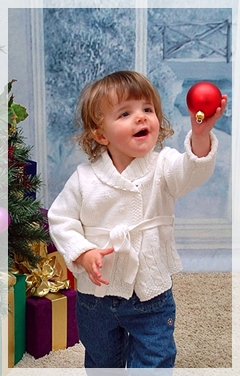 One day, the disciples scolded some parents for bringing their children to Jesus for a blessing. After telling them the Kingdom belonged to those who received it like a child, He called the children to Him. Unlike adults, children accept their humble position and live by faith and trust. Without self-consciousness and knowing they are in complete dependence on the giver, they receive gifts with humility and enthusiasm. Like explorers, children have a sense of wonder on their quest to learn about the world around them. They are filled with excitement and awe at every new thing they experience because life hasn’t become routine, predictable, or run-of-the mill to them.
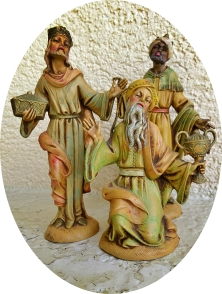 For centuries, access to the written Word of God was limited to just a few. The printing press wasn’t invented until 1439 and, at the time, only about 20% of the population could read. As a result, churches were decorated with paintings, stained glass windows, statues, carvings, and mosaics depicting biblical stories or illustrating theological concepts. For people who couldn’t read the book, religious art told the story. Consider how the Stations of the Cross in Roman Catholic churches illustrate the events of Good Friday. Sometimes, a picture really is worth a thousand words! While most nativity scenes are inaccurate, our depictions of the nativity don’t have to be historically exact to be meaningful.
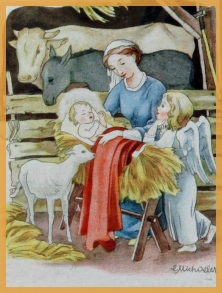 The earliest known portrayal of Jesus’ birth is a bas relief on a Roman sarcophagus from around 385. It depicts the swaddled Christ child in the manger flanked by an ox at His head and an ass at His feet. Why are they present instead of Joseph and Mary? In 1223, Francis of Assisi brought some hay and a manger to a cave and celebrated Mass there on Christmas Eve. Even though Mary and Joseph weren’t present, an ass and an ox were! In 1291, Pope Nicholas IV commissioned Arnolfo di Cambio to create a permanent nativity. While there are statues of Mary and Jesus, Joseph, and three Magi, the sixth statue shows the heads of an ox and an ass rather than shepherd or angel. Besides the baby Jesus, the ass and the ox are the most ancient and consistent elements in depictions of the nativity. Why do these two animals, neither of which is mentioned in the gospels, have such a prominent place in our nativity scenes, Christmas cards, and carols?
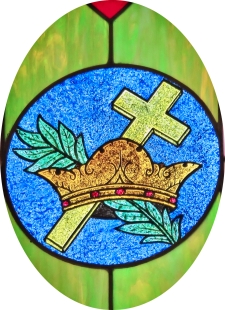 For those of us who attend liturgical churches, yesterday was the last Sunday of the liturgical (or church) year: Christ the King Sunday. A kind of liturgical “New Year’s Eve,” it is the climax and conclusion of the Church’s year.
 Devotions of the Heart