DIFFERENT LISTS

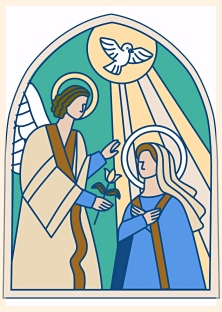
“And behold, you will conceive in your womb and bear a son, and you shall call his name Jesus. He will be great and will be called the Son of the Most High. And the Lord God will give to him the throne of his father David, and he will reign over the house of Jacob forever, and of his kingdom there will be no end.” [Luke 1:31-33 (ESV)]

doris longwing butterflyMost of us breeze through (or skip altogether) the Bible’s genealogies. Nevertheless, when genealogy and all those “begats” seem so important in Scripture, what explanation is there for the difference between the genealogies of Jesus found in Luke and Matthew? Because Jews were meticulous about recording genealogies, it’s inconceivable to have two conflicting yet correct lists of Jesus’ lineage.

The two gospels agree on one important point—neither Luke nor Matthew call Joseph Jesus’ “father”. Matthew refers to him as the “the husband of Mary, of whom Jesus was born, who is called Christ” and Luke simply says that Jesus was enomizeto (considered, thought to be, or assumed) to be Joseph’s son. While the two genealogies agree from Abraham to David, they differ from then on. Matthew says David’s son Solomon was Jesus’ ancestor and Luke says it was David’s son Nathan. While there are a variety of convoluted explanations, most biblical scholars believe these are two different, but equally correct, genealogies—Matthew’s through Jesus’ legal father, Joseph, and Luke’s through His birth mother, Mary.

With his frequent references to the Hebrew Scriptures and emphasis on Jesus’ fulfillment of Messianic prophecies, Matthew’s gospel has a distinctly Jewish viewpoint and it is believed that he directed his gospel to Jews and Jewish believers. Reflecting the importance of the Messiah’s lineage to the Jewish people, Matthew’s gospel begins by calling Jesus “the Messiah, a descendant of David and Abraham” and follows the traditional Hebrew format of going from the past to the present where he again identifies Jesus as the Messiah. Although Joseph was Jesus’ father in name only, he was the Lord’s legal father and scholars believe Matthew provided Jesus’ official (paternal) genealogy from Abraham to David to David’s son Solomon and eventually to Joseph. His list emphasized both Jesus’s legal right to be the king of the Jews as well as His fulfillment of the Messianic prophecies.

On the other hand, Luke addressed his gospel to the “most honorable Theophilus” and his primary audience is thought to have been mostly Gentile Greeks. Luke lists Jesus’ ancestry the Greek way and goes from the present to ancient past. Unlike Matthew, he doesn’t stop with Abraham but continues all the way back to Adam. Scholars believe Luke’s to be Jesus’ actual physical lineage through His mother Mary and her father Heli. While giving a mother’s lineage was unusual, so was a virgin birth! To a Gentile, if Jesus weren’t the physical son of Joseph, there would be no need to know the man’s genealogy. Rather than Solomon, Jesus’ royal lineage comes through a blood relationship with Mary’s ancestor Nathan, another of David’s sons with Bathsheba.

Luke placed Jesus’ genealogy after His baptism when the Holy Spirit descended on Him and a voice from heaven said, “You are my beloved Son; with you I am well pleased.” That heavenly voice established Jesus’ divinity—that He was the son of God. By tracing Jesus’ line all the way back to the first man, Adam, Luke established the dual nature of Jesus—that He was fully human as well as divine. It also emphasized Jesus’ relevance, not just to Jews, but to the entire human race.

We’re left with the problem of Joseph’s father—Matthew says it was Jacob while Luke says Joseph was ”of” Heli. It is believed that Heli was Mary’s father and, with no Greek word for “son-in-law,” scholars posit that Joseph became Heli’s “son” through his marriage to Mary.

Rather than contradicting one another, these two genealogies complement each other by giving us both Jesus’ official and actual lineage. They agree that Mary was Jesus’ mother, that her husband Joseph was not Jesus’ father, and that Jesus descended from the family of Judah as well as the house of David both legally (through Joseph) and by bloodline (through Mary). They show that Jesus fulfilled God’s promise of offspring to Abraham as well as his promise to David that His offspring would sit on his throne forever.

Contradiction is not a sign of falsity, nor the lack of contradiction a sign of truth. [Blaise Pascal]

I will surely bless you, and I will surely multiply your offspring as the stars of heaven and as the sand that is on the seashore. And your offspring shall possess the gate of his enemies, and in your offspring shall all the nations of the earth be blessed, because you have obeyed my voice. [Genesis 22:17-18 (ESV)]

Behold, the days are coming, declares the Lord, when I will raise up for David a righteous Branch, and he shall reign as king and deal wisely, and shall execute justice and righteousness in the land. [Jeremiah 23:5 (ESV)]

 Copyright ©2025 jsjdevotions. All rights reserved.

GARDEN OR SWAMP?

For everything there is a season, a time for every activity under heaven. A time to be born and a time to die. A time to plant and a time to harvest. A time to kill and a time to heal. A time to tear down and a time to build up. A time to cry and a time to laugh. A time to grieve and a time to dance. [Ecclesiastes 3:1-4 (NLT)]

We enjoy walking in the local Botanical Garden as well as the nearby Corkscrew Swamp. Although both offer plenty of photo ops and pleasant strolls in God’s creation, the Garden offers more color and variety than a swamp any day. Nevertheless, as much as I enjoy the Garden’s beauty and serenity, I feel more at home in the swamp.

While the Botanical Garden always has an abundance of showy colorful orchids, the swamp’s “super ghost orchid” has blossoms for only a few weeks each year. Even then, you need binoculars or a spotting scope to view its delicate (and not very impressive) flowers. At various times of the year, the swamp has wildflowers like blue flag iris, morning glories, and string lilies but they pale in comparison to the variety of exotic flora found in the Garden all year long. If the swamp’s flowers were in a beauty contest with the Garden’s flamboyant blooms like the passion flower or flaming glory bower, they’d easily lose.

Carefully designed by world-famous landscape architects and impeccably maintained by staff and volunteers, the Botanical Garden speaks of order, design, and perfection; nothing ever seems amiss. The Garden’s plants are beautifully pruned, fertilized, and fussed over. Weeds are quickly pulled and, should a plant wither or die, a lovely new one quickly replaces it.

In contrast, the swamp, with no apparent plan to its layout or plants, is a hodgepodge of flora, fauna, and water that changes almost daily. Completely dependent on rain for its existence, its animals and plants are left to the whims of the weather and Mother Nature. No one pulls the weeds, deadheads the flowers, shapes the trees, or brushes away dead leaves. Lightening and hurricanes take a heavy toll on the swamp’s plant life and, when conditions aren’t favorable, plants wither and die while animals move elsewhere. Dead trees eventually fall and, unless they’re blocking the trail, wherever they land is where they remain.

Try as I might, my life will never have the exquisite perfection of a Botanical Garden. In truth, it resembles the unpredictable and disordered swamp more than any garden. Perhaps, that’s why I enjoy it so much. The swamp is imperfect, changeable, and full of surprises. I never know what flowers will be in bloom, what birds will appear, or if I’ll see alligators, snakes, raccoons, or deer. The only thing I know for sure is that the swamp never disappoints; it always is wonderful and wild in its own unique way!

Life, like the swamp, is chaotic, disorganized, and a little dangerous; nevertheless, it is magnificent! As much as we might prefer it to be as ordered, serene, and pristine as a botanical garden, it isn’t! We’re sure to encounter life’s versions of thistles, mosquitoes, fungus, poison ivy, and animal scat. Nevertheless, along the way, there will be blessings like the swamp’s Roseate Spoonbills, sunflowers, deer, Scarlet Hibiscus, butterflies, and tiny green tree frogs! Like the swamp, we’ll have seasons of abundance and scarcity, downpours and drought, growth and dormancy, health and affliction, blessings and misfortune, beginnings and endings, and even occasional hurricanes. Life comes with its share of muck, weeds, pests, predators, storms, and vulnerability to circumstances beyond our control. The only sure thing is that God is with us during it all!

It’s ironic that our local Botanical Garden is in what used to be a swamp. The 250,000 yards of fill created after two lakes were dug in 2008 sculpted the property into the splendid showplace it is today. Someday, we will trade in our earthly swamp for God’s heavenly garden—a garden far more magnificent than any earthly garden—one with no disease, death, sorrow, pain, or weeds. Until then, we must be satisfied living in the crazy and wonderful swamp we call life. As we walk through it, we brush off the spider webs, avoid the scat on the trail, stay clear of the alligators, and look for the swamp’s gifts. Confident in the swamp’s creator, we find joy and contentment in the unique beauty of our somewhat confusing and chaotic journey. Thank you, God, for this amazing holy mess we call life!

They will never again be hungry or thirsty; they will never be scorched by the heat of the sun. For the Lamb on the throne will be their Shepherd. He will lead them to springs of life-giving water. And God will wipe every tear from their eyes. … He will wipe every tear from their eyes, and there will be no more death or sorrow or crying or pain. All these things are gone forever. [Revelation 7:16-17, 21:4 (NLT)]

Copyright ©2025 jsjdevotions. All rights reserved.

MARY’S HUSBAND

And her husband Joseph, being a just man and unwilling to put her to shame, resolved to divorce her quietly. But as he considered these things, behold, an angel of the Lord appeared to him in a dream, saying, “Joseph, son of David, do not fear to take Mary as your wife, for that which is conceived in her is from the Holy Spirit.” [Matthew 1:19-20 (ESV)]

JosephWhile putting away our nativity, I looked at the figure of Joseph. For the man who played a pivotal role in the Christmas story, once Christmas is packed away, Mary’s husband rarely gets a second thought until the next December. Neither Mark nor John mention the man who served as step-father to Jesus and the author of Hebrews didn’t even list him in its “Hall of Faith.”

Unfamiliar with 1st century Jewish marriage customs, we probably take Joseph’s presence at the nativity too lightly. Rather than an agreement between two people, marriage at the time was an agreement between two families. Before the prospective bride was consulted, the groom (or his father) approached her father and the men would negotiate the price [mohar] to be paid for the girl. Once the mohar had been paid, the first of two ceremonies, the betrothal, was held and the couple were legally married. Following the betrothal, the bride remained in her father’s house, gathered her trousseau, and prepared for married life while the groom prepared living accommodations for his wife and arranged for the wedding feast. Although married, the couple were prohibited from having sex. It wasn’t until about a year after the betrothal that a colorful procession led the woman to the house of her groom, more vows were made, and the marriage finally was consummated.

During her betrothal, the bride could not belong to another man. Should the groom learn that she lied about her virginity, he could dissolve the marriage contract through a certificate of divorce and, if caught in the act of adultery, she could be killed.

Matthew tells us Joseph was dikaios, meaning righteous and just. Expressing a righteousness rooted in a covenant relationship with God, dikaios emphasizes moral integrity and obedience to the Law. Can you imagine this honorable man’s reaction to his bride’s pregnancy? Remember, within days of Gabriel’s visit to her, Mary hurried to the home of Zechariah and Elizabeth where she stayed for three months. When she told Joseph of her pregnancy, did he wonder what his bride had been up to while away in the hill country? Consider his distress at what seemed a betrayal. Imagine his disappointment at Mary’s preposterous explanation that probably seemed like an outlandish lie. Knowing he wasn’t the father, Joseph had every legal right to divorce her and demand the mohar’s return; in fact, Mary’s infidelity could cause her to be stoned!

Although an angel appeared to Joseph in a dream to reassure him that Mary’s baby was, indeed, conceived by the Holy Spirit, Joseph was an ordinary builder—not a priest like Zachariah or a prominent rabbi like Shammai. I suspect this was his first angelic visit and he must have questioned the validity of his dream. Imagine his confusion and consider his torment as he struggled with his choice. If he divorced Mary, Joseph could deny responsibility for her shameful pregnancy and maintain his good reputation but, if he stayed with Mary, he assumed responsibility for the pregnancy and took on her disgrace. His choice regarding Mary’s scandalous pregnancy affected both of their families, as well.

Nevertheless, Joseph valued God’s call over his reputation and remained betrothed to Mary. Moreover, despite everyone else assuming they had sex, both Matthew and Luke tell us that Joseph refrained from intercourse with Mary before Jesus’ birth. The young man honored God’s plan over his own wants and needs. It was not until after Jesus’ birth that their marriage finally was consummated.

Right after the Magi’s departure, the new father had a second visit from an angel. Told to flee to Egypt because the child’s life was in danger from Herod, Joseph immediately obeyed. Although he must have had misgivings about leaving his homeland, Joseph kept Mary and Jesus safe and they became refugees in a pagan country. They only returned when, once again, an angel of the Lord directed his way.

While Joseph seems to disappear after the second chapters of both Matthew and Luke, his role in Jesus’ life certainly didn’t stop. It was in his home that “Jesus increased in wisdom and in stature and in favor with God and man.” [Luke 2:52]

Can you imagine what it was like for this righteous (but ordinary) man to be tasked by God with the responsibility of being guardian to the Messiah—the one who would “save his people from their sins”? What was it like to hold the Son of God in his calloused hands or to teach Him to walk, handle tools, and read the Torah? Consider the weight of responsibility upon Joseph’s shoulders. The last we hear of him is when he and Mary temporarily “lost” the twelve-year-old Jesus on their return from celebrating the Passover in Jerusalem. I can’t imagine his panic at having lost the Messiah! Although Joseph almost certainly died before the Lord’s crucifixion, we don’t know when, where, or how. What we do know is that Joseph was, indeed, a dikaios man—a man who was willing to follow God’s guidance and do His will regardless of the consequences.

Joseph reminds us that those who appear hidden or in the shadows can play an incomparable role in the history of salvation. [Pope Francis]

An angel of the Lord appeared to Joseph in a dream and said, “Rise, take the child and his mother, and flee to Egypt, and remain there until I tell you, for Herod is about to search for the child, to destroy him.” And he rose and took the child and his mother by night and departed to Egypt and remained there until the death of Herod. [Matthew 2:13-15 (ESV)]

Copyright ©2025 jsjdevotions. All rights reserved.

THE NATIVITY (1) – THE OX AND ASS

The ox knows its owner, and the donkey its master’s crib, but Israel does not know, my people do not understand. [Isaiah 1:3 (ESV)]

Here betwixt ass and oxen mild, sleep, sleep, sleep, my little child… [13th century French carol]

The earliest known portrayal of Jesus’ birth is a bas relief on a Roman sarcophagus from around 385. It depicts the swaddled Christ child in the manger flanked by an ox at His head and an ass at His feet. Why are they present instead of Joseph and Mary? In 1223, Francis of Assisi brought some hay and a manger to a cave and celebrated Mass there on Christmas Eve. Even though Mary and Joseph weren’t present, an ass and an ox were! In 1291, Pope Nicholas IV commissioned Arnolfo di Cambio to create a permanent nativity. While there are statues of Mary and Jesus, Joseph, and three Magi, the sixth statue shows the heads of an ox and an ass rather than shepherd or angel. Besides the baby Jesus, the ass and the ox are the most ancient and consistent elements in depictions of the nativity. Why do these two animals, neither of which is mentioned in the gospels, have such a prominent place in our nativity scenes, Christmas cards, and carols?

In Scripture, the ox came to represent the people of Israel. As the most important and costly of sacrificial animals, the ox also represented Israel’s prosperity and power. In the temple, figures of twelve oxen (representing Israel’s twelve tribes) supported the huge bronze basin that held water for ritual cleansing. While the ox was considered a ritually “clean” animal, the undivided hoof of the donkey (or ass) made it “unclean” so it came to represent the pagan Gentile nations. Deuteronomy 22:10 specifically prohibited plowing with an ox and an ass yoked together. Jews interpreted this law as being about more than plowing—it was about not mixing the clean with the unclean or the Jew with the Gentile.

In the 8th century BC, Isaiah prophesied, “The ox knows its owner, and the donkey its master’s crib, but Israel does not know, my people do not understand.” At the time, he was bringing God’s charges against Judah and speaking of God’s judgment against them in the immediate future through Assyria and also God’s later judgement with Babylon’s invasion and the fall of Jerusalem. Dumb animals knew to whom they belonged, but God’s chosen people did not!

With the benefit of hindsight, however, the early Church fathers recognized a third prophecy in Isaiah’s words—that of the Messiah’s arrival when Israel failed to recognize Him. Like the donkey, however, the Gentiles knew their master’s crib. Because the ox and ass recognized the Christ when the world did not, they are shown with the Christ. This image illustrates Paul’s words to the Ephesians that Jews and Gentiles are reconciled and have become one in Christ. Their presence at the nativity became a visual way of saying that Jesus came to save the people of all nations!

Because the firstborn male was the Lord’s, Mosaic law demanded the sacrifice to God of every firstborn male of the people’s livestock. As a ritually clean animal, the ox was an acceptable sacrifice. As an unclean animal, however, the ass could not enter the temple or be offered to God. A law unique to the ass gave its owner a choice—rather than killing such a valuable animal, he could redeem it with the sacrifice of a lamb. We sinners, like the ass, are unclean and cannot enter God’s tabernacle but, like the ass, our owner can redeem us with the sacrifice of an innocent lamb, which He did! We are redeemed by the blood of Jesus, the Lamb of God.

While seeing an ox and ass on Christmas cards or in nativity scenes may not be an accurate representation of that first Christmas, let us remember the symbolism behind their presence. While we may be as different as an ox is from an ass, Christ’s church is made up of one united people—people who have been redeemed by the blood of the Lamb!

There were only a few shepherds at the first Bethlehem. The ox and the donkey understood more of the first Christmas than the high priests in Jerusalem. And it is the same today. [Thomas Merton]

You are brought near to God through the blood sacrifice of Christ. Christ is the reason we are now at peace. He made us Jews and you who are not Jews one people. We were separated by a wall of hate that stood between us, but Christ broke down that wall. By giving his own body, Christ ended the law with its many commands and rules. His purpose was to make the two groups become one in him. By doing this he would make peace. [Ephesians 2:13b-15 (ERV)]

Copyright ©2024 jsjdevotions. All rights reserved.

READY OR NOT…

For you know quite well that the day of the Lord’s return will come unexpectedly, like a thief in the night. When people are saying, “Everything is peaceful and secure,” then disaster will fall on them as suddenly as a pregnant woman’s labor pains begin. And there will be no escape. But you aren’t in the dark about these things, dear brothers and sisters, and you won’t be surprised when the day of the Lord comes like a thief. [1 Thessalonians 5:1-4 (NLT)]

For Christians, the four weeks before Christmas are the season of Advent: a season as much about preparing for Christ’s second coming as it is about preparing to celebrate His first. Having recently purchased a baby gift, I couldn’t help but see similarities between the way expectant parents prepare for the advent (coming) of their new baby and we prepare for the advent (coming) of Christ.

Wanting to give her baby the best possible start, the mother-to-be is cautious about what goes into her body. She adds pre-natal vitamins, stops drinking alcohol, gives up junk food, and shuns risky foods like sushi, alfalfa sprouts, and brie. In the same way, as we prepare for Christ’s coming, we should take these weeks to improve what we put into our minds—the things we listen to, read, watch, and stream. Are they as worthless as junk food’s empty calories or as unsafe as smoking or drinking unpasteurized cider are for the expectant mother and baby she carries?

In preparation for their baby’s arrival, the expectant mom and dad eagerly read all about child care and attend birthing, parenting, and infant CPR classes. We should be as intent on learning about Jesus as new parents are about babies. Advent is a good time to start!

Knowing that life will be different once their baby comes, the soon-to-be parents give serious thought to their priorities and the sacrifices to be made. Midnight feedings will replace date nights, designer handbags are swapped for a diaper bag, and a full night’s sleep will become a thing of the past. Carpets will be cleaned, the office or extra bedroom becomes the nursery, while cabinets, corners, and sockets are baby-proofed.

The four weeks of Advent are the time for Christ’s followers to prepare room in our hearts for Him. As we prepare for the coming of the Christ child, like expectant parents, we might reflect on any changes or sacrifices that we should make so Christ can make His home with us. Rather than baby-proofing, do we need to do a little sin-proofing? As we clean house in preparation for the holidays, we might want to clean our hearts of things like greed, pride, or resentment so there’s room for the King.

Once they know a baby is coming, I doubt that a day passes without the parents-to-be thinking about its arrival. Advent should be a season when Christ is first and foremost in our minds, as well. Just as a woman in her 40th week of pregnancy yearns for her baby’s arrival, we yearn for Jesus to arrive and straighten out the mess we’ve made of His world.

The expectant parents have a good idea of when their baby will come and, while we know when Christmas will arrive, only God knows the date of Christ’s second coming. Nevertheless, Jesus told us that, like labor pains, there would be signs—things like wars, famines, earthquakes, persecution, conflict, economic turmoil, and deception. Considering today’s news, it’s not surprising that 39% of Americans (and 47% of American Christians) think we are in the end times right now. Then again, chaos and trouble are not unique to the 21st century. The early church thought Jesus would return and usher in God’s Kingdom in their lifetimes and I suspect Christians throughout the centuries have thought they were living in the end times. We don’t know if we’re living in the last days but, like those soon-to-be-parents, we know for sure that He will arrive whether we’re ready or not!

The immense step from the Babe at Bethlehem to the living, reigning triumphant Lord Jesus, returning to earth for His own people – that is the glorious truth proclaimed throughout Scripture. As the bells ring out the joys of Christmas, may we also be alert for the final trumpet that will announce His return, when we shall always be with Him. [Alan Redpath]

However, no one knows the day or hour when these things will happen, not even the angels in heaven or the Son himself. Only the Father knows. … You also must be ready all the time, for the Son of Man will come when least expected. [Matthew 24:36, 44 (NLT)]

Copyright ©2024 jsjdevotions. All rights reserved.

ANSWERED PRAYERS – ST. NICHOLAS (2)

He went on a little farther and bowed with his face to the ground, praying, “My Father! If it is possible, let this cup of suffering be taken away from me. Yet I want your will to be done, not mine.” [Matthew 26:39 (NLT)]

St. NicholasSometime near the end of the 3rd century, the Bishop of Myra died and a conclave was held to elect his replacement. Legend has it that the bishops kept praying and voting but could not come to an agreement. In a stalemate, they prayed all night for God’s guidance. That night, one bishop heard a voice telling him that, at the hour of matins, the man who walked into the church was the one God wanted to shepherd His flock.

A young man was the first to come in the door and, when asked his name, it is said he replied, “Nicholas, the sinner.” The man was brought into the sanctuary, placed on the bishop’s seat, and consecrated as the new Bishop of Myra. In spite of the odd manner of Nicholas’ selection, from what we know of the man—his good deeds, wisdom, generosity, and deep faith are legendary—God knew what He was doing.

When those bishops first got together to select the new bishop, I suspect each man had his favorite candidate and his prayers probably were that the other bishops would see the light and vote for his man. Busy telling God the outcome they desired rather than asking Him to reveal who He wanted, it’s no surprise the bishops came to an impasse. Once they agreed to ask God for His divine wisdom, their prayers were answered.

There’s no point asking God for His guidance, however, if we’re unwilling to accept His answer. Granted, selecting the first man into church seems rather strange but God knew who that would be. While there are variations in the story’s details, most agree that Nicholas was no more than thirty. While he was devout and well-versed in Scripture and even may have been a monk, the man was a complete stranger and not even a priest. Could some of the bishops have had second thoughts at that point? Here was an unknown entity: someone who’d never been deacon or priest, inexperienced in the church and its politics, who would now be on an equal footing with the other bishops and in charge of the deacons and priests of Myra. And what of young Nicholas? Many stories mention his hesitation at taking on such an undeserved honor. Nevertheless, both the young man and the bishops were obedient to God’s plan; Nicholas became the Bishop of Myra and history tells us he was the right man for the job.

Do we really think God needs our advice in running the world and our lives? When we pray, do we tell Him what we want Him to do and the outcome we desire or are our prayers open-ended, leaving the end result up to God’s will? God is not a cosmic vending machine and even He can’t please all the people all of the time. If I get every green light, then someone else is getting all the reds! We all can’t get what we want but we all can get what God wants for us! In Gethsemane, Jesus asked for release but He finished His prayer with acquiescence to God’s will. We must do the same in our prayers. When we say, “Thy will be done,” however, we can’t have the unspoken proviso of, “as long as I like Your answer.”

For me, the story of his ordination is the best part of the St. Nicholas legend and yet the saint plays a minor role in it. It’s both a story of faith—faith in a loving and wise God, a God who answers the right prayers—as well as a story of submission—submission to God’s will and the immediate acceptance of His answer, strange as that answer seemed.

If you need wisdom, ask our generous God, and he will give it to you. He will not rebuke you for asking. But when you ask him, be sure that your faith is in God alone. Do not waver, for a person with divided loyalty is as unsettled as a wave of the sea that is blown and tossed by the wind. Such people should not expect to receive anything from the Lord. [James 1:5-7 (NLT)]

Copyright ©2024 jsjdevotions. All rights reserved.