
But I say to you who hear, Love your enemies, do good to those who hate you, bless those who curse you, pray for those who abuse you. …. Be merciful, even as your Father is merciful. [Luke 6:27-28,36 (ESV)]
 When writing about forgiveness these last few days, I wondered why we find it so difficult to forgive. Perhaps it’s because, in our troubled hearts, we want to even the score before doing so. Wanting to retaliate in some way, bitterness and resentment grow and eat at us until we can extract our pound of flesh.
For one woman, the opportunity for retaliation didn’t arise until her father died and she wrote his blistering obituary. Contemptuous of the man, she said he lived “29 years longer than expected and much longer than he deserved!” and called him a “horse’s ass!” After naming his “relieved children,” she said he left behind ”countless other victims including an ex-wife, relatives, friends, neighbors, doctors, nurses and random strangers.” Calling the man, “a model example of bad parenting combined with…a complete commitment to drinking, drugs, womanizing and being generally offensive,” she added that he joined the Navy as part of a plea deal to avoid criminal charges. Along with being described as reckless, wasteful, and having no redeeming qualities, he was accused of abusing his family, squandering their money, and being cruel to animals.
Explaining “there will be no prayers for eternal peace and no apologizes to the family he tortured,” she added that the man’s cremains would be kept in the barn until the “donkey’s wood shavings run out.” The obituary closed with the words that his passing “proves that evil does in fact die and hopefully marks a time of healing and safety for all.” The angry words in this scathing obituary were the family’s way of extracting their pound of flesh from the man.
Reading those words saddened me when I read them in 2017 and they continue to trouble me today. Perhaps the man’s family found the spiteful obituary cathartic, but publicly cataloguing the dead man’s wrongs accomplished nothing. Even though their contemptuous words remain on the funeral home’s website today, the man they hated will never read them! I suspect the sweet taste of revenge his family may have felt when the obituary was posted left them with a bitter aftertaste.
When harmed, it’s natural to want payback. Natural, however, isn’t necessarily right and justice and vengeance are God’s department and His alone. Rather than meeting evil with more evil, Jesus tells us we are to meet evil with grace and to do all we can to live in peace with everyone. As Christ’s followers, we are expected to extend grace and forgiveness.
I can only pray that this man’s passing has provided healing for those whose lives he touched. That healing, however, won’t come until they finally forgive him and let go of the past. Like their anger, forgiveness can’t change their past but, unlike anger, forgiveness can change their future! Unlike the bitter aftertaste of anger and revenge, forgiveness always tastes sweet!
To forgive is to set a prisoner free and discover that the prisoner was you. [Lewis B. Smedes]
If possible, so far as it depends on you, live peaceably with all. Beloved, never avenge yourselves, but leave it to the wrath of God, for it is written, “Vengeance is mine, I will repay, says the Lord.” To the contrary, “if your enemy is hungry, feed him; if he is thirsty, give him something to drink; for by so doing you will heap burning coals on his head.” [Romans 12:18-20 (ESV)]
Copyright ©2025 jsjdevotions. All rights reserved.
 When Moravian missionaries first arrived in the Arctic, they found no single word in the Inuktitut language for forgiveness. That doesn’t mean the Inuit people didn’t let go of past wrongs, just that they didn’t have a single world for doing so. Since forgiveness is an essential concept in Christianity, the missionaries wanted a single word that captured the kind of forgiveness found in Psalm 103. Using Inuktitut words, they came up issumagijoujungnainermik meaning “not-being-able-to-think-about-it-anymore.” This 24-letter multi-syllable word beautifully describes the God who will “cast all our sins into the depths of the sea” [Micah 7:19], who vows to “forgive their iniquity, and…remember their sin no more,” [Jeremiah 31:34], and who promises to blot out our transgressions and not remember our sins.[Isaiah 43:25]
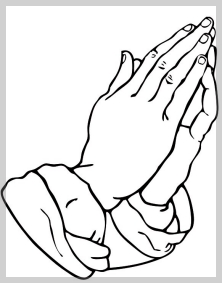 While there are no hard and fast rules about prayer except to believe in it and do it, some people use acronyms to help organize their prayers. The PRAY method stands for Praise, Repent, Ask, and Yield while the ACTS method formats prayer into Admiration (praise), Confession, Thanksgiving, and Supplication (asking God for what is needed). A TACOS prayer structure is Thanks, Adoration (or Applause), Confession, Others, and Self. Rather than an acronym, I was taught “The Hand of Prayer” as a girl. Beginning with the thumb, the order was Praise, Thanksgiving, Confession, Intercession (prayer for others), and Petition (prayer for oneself).
 Several years ago, two friends joined the ranks of widowhood within a week of one another. Because her husband surrendered to cancer several months earlier by stopping all treatment, one woman was not surprised when she joined the club. The other woman, however, went to bed a wife and awoke the next morning to find herself a widow. Despite his looking the picture of health, her husband, having suffered a fatal stroke while she slept, lay dead on the kitchen floor.
 Whenever I asked about her boys, my sister would give a vague answer like, “They’re fine…just doing their own thing” It was several years before I learned “their own thing” meant they were breaking her mama’s heart with their mental illness, addictions, and run-ins with the law. Because she kept her pain concealed, she carried the weight of that burden alone for many years.
 As a teen and young adult, it was easy to be critical of my parents and their parenting. Vowing I’d never say or do some of the things they did, I was sure I’d never make any of their mistakes. Once I became a mother, however, I became far more forgiving and much less judgmental. Turns out, I made some of the same mistakes my parents did (and plenty more of my own).
 Devotions of the Heart