THE LAW AND THE PROPHETS

Don’t misunderstand why I have come. I did not come to abolish the law of Moses or the writings of the prophets. No, I came to accomplish their purpose. I tell you the truth, until heaven and earth disappear, not even the smallest detail of God’s law will disappear until its purpose is achieved. [Matthew 5:17-18 (NLT)]

You search the Scriptures because you think they give you eternal life. But the Scriptures point to me! [John 5:39 (NLT)]
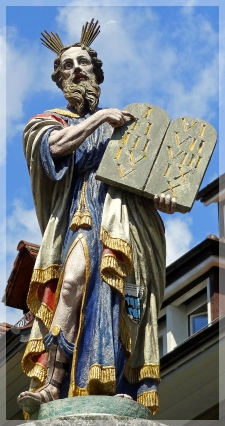
Moses Fountain - Bern - SwitzerlandOur Colorado church had a large worship center with excellent acoustics so, when the local Jewish congregation wanted to present a concert of Jewish music by a well-known Jewish performer, we were happy to offer our venue to them. The Christians in attendance never expected the evening to end with Jews and Christians joining hands and dancing the hora around the church while singing “Hava Nagilah” (Let Us Rejoice). What the Jews hadn’t expected were the Bibles on the back of every chair. Before the concert began, many intently looked through them and, after the concert, they expressed their surprise at finding their Hebrew Scriptures in our Christian Bibles!

While we call it the Old Testament, it isn’t called that by a Jew. When “testament” appears in the New Testament, it is a rendering of the Greek word diatheke, meaning covenant. While Christians recognize the old covenant God made with the Israelites, we also believe He made a new covenant (or testament) with the followers of Jesus. For a Jew, however, there’s nothing “old” about that covenant because there hasn’t been a new one. As a result, they much prefer the term Hebrew Bible or Hebrew Scriptures. The other term used for the Hebrew Bible is Tanakh—an acronym for its three categories: Torah (Law), Nevi’im (Prophets), and Ketuvim (Writings).

Even though the Hebrew Bible has 24 books divided into those three categories and our Old Testament has 39 books and four categories (Law, History, Wisdom and Poetry, and Prophecy), they both tell the same story, but in a different order. The number of books differs because the Hebrew Bible combines the first and second books of Samuel, Kings, and Chronicles, the books of Ezra and Nehemiah, and the 12 books of the minor prophets. Instead of ending with the Prophets as does our Old Testament, the Hebrew Bible ends with the Writings and the book of Chronicles.

The 1st century Jewish historian Flavius Josephus (37/38 – 100 AD) reported that there was an authoritative list of the twenty-two books Jews called “holy scriptures” that was determined by the time of Artaxerxes (464-424 BC). The book number differs because Ruth was attached to Judges and Lamentations to Jeremiah at that time. We know that the Scripture our Lord read, studied, and memorized as a boy in Galilee is the same Scripture we have today.

Jesus made frequent references to the Scriptures throughout His ministry and his enemies soon learned that they couldn’t argue the Word of God with the One who breathed that word! He defeated Satan’s temptations with words from Deuteronomy and, during his frequent confrontations with the Jewish rulers, Pharisees, and Sadducees, He made specific references to verses in Genesis, Leviticus, Deuteronomy, Exodus, Samuel, Isaiah, Hosea, and Psalms. He quoted from Malachi when speaking of John the Baptist and frequently quoted from Scripture to show how He would fulfill prophecies. He explained the writings of Moses and the prophets to Cleopas on the road to Emmaus. According to Liberty University’s Harold Willmington, of the 1,800 verses reporting Jesus’ words in the gospels, 180 verses are Old Testament quotes or allusions.

While I can understand a Jew’s unfamiliarity with a Christian Bible and surprise at finding the Hebrew Scriptures in it, I can’t understand why those of us who claim to follow Jesus are so unfamiliar with the words our Lord read, studied, quoted, and believed while He walked the earth! If it was important to Him, shouldn’t it be important to us?

Then he said, “When I was with you before, I told you that everything written about me in the law of Moses and the prophets and in the Psalms must be fulfilled.” Then he opened their minds to understand the Scriptures. [Luke 24:44-45 (NLT)]

Copyright ©2023 jsjdevotions. All rights reserved.

PUT AWAY YOUR CALCULATORS AND CALENDARS! (Revelation – Part 3)

blood moon - lunar eclipse

Photo Courtesy Dennis Johnson


However, no one knows the day or hour when these things will happen, not even the angels in heaven or the Son himself. Only the Father knows. [Matthew 24:36 (NLT)]

I couldn’t finish writing about Revelation without a caution to beware of end times predictions. If someone claims to have secret knowledge or frightens you with their teaching—abandon them ASAP! If Jesus didn’t know when the end would occur, I can guarantee that no mortal will!

Nevertheless, in 1994, radio evangelist Harold Camping predicted the world would end on September 6. When it didn’t, explaining his mistake was a mathematical error, Camping got out his calculator again and predicted the apocalypse would begin precisely at 5:59 PM, May 21, 2011. At that time, those chosen by God would ascend to heaven in the Rapture and cataclysmic earthquakes would rock the earth. After finding himself still here May 22, Camping admitted his understanding of God’s plan was slightly off but continued predicting the world’s end on October 21. When October 22 dawned, the evangelist confessed such predictions were “incorrect and sinful” and finally conceded that God might not tell people the date of Christ’s return. Camping’s apology, however, was little comfort to his followers who’d given up jobs and families to warn people of God’s coming judgment!

Because Joel 2:31 and Revelation 6:12 describe the sun growing dark and the moon turning red as blood before the great day the Lord arrives, we frequently read of “blood moon” predictions! A “blood moon” is a total lunar eclipse during which we see the moon slowly darken and change color from bright white to an orange-red coppery color. Not a rare event, one occurred last November and another will in 2025. On September 28, 2015, however, the fourth such lunar eclipse occurred within two years (a “tetrad event”) and coincided with the Jewish celebration of Sukkot. The concurrence isn’t surprising since Sukkot always occurs on the first full moon following the autumn equinox. Nevertheless, this caused some Christian evangelists to warn of imminent world-shaking events or that the Four Horsemen of the Apocalypse would reveal their missions. They didn’t! Nevertheless, we’ll probably hear more tribulation prophecies in 2033 when the last full moon in the tetrad occurs on October 8—the first day of Sukkot!

Because Revelation calls “666” the number of the Beast, people try to use 666 to predict the end. Although Revelation’s message shouldn’t frighten believers, many Christians in 17th-century Europe feared the world’s end in 1666. When the Great London Fire that year destroyed much of the city, they thought it the end of the world but, since it lasted only four days and left only ten dead, that wasn’t much of an end!

To determine the Beast’s name, some people use gematria (a system of assigning numeric values to letters or words in the Hebrew language). Although originally limited to Hebrew, they also use Greek, Latin, English, or whatever suits them. Depending on the language, whether first and/or last name is used, and the number of mathematical applications employed, just about any name can be made to total 666 (including Nero Caesar, Julius Caesar, Domitian, Vespasian, Caligula, Mohammed, Pope Benedict IX, Luther, Ronald Reagan, and Mikhail Gorbachev). Don’t fret about 666 or its meaning. We aren’t going to know the Beast’s identity until it appears but we’ll recognize the Beast by the mark!

Last week I wrote about the Episcopal priest Jeopardy contestant and his easy dismissal of Revelation. His dismissal is understandable. False prophecies, outlandish predictions, and farfetched interpretations of Revelation bring shame and ridicule to John’s vision and, by extension, to Jesus. False rapture and end-of-the-world predictions do more than embarrass and discredit the false prophet, they dishonor the Lord and the Christian doctrine of Christ’s return!

It is only by studying Revelation that we can maintain both our hope in the return of Jesus and dispel the doomsday delusions of today’s false prophets. Let us remember that God doesn’t want us to speculate about the timing of His return; He wants us to remain faithful, righteous, watchful, and ready. In the meantime, rather than being sign watchers, we should be disciple makers!

So when the apostles were with Jesus, they kept asking him, “Lord, has the time come for you to free Israel and restore our kingdom?” He replied, “The Father alone has the authority to set those dates and times, and they are not for you to know. But you will receive power when the Holy Spirit comes upon you. And you will be my witnesses, telling people about me everywhere—in Jerusalem, throughout Judea, in Samaria, and to the ends of the earth.” [Acts 1:6-8 (NLT)]

Copyright ©2023 jsjdevotions. All rights reserved.

LITERAL OR FIGURATIVE (Revelation – Part 2)

Above all, you must realize that no prophecy in Scripture ever came from the prophet’s own understanding, or from human initiative. No, those prophets were moved by the Holy Spirit, and they spoke from God. [2 Peter 1:20-21 (NLT)]

columbineThe Apostle Peter tells us that true prophecy isn’t a product of the prophet—prophets only speak God’s revelation. Directed by the Spirit, their words communicate the message the Lord wants sent. Sometimes, however, prophecy is difficult to understand and interpretations of Revelation go from one extreme to the other. Some, like that priest in Monday’s devotion, dismiss it as completely symbolic. To them, Revelation is an allegory about the conflict between good and evil with good winning in the end. On the other extreme, we find obscure theories, convoluted correlations, and implausible explanations of every symbol and metaphor along with sensationalism and unchecked speculation connecting Revelation to current events.

A simple rule of thumb in hermeneutics (the interpretation of Scripture) is, when it obviously is literal, we should accept it as such. The key to understanding Revelation is to interpret it as literally (and simply) as possible. Extra meaning shouldn’t be given to words or phrases if they can be understood as written. For instance, we shouldn’t assume 1,000 years means anything else. Moreover, when a description is of something we’ve never seen, such as cherubim or heaven, we shouldn’t immediately dismiss it as totally figurative. Nevertheless, we can’t read Revelation as we might a newspaper. When a passage clearly uses figurative language or obviously is symbolic, we should interpret it as such.

At the same time, we should be careful about finding extra meaning in John’s figurative descriptions. For example, Revelation 4:3 describes the One sitting on the throne “like a jasper stone and a sardius in appearance; and there was a rainbow around the throne, like an emerald in appearance.” Although the word “like” clearly indicates a simile, many commentators ascribe extra meaning to the descriptions, e.g. the stones allude to the high priest’s breast plate, the red sardius signifies God’s righteous anger or Jesus’ blood, the green denotes God’s mercy and grace, or the rainbow means God’s won’t depart from His covenant with Israel. To understand John’s words, we don’t need to get bogged down in possible symbolic meanings when what we’re being told clearly is that there was a spectacular radiance to the One (God) sitting on the throne.

Revelation, like other apocalyptic prophecy, often has bizarre imagery. John describes such things as locusts wearing armor with wings that roared like an army of chariots and horses with heads like lions with fire, smoke, and burning sulfur coming from their mouths. While these horrifying things may have been living demonic creatures, they also could be weaponry like helicopters, drones, missiles, or tanks. Prophecy describes the future and, not knowing what he saw, John may have used metaphors to describe their size, power, and noise. Whatever he saw was unfamiliar, frightening, and capable of mass destruction and his imagery conveys that perfectly.

While meant for all believers, John specifically wrote to the seven churches in Asia and many of his allusions make sense in historical context. When he describes a woman sitting on seven hills, his 1st century readers easily would have known he was referring to Rome (a city built on seven hills). Moreover, because concepts and symbols from the entire Bible echo throughout Revelation, John’s allusions must be put in scriptural context. Without ever making a direct quote, 278 of Revelation’s 404 verses make at least one allusion to the Old Testament. For example, after one of the elders points out “the lion from the tribe of Judah, the Root of David,” John sees a “Lamb, standing as if slaughtered.” John’s original readers easily would have recognized Messianic descriptions found in Isaiah and Genesis.

With events taking place simultaneously in heaven and on earth, Revelation doesn’t follow a strict chronology and can be challenging to follow. With its wars, famine, and disasters, it can be distressing and, with its allusions and figurative language, it can be confusing. But, as God’s word, Revelation can’t be ignored or treated as fictional fantasy.

Because Revelation was written for the servants of Christ (that’s us), it seems unlikely that God expected us to have theology degrees to understand its message. Nevertheless, understanding Revelation is easier with a good study Bible, a commentary or two, and a study guide or group, along with prayers for the Spirit’s guidance.

Revelation shows us God’s amazing patience as He gives mankind opportunity after opportunity to repent and plenty of reasons to do so! For those who choose not to believe, Revelation is a book of dire warning but, for those who believe, it is a beautiful book of hope. Spoiler alert—Jesus wins!

The big picture of Revelation is clear: Jesus returns, people must be ready, evil is defeated…. With the rest of the details, there is room for disagreement. [Scott McConnell]

Then the angel said to me, “Everything you have heard and seen is trustworthy and true. The Lord God, who inspires his prophets, has sent his angel to tell his servants what will happen soon.” [Revelation 22:6 (NLT)]

Copyright ©2023 jsjdevotions. All rights reserved.

NOT TO BE IGNORED (Revelation – Part 1)

Behold, I am telling you a mystery; we will not all sleep, but we will all be changed, in a moment, in the twinkling of an eye, at the last trumpet; for the trumpet will sound, and the dead will be raised imperishable, and we will be changed. [1 Corinthians 15:51-52 (NASB)]

little blue heronWhen researching another devotion, I learned that a Jeopardy contestant missed this $1,000 clue: “It’s the ascension heavenward by true Christians both living & dead at Christ’s second coming.” Although the answer was the Rapture, the contestant, an Episcopal priest, remained silent. He later explained that he didn’t believe in the Rapture or hold to a literal reading of Revelation, adding that the literal reading of Revelation is a “a product of the modern era.” His words gave me pause.
In the decades I attended denominational churches, I never heard any reference to the Rapture and can’t recall ever hearing a sermon about the tribulation or Christ’s return. While I’d read bits and pieces of Revelation, it seemed so bizarre after the first three chapters that I thought the Apostle John might have imbibed in the 1st century version of LSD. It was not until I began attending more evangelical and Bible-based churches that I became familiar with both the Rapture and Revelation.

Although not found in Scripture, the word “rapture” comes from the Latin rapiõ meaning “to seize, snatch away,” which is equivalent to the Greek word harpazõ or “caught up” that is found in 1 Thessalonians 4:13-18 and 1 Corinthians 15:50-52. In the Rapture, dead and living believers will be caught up together to meet Jesus in the clouds to make way for God’s judgment and wrath that will be poured out on the earth during the Tribulation. Because Scripture is unclear about how and when this will occur, Paul called it a mystērion—something that only can be known through God’s revelation. Being a mystery, however, doesn’t mean something like it won’t happen.

While there is general agreement throughout the Church about the resurrection of the dead and Christ’s return, there is a diversity of thoughts about the particulars. Unlike essential doctrine in which Christians have unity (e.g. the forgiveness of sins and Christ’s deity, death, and resurrection), there’s plenty of liberty about the specifics of the end times and Christ’s return. That Episcopal priest is just one of many Christians who don’t believe in the Rapture.

My issue is with the priest’s easy dismissal of Revelation. Perhaps he’s like a mainstream pastor friend who questions whether Revelation belongs in the Bible. Even though the New Testament canon was not firmly established until 397, the book of Revelation was considered part of the Church’s holy Scriptures in the early stages of Christianity. It was listed as part of the canon around 180 AD in both Irenaeus’ Against Heresies and on the Muratorian Fragment. Church fathers like Irenaeus (bishop of Lyons), Papias (bishop of Hierapolis), Theophilus (bishop of Antioch), Justin Martyr, Tertullian, and Clement of Alexandria all accepted the Apocalypse as revealed in John’s vision.

While a renewed interest in Revelation may be “a product of the modern era,” the earliest church fathers like Irenaeus and Justin Martyr took a literal view of the thousand-year reign with Christ. It was only after Constantine awarded full legal recognition and favor to the Christian church in 313 and Christianity became the official religion of the Roman Empire in 380 that the focus of the church changed. No longer being persecuted for their faith, Christians went from looking for their ultimate comfort in the world beyond the grave to seeking comfort in this world. As believers became more content in the here and now, they became less eager for the Apocalypse, God’s future judgment, and Jesus’ return.

While we don’t know whether the end is near or in another 2,000 years, we should look to Christ’s promised return. As the final chapter of our salvation, Revelation never should be ignored, scorned, or forgotten. It can be confusing, intimidating, and mind-boggling at times, and we’ll probably never fully understand it. Nevertheless, Revelation is worth reading; after all, it’s the only book in the Bible promising a blessing to those who read its words and do what it says!

Blessed is the one who reads, and those who hear the words of the prophecy and keep the things which are written in it; for the time is near. [Revelation 1:3 (NASB)]

Copyright ©2023 jsjdevotions. All rights reserved.

REVERENCE AND RESPECT [1 Samuel 4 to 6 (Part 2)]

The Ark remained in Kiriath-jearim for a long time—twenty years in all. During that time all Israel mourned because it seemed the Lord had abandoned them. [1 Samuel 7:2 (NLT)]

As we settled into our pews in the sanctuary, people talked loudly, called out to one another, laughed raucously, visited other pews, and checked their phones even after the organist started his beautiful prelude. It wasn’t until the pastor stood at the pulpit and started speaking that they eventually quieted down and put away their phones. As I wondered what became of the awe and reverence that should accompany us into God’s house, I again thought of the time Israel brought the sacred Ark of the Covenant into battle with them. Putting aside their idolatry, consider the lack of respect given to this religious chest designed by God and representing His presence among His people.
After being defeated by the Philistines, Israel blatantly disregarded the law that the Ark was to remain in the Tabernacle’s Holy of Holies in Shiloh and brought it to their camp in Ebenezer. Rather than treating it with the reverence due the most sacred object in the land, they loudly cheered the Ark’s arrival as if it were a team mascot. Pagan armies carried their gods into battle with them and, when they carried the Ark into battle the next day, the Israelites were no different than the pagan Philistines. Their sacrilege ended with defeat and 30,000 dead.

In the ancient world, the gods of the defeated were carried off by the victors and the Philistines took their battle trophy to their temple in Ashod. Thinking Israel’s god was in the box, they placed the Ark in the temple to serve as a secondary god to their major deity Dagon. The great God Jehovah, however, is second to none and He is not to be treated disrespectfully. When things went from bad to worse for the Philistines, they finally decided to return the Ark to Israel. Accompanied by a guilt offering of golden tumors and rats like the ones that probably ravaged their land with a plague, the Ark was returned to the Israelite city of Beth-shemesh.

The people of Beth-shemesh were overjoyed at the Ark’s return but, instead of treating it as the sacred object it was, they treated it as a curiosity. The inquisitive men opened the Ark and looked into it. This sacrilege was a serious violation of the law. As descendants of Aaron, the men of Beth-shemesh were priests and knew that they were prohibited from looking in the Ark “for even a moment.” Regardless of intentions, even touching (let alone opening) the Ark was punishable by death. When 70 men (some translations say 50,070) were struck down for this sacrilege, like the Philistines, the people of Beth-shemesh wanted to get rid of the Ark as soon as possible. What they failed to comprehend was that the Ark didn’t cause those deaths; it was the people’s impious, thoughtless, and reckless behavior that did!

Men from Kiriath-jearim came for the Ark but, rather than taking it back to the Tabernacle in Shiloh where it belonged, they took it to the home of Abinadab. Stored unceremoniously as if it were an old trunk in the attic, it remained there for twenty years.

Which brings me back to the noisy sanctuary last week. While church should be a welcoming place, it seems that we’ve shifted from relaxed, friendly, and unintimidating to irreverent, cavalier, and rude. A neighbor has noticed the same thing in her church.

A sanctuary is a sacred place set aside for worship—it may be in a large cathedral, small church, rustic chapel, park, living room, arena, auditorium, school room, or store front. Nevertheless, wherever it is, God demands (and certainly deserves) reverence and respect. Do we approach the sanctuary with awesome wonder at being welcomed into God’s house or do we irreverently give no thought at all to where and why we’re there? Does our behavior in church honor and glorify God? Does it reveal our gratitude for worshipping freely, safely, and openly; for hearing God’s word and singing His praises; and for sharing the Eucharist with our brothers and sisters in Christ? It should.

Israel “mourned because it seemed that the Lord had abandoned them” and it was twenty years before they repented of their behavior. God, however, had never abandoned them; they had abandoned Him when they stopped revering Him and started treating His Ark with disrespect and contempt. May we never make the mistake of treating our place of worship (His house) the same way!

You must keep my Sabbath days of rest and show reverence for my sanctuary. I am the Lord. [Leviticus 26:2 (NLT)]

Since we are receiving a Kingdom that is unshakable, let us be thankful and please God by worshiping him with holy fear and awe. [Hebrews 12:28 (NLT)]

Copyright ©2023 jsjdevotions. All rights reserved.

TALISMANS [1 Samuel 4 to 6 (Part 1)]

You must not have any other god but me. You must not make for yourself an idol of any kind or an image of anything in the heavens or on the earth or in the sea. You must not bow down to them or worship them, for I, the Lord your God, am a jealous God who will not tolerate your affection for any other gods. [Exodus 20:3-5 (NLT)]

During the time of the judges, the Israelites were at war with the Philistines. Following their loss of 4,000 men, they questioned why God had allowed their defeat but never bothered asking Him. Instead, they decided that carrying the Ark of the Covenant into battle would guarantee a future victory. Perhaps they remembered the story of Israel entering the Promised Land—how the Jordan River stopped flowing when the feet of the priests carrying the Ark touched the water and the entire nation crossed the dry riverbed into Canaan. They may have recalled Jericho’s defeat when Israel’s priests carried the Ark around the walled city for seven days and the city’s seemingly invincible walls collapsed. Maybe they thought it was the Arks’ presence that caused those miracles; in any case, they brought the Ark to their camp in Ebenezer.

Rather than put their faith in God’s power to save them, the men put their faith in a powerless box that held revered artifacts. While sacred, the Ark had no more power to bring victory than would a scarab amulet. Nevertheless, Israel put their trust in this talisman instead of God. I wonder if they blamed the Ark rather than their sacrilege when the Philistines defeated them, captured the Ark, and took it into their territory.

Israel failed to remember that, in the 400 years since crossing the Jordan and defeating Jericho, the Ark never had been taken into battle and, in both of those instances, God specifically commanded the action. Worse, the men had broken the first commandment by putting their faith in something other than God.

The Philistines may have thought themselves lucky to have captured the Ark but that quickly changed. Although they placed it in their temple next to their chief deity Dagon, the next morning, Dagon was found on the ground before the Ark, face down in a position of humility and worship. After the idol was returned to its place, it was found face down again the next day. Decapitation of foes and the severing of hands was a common practice in the ancient world and Dagon’s head and hands were broken off and lying in the temple’s doorway. Jehovah’s message was clear: Dagon was a powerless god who couldn’t even prevent his own execution in his temple!

Still, the Philistines failed to return the Ark and, when God sent an illness of tumors (possibly something like bubonic plague), they played a deadly game of “hot potato” for the next seven months by moving the Ark from town to town. Wherever it landed, however, the plague of tumors followed. When a cry went through the land, the Philistines finally returned the Ark to Israel. Like Israel, they made the mistake of attributing power to the Ark rather than to the great God Jehovah!

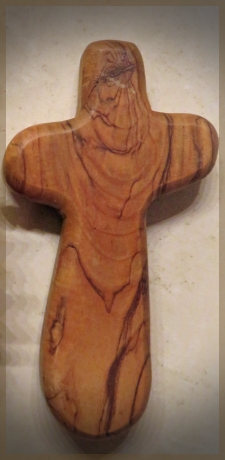
As did the Israelites, we must never put our trust in things—whether it’s lucky coin, crystal, rabbit’s foot, or cross on a necklace. Although a rosary dangling from the rearview mirror, an olivewood cross in your purse, a fish symbol on the trunk, a St. Christopher medal on the dash, or an angel pin on your lapel may serve as visual reminders of our powerful God, they are powerless to keep us from being lost, injured, ill, or getting into an accident, or having some other trouble. God cannot be manipulated to bring about good fortune! Treating any object (secular or religious) as a talisman or good luck charm turns it into an idol!

In the same way, we must never live in fear of things like the number 13, not forwarding a chain letter, or seven years of bad luck after breaking a mirror. Those things are as powerless as was the Philistine’s god Dagon. At its simplest, superstition simply is fear. As Paul told Timothy in his second letter, “God has not given us a spirit of fear and timidity, but of power, love, and self-discipline.” [1:7] Rather than fearing superstitions or symbols, we should fear God with a fear that manifests itself in our respect, obedience, submission, and worship of Him.

Divine protection and victory come from God alone, not from pictures, jewelry, talismans, or even the Ark. There is a fine line between respecting an object and idolatry. Philistine and Israelite alike crossed that line; let’s be sure we never do.

The idols of the nations are merely things of silver and gold, shaped by human hands. They have mouths but cannot speak, and eyes but cannot see. They have ears but cannot hear, and mouths but cannot breathe. And those who make idols are just like them, as are all who trust in them. [Psalm 135:15-18 (NLT)]

Copyright ©2023 jsjdevotions. All rights reserved.