PLODDING

Have mercy upon me, O God, according to thy lovingkindness: according unto the multitude of thy tender mercies blot out my transgressions. [Psalm 51:1 (KJV)]
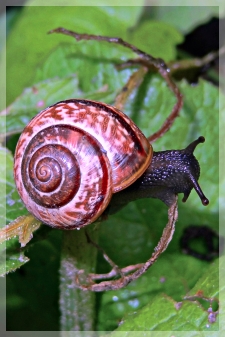
snailI suspect we would prefer a eulogy that shines a light on our victories and accomplishments but the man known as “the father of modern missions” chose otherwise. When William Carey [1762-1834] was asked what text he wanted for his funeral sermon, he chose today’s verse. The humble man wanted to shine a light on God’s lovingkindness and great compassion rather than his personal accomplishments.

Convinced that Jesus’ words in the Great Commission were a binding command on every generation of Christ’s followers, Carey contended that 18th century Christians were as called to take the gospel to foreign lands as were the 1st century Apostles. While this may seem obvious to us today, back in 1786 the prevailing view was that God would bring the nations to Christ without human assistance. Told by some that God didn’t need (or want) his help in converting the “heathens,” others argued that distance, barbarism, dangers, supply issues, and unintelligible languages made foreign missions unfeasible. Carey, however, remained determined to spread the gospel abroad. Eventually, what became known as the Baptist Missionary Society was formed and, in 1793, William Carey and John Thomas were appointed missionaries to the East Indies.

When they arrived in colonial Calcutta, the men faced stiff opposition from the East India Company along with poverty, illness, loneliness, domestic issues, and the deaths of friends and family, but Carey never lost heart. Determined to spread the gospel, he wanted more than converts; Carey wanted to develop apostles! To that purpose, in 1818 he and his colleagues founded Serampore College in West Bengal. While the college’s primary goal was to train indigenous ministers, both believers and unbelievers from all castes were welcome. Fierce critics of the caste system, infanticide, and suttee (widows burning themselves upon their late husbands’ funeral pyres), the missionaries labored tirelessly for the welfare of all Indians. Carey’s greatest contribution to Christ was his work as a translator. A cobbler by training, this self-taught man (whose only degree was an honorary one) translated the entire Bible into six Indian languages and portions of Scripture into 29 others! Carey’s approach to missions combined evangelism with translation, education, social reform, and health care. That same holistic approach remains a model for Christian missionaries today.

William Carey served 41 years in India without a furlough but, even before his death, his name was well known and people started collecting mementos of him. Carey’s contemporary, John Newton (evangelist, abolitionist, and author of “Amazing Grace”) said of him, “I look to such a man with reverence. He is more to me than bishop or archbishop; he is an apostle.” Yet, when this man who was a legend before his time lay dying in 1834, he gave a fellow missionary these instructions: “When I am gone, say nothing about Dr. Carey. Speak about Dr. Carey’s Savior.”

Suspecting that someday his biography would be written, Carey gave his nephew this criterion for judging its correctness: “If he give me credit for being a plodder, he will describe me justly. Anything beyond this will be too much. I can plod. I can persevere in any definite pursuit. To this I owe everything.”

Indeed, Carey was a plodder—it took him seven years to get support for his mission and another seven years passed before he baptized his first convert! Nevertheless, he never lost faith in God’s call to him. Twelve years after establishing the Mission Press in Serampore, the print shop and office burnt to the ground. Type sets for fourteen different languages, vast quantities of paper, dictionaries, and Carey’s entire library along with his completed Sanskrit dictionary, part of his Bengal dictionary, two grammar books, and ten translations of the Bible were destroyed. Even that setback did not deter the plodder. “The loss is heavy” he said, “but as traveling a road the second time is usually done with greater ease than the first time, I trust the work will lose nothing of real value. We are not discouraged…. We are cast down but not in despair.” Indeed, within a few months, the resilient man set up shop and started over again!

A plodder, Carey converted one soul at a time, learned new languages one word at a time, translated the Bible one verse at a time, paid the bills one rupee at a time, and walked the road God set before him one step at a time. God doesn’t call us to be fast; He calls us to be faithful! As Charles Spurgeon said, “By perseverance the snail reached the ark.” Can we do any less?

When reading about William Carey, I couldn’t help but wonder at how easily we allow disappointment, disillusionment, and setbacks to intimidate, dishearten, and overwhelm us in our daily walk as believers. But, for William Carey, it never was about him—it always was about Jesus! He kept his eyes on Christ as he plodded along; let us do the same.

I feel it my duty to plod on while daylight last. [William Carey]

Therefore, my beloved brethren, be ye steadfast, unmoveable, always abounding in the work of the Lord, forasmuch as ye know that your labour is not in vain in the Lord. [1 Corinthians 14:58 (KJV)]

And let us not be weary in well doing: for in due season we shall reap, if we faint not. [Galatians 6:9 (KJV)]

Copyright ©2024 jsjdevotions. All rights reserved.

 

NEW TERRITORY – New Year’s Day 2024

The land that you are going over to possess is a land of hills and valleys, which drinks water by the rain from heaven, a land that the Lord your God cares for. The eyes of the Lord your God are always upon it, from the beginning of the year to the end of the year. [Deuteronomy 11:11-12 (ESV)]

The Israelites were camped on the east side of the Jordan River, in view of Canaan, when Moses addressed them. After spending the last forty years as nomads in the wilderness of the Sinai Peninsula, can you imagine their excitement at the thought of finally having a place to call their own and their eagerness for a new beginning in a new land? There must have been some apprehension, as well. They weren’t naïve; they knew there would be conflict, battles, and even loss before Canaan was conquered.

Moses was not addressing the original generation of adults he brought out of Egypt—they died in the wilderness because of their disobedience the first time Israel approached Canaan. This was the second generation of adults—the ones who had been under twenty when their parents refused to enter the Promised Land. This generation were eye-witnesses to God’s power and provision. As children, they witnessed the plagues God visited on Egypt. They were there when the waters of the Red Sea parted and watched Pharaoh’s soldiers drown. They experienced Israel’s defeat of the Amalekites at Rephidim, enjoyed God’s provision of quail, and observed water pouring out of a rock more than once. They beheld the glory of the Lord fill the Tabernacle and knew that God faithfully provided them with manna for forty years.

At the same time, this generation also knew the consequences of disobedience. They survived the plague God sent because Israel worshiped the golden calf, saw the earth split open and swallow the men (and their families) who rebelled against Moses, and spent most of their lives as nomads because of their parent’s defiance. They had first-hand knowledge of God’s discipline as well as His faithfulness, provision, compassion, and mercy.

As Canaan was for the Israelites, so a new year is for us. Like a new land, the new year means a fresh start but, like the Israelites, we wonder what trouble the year may bring. Will there be more dark valleys than sunny hilltops? Will our journey be challenging or easy, rocky or smooth, crooked or straight? Will obstacles or detours cause us to lose our way? Will we encounter times of plenty or famine, profit or loss? Will there be storms or sunshine, floods or drought, abundance or scarcity? Rather than being attacked by Amorites, Hittites, or Jebusites, will cancer, divorce, or job loss strike? Just as those Israelites knew that both challenges and blessings lay ahead in Canaan, we know that the new year will bring its share of both grief and joy, chaos and calm, hardship and ease, loss and gain.

Moses told the people not to fear the inhabitants of Canaan because God was with Israel. They didn’t go into new territory alone and neither do we. God was with them and He is with us. While we haven’t gathered manna in the morning, seen bitter water become sweet, experienced God’s victory over Midian, or followed a pillar of cloud or fire through the Sinai wilderness, we know God did all that and more for Israel. Moreover, we have firsthand experience of the many ways He has been faithful to us. In previous years, He transformed discord into harmony, heartbreak into joy, chaos into order, defeat into victory, unhappiness into contentment, and scarcity into enough! God’s faithfulness and power in the past tells us there is nothing to fear in the days ahead!

While we don’t know what 2024 holds, we do know the One who holds the new year in His hands. Let us stride confidently into the challenges of the future knowing that, “The eyes of the Lord your God are always upon it, from the beginning of the year to the end of the year.”

New Year’s Day is a good time to fix one’s eyes on the only One who knows what the year is to hold. [Elisabeth Elliot]

Be strong and courageous. Do not fear or be in dread of them, for it is the Lord your God who goes with you. He will not leave you or forsake you. [Deuteronomy 31:6 (ESV)]

Copyright ©2024 jsjdevotions. All rights reserved.

MORE THAN MEETS THE EYE

But you must not forget this one thing, dear friends: A day is like a thousand years to the Lord, and a thousand years is like a day. The Lord isn’t really being slow about his promise, as some people think. [2 Peter 3:8 (NLT)]

Along the road to the Serengeti, somewhere near the Olduvai Gorge in Tanzania, is a crescent-shaped sand dune. Measuring about 30-feet in height and 328-feet long along its curves, it is known as the Shifting Sands. Rich in iron and highly magnetized, the sand sticks to itself when tossed in the air. When the wind blows, its particles fall back on the dune rather than get carried away by the breeze. The dune, however, is constantly on the move as the prevailing winds slowly move the entire thing across the land. Moving about 50-feet a year, it’s believed that the Shifting Sands have been traveling the savannah for more than three thousand years, sometimes changing both shape and direction. Of course, the dune moves so gradually that you don’t see its motion. Nevertheless, stakes in the ground indicate its location in previous years.

Like the Shifting Sands, God often appears to be standing still. David was anointed king as a boy but he didn’t rule over all of Israel until he was 37 years old. After being promised a son, Abraham and Sarah waited 25 years before Isaac’s birth. It was 22 years between Joseph’s prophetic dream that his brothers would bow to him and the day they did! Think of the centuries that passed between God’s promise of Canaan to Abraham’s descendants and Israel’s arrival there. By the time Jesus was born, thousands of years had passed since God’s first promise of a Savior in Genesis 3, one thousand had passed since God’s promise in 2 Samuel that David’s line would continue eternally, and about 700 years had elapsed since the many Messianic prophecies found in Isaiah, Hosea, and Micah! God wasn’t quick but He made good on His promises—God always does!

God moves at His own pace—and it often seems undetectable at the time. Just because we don’t see Him move, however, doesn’t mean He’s standing idly by, forgotten His promises, or ignoring His children. God works in the unseen and just because we can’t see His hand at work doesn’t mean it isn’t happening! I never saw the Shifting Sands move and yet I know they moved 1½ to 3 inches the day I was there!

Like Tanzania’s moving dune, more is happening in God’s realm than meets our mortal eyes. As Christians, we must “live by believing and not by seeing,” and “walk by faith, not by sight.” [2 Corinthians 5:7] We live by believing in God’s promises—rather than what we think we see (or don’t see) in our world! God often seems incredibly slow but His time is not the same as ours and His perspective is far broader than ours! More is happening than meets the eye! God’s promises never fail and He always is right on time!

Faith shows the reality of what we hope for; it is the evidence of things we cannot see. [Hebrews 11:1 (NLT)]

So we don’t look at the troubles we can see now; rather, we fix our gaze on things that cannot be seen. For the things we see now will soon be gone, but the things we cannot see will last forever. [2 Corinthians 4:18 (NLT)]

Copyright ©2023 jsjdevotions. All rights reserved.

OH COME, IMMANUEL (5) – THE SECOND ADVENT

The Lord of Heaven’s Armies says, “The day of judgment is coming, burning like a furnace. On that day the arrogant and the wicked will be burned up like straw. They will be consumed—roots, branches, and all. But for you who fear my name, the Sun of Righteousness will rise with healing in his wings. And you will go free, leaping with joy like calves let out to pasture. On the day when I act, you will tread upon the wicked as if they were dust under your feet,” says the Lord of Heaven’s Armies. [Malachi 4:1-3 (NLT)]

In the first Advent, Jesus came as a suffering servant in a manger. In His second Advent, Jesus will return in righteousness as the conquering King who makes all things right. His return means the final destruction of sin, injustice, hate, disease, death, decay and evil. Our God, however, is one of both mercy and judgement and Malachi’s promise of the Messiah included a warning about the coming day of judgment.

Jesus spoke of this coming judgment when He likened the division between believers and unbelievers to a shepherd who separates the sheep from the goats. True believers, however, don’t need to cower in fear at the prospect of judgment. Clothed in His righteousness, they will stand before Jesus forgiven of every single sin. As the faithful, they are the righteous sheep and destined for eternal life in the kingdom. The goats, however, are those who refuse to believe and they are destined for eternal punishment.

The early church thought Jesus would return within their lifetimes but 2,000 years have passed and He still hasn’t returned. Peter explained the delay: “A day is like a thousand years to the Lord, and a thousand years is like a day. The Lord isn’t really being slow about his promise, as some people think. No, he is being patient for your sake. He does not want anyone to be destroyed, but wants everyone to repent.” [2 Peter: 8-9]

Nevertheless, the day will come when Jesus returns to judge the living and the dead. He told us that we must be ready for that day. Just as a thief strikes an unsuspecting house by surprise, Jesus will catch an unbelieving world the same way. On that day, Almighty God will assess everyone according to their soul’s status and, when that happens, there will be no opportunity for last-minute repentance or bargaining.

It is in Christ’s return that we see the promises of God fully come to pass – promises to be with His people – promises that all things will be made new – promises of peace and security – promises of the full enjoyment of all that life was meant to be.

“God’s home is now among his people!” prophesied John in Revelation 21. “He will live with them, and they will be his people. God himself will be with them. He will wipe every tear from their eyes, and there will be no more death or sorrow or crying or pain. All these things are gone forever.” [21:3-4]

This season of Advent is more than a time of preparation to celebrate Christmas; it is a time of preparation to focus our hearts, wills, and minds on Christ’s return—not as the end of the world—but as the beginning of the life as God intended it to be lived—a time when peace and justice will prevail and there will be no death, sorrow, or tears.

2,000 years ago, the people of Judah longed for the promised Messiah and, recognizing mankind’s need for a savior, God answered their prayer with Jesus. As Christians in the 21st century, we long for Messiah’s return and, someday, God will make good on that promise, as well.

The question to ask ourselves during this season isn’t whether we’re ready for Christmas. The question we should be asking is whether we’re ready for that glorious day when Jesus returns.

“Men of Galilee,” they said, “why are you standing here staring into heaven? Jesus has been taken from you into heaven, but someday he will return from heaven in the same way you saw him go!” [Acts 1:11 (NLT)]

Don’t let your hearts be troubled. Trust in God, and trust also in me. There is more than enough room in my Father’s home. If this were not so, would I have told you that I am going to prepare a place for you? When everything is ready, I will come and get you, so that you will always be with me where I am. [John 14:1-3 (NLT)]

Copyright ©2023 jsjdevotions. All rights reserved.

REACH FOR THE CROWN

Do you not know that in a race all the runners run, but only one receives the prize? So run that you may obtain it. Every athlete exercises self-control in all things. They do it to receive a perishable wreath, but we an imperishable. So I do not run aimlessly; I do not box as one beating the air. But I discipline my body and keep it under control, lest after preaching to others I myself should be disqualified. [1 Corinthians 9:24-26 (ESV)]

Like their parents, my youngest grands like to race and recently did this year’s 5K “Hot Chocolate” run. When Paul referred to running, he wasn’t referring to fun runs like theirs or a marathon like the one their parents ran nor were his boxing and wrestling references to the sports we know today. His allusions were to the Panhellenic games and Olympics which were well known throughout the Roman Empire in his day.

The modern Olympics are a secular event but the ancient Olympics were as much a religious festival as a sporting one. Held to honor Zeus, cheating was an offense to the gods and breaking any rule was a sacrilege. The athletes (along with their brothers, fathers, trainers, and judges) vowed before an enormous statue of Zeus that they’d observed all the rules of training for at least ten straight months and would use no unfair means to win. Just as those athletes did not want to dishonor Zeus, Paul did not want to dishonor Jesus with his “race” and he wrote of conducting himself honorably so he wasn’t disqualified.

Paul’s mention of self-control takes on deeper meaning when we consider the athletes’ rigorous training and the discipline and self-denial required to maintain their strict diet and demanding physical regimen for ten straight months. Some athletes even remained celibate during training. If they are going to finish their race, Christ’s followers need that same level of self-discipline, diligence, obedience, effort, focus, and full commitment to God and His kingdom but for a lifetime rather than ten months! Ancient athletes competed in the nude and barefoot on a sand surface. Even though we run our faith race in clothing, let’s remember that we are completely naked before God and nothing is hidden from Him!

The marathon is a modern Olympic event and the ancient foot races were much shorter, ranging from about 210 yards (the length of the stadium) to 2.8 miles (less than a 5K run). Such short races meant there was little chance to catch up if one fell behind. Since any race longer than the length of the stadium meant runners had to make a sharp 180-degree turn around a post, no runner wanted to be caught in the pack when making that turn! Runners had to start strong and push forward with all their might. While our faith race lasts longer, Christians need to strain forward and press on with that same intensity if we hope to reach our goal.

In a special race called the hoplitodromos, men ran from a quarter to a half mile while wearing a soldier’s  helmet, shield, and greaves which meant carrying an additional 17 to 30 pounds. Depending on the race’s length, runners made one to three sharp turns and they often fell when their shields got entangled at the post. Knowing about the hoplitodromos gives deeper meaning to the admonition in Hebrews 12 to “lay aside every weight” slowing us down.

The brutal combat sports had no rest periods, water breaks, or time limits and bouts could last hours. Fighters risked injury, disfigurement, and even death. Other than biting, eye gouging, or attacking the genitals, just about everything else was allowed. With no holds barred and no weight classes, a wrestling match usually ended with broken bones. Boxers wore just a pad of leather over their knuckles and a man could be hit when down. The winner wasn’t determined by points or decision but by the complete submission or incapacitation of his opponent. When Paul referred to boxing, his readers knew that the fighter who shied away from his opponent or punched at air would not survive!

Testing an athlete’s ability to endure pain as much as his fighting skill, the pankration combined wrestling and boxing. In this brutal bloody contest, even groin kicks and hits were allowed. When Paul wrote of wrestling against the forces of evil or fighting the good fight of faith, he wasn’t talking about fighting under the Queensbury rules. He was speaking of a no-holds-barred-knock-down-drag-out brawl in harsh conditions—a battle that ended only when the opponent—Satan—was defeated!

With no teams, weak athletes couldn’t be carried to victory by stronger members of the team. Even though Christians collectively are the Church and the body of Christ, each person is responsible for running their individual race and fighting their individual battles. In the end, like the ancient Olympic athletes, we alone are responsible for how we run the race and fight the fight.

Even though my grands weren’t the first to cross the finish line in their recent 5K, they received medals along with a huge cup of cocoa, a banana, Rice Krispie treats, chocolate dip and a cookie (along with a hoodie)—which is more than the ancient Olympic athletes got! Back then, there was only one winner in each event and all he received at Olympia was a crown of olive leaves. For the chance to get one of those perishable crowns, athletes spent nearly a year training for a race less than the one my grands ran or for a fight that probably left them injured or disfigured. Only victors were honored by their home cities. As for the others—regardless of how honorably they competed, they returned home with their heads hanging in disgrace.

As Christians, no matter how slowly we run or often we stumble and regardless of how battered we get or frequently we’re knocked to the ground, if we are still running the race and fighting the fight until our dying breath, we will have won! Instead of being called up to the judge’s seat to receive a perishable crown of leaves, we will be called up to receive an imperishable crown of righteousness from the Lord Himself! Rather than returning to our hometowns with heads hanging in shame because we weren’t the strongest or fastest, we will go to our heavenly home as victors in Christ!

Brothers, I do not consider that I have made it my own. But one thing I do: forgetting what lies behind and straining forward to what lies ahead, I press on toward the goal for the prize of the upward call of God in Christ Jesus. [Philippians 3:13-14 (ESV)]

I have fought the good fight, I have finished the race, I have kept the faith. Henceforth there is laid up for me the crown of righteousness, which the Lord, the righteous judge, will award to me on that day, and not only to me but also to all who have loved his appearing. [2 Timothy 4:7-8 (ESV)]

Copyright ©2023 jsjdevotions. All rights reserved.

ENDURANCE 

Therefore, since we are surrounded by such a huge crowd of witnesses to the life of faith, let us strip off every weight that slows us down, especially the sin that so easily trips us up. And let us run with endurance the race God has set before us. [Hebrews 12:1 (NLT)]

Last October, we went north to watch our son and daughter-in-law run the Chicago Marathon. This 26.2-mile race passes through 29 Chicago neighborhoods and the city’s streets were lined with spectators ringing bells, beating drums, holding signs, cheering, and applauding as the runners ran past. Like us, some were there to cheer on specific runners but many were there to encourage all who were running. When we saw Sam and Nina, they were nine miles into their run and had stripped off the jackets, gloves, and hats they’d been wearing earlier that morning. The whole scene reminded me of today’s verse from Hebrews in which the author likens Christian living to running a race with endurance.

Of course, when Hebrews’ author refers to witnesses, he’s referring to the heroes of faith mentioned in Hebrews 11 rather than spectators. Nevertheless, like marathon runners who can grow discouraged as the miles take their toll, we all need encouragement as we face trials and troubles in our faith journey. Rather than onlookers cheering from the sidewalk, it’s our brothers and sisters in Christ who encourage and pray for us in our challenges. Instead of discarding extra clothing or water bottles as do runners, we must strip off the hindrances and burdens—things like doubt, resentment, wealth, unbelieving friends, and guilt—that can cause us to stumble in our run.

When telling his readers to run their race with endurance, the writer used hupomoné, a Greek word describing someone who remains loyal to their purpose and refuses to veer off from it even when faced with great trials and suffering. Although running 26.2 miles is no easy task for even elite athletes, we saw runners of all ages, shapes, and sizes. There were blind runners with guides and several runners who were missing limbs. Some people raced in their wheelchairs while others raced while pushing loved ones in wheelchairs. Some runners wore tee shirts celebrating their recovery from cancer and one man, wearing a leg brace, wore a tee saying he’d broken his leg in February! Each runner faced their own unique challenges and, even at the 9-mile point where we stood, some were struggling to continue. Nevertheless, in spite of their individual trials, more than 98% of the day’s 48,944 runners had enough endurance to finish the race.

Little did we know when we saw the first runners speed by that we were witnessing the breaking of a world record. In only his third marathon, Kenyan runner Kelvin Kiptum completed the 26.2 miles in two hours (2:00:35)! His closest competition was nearly 4 minutes behind him and wasn’t even in view when Kiptum crossed the finish line! Kiptum certainly exhibited endurance in his run as did Sam and Nina in their four-hour run. But, when reading about the race later, I discovered the real meaning of hupomoné in a story about a woman named Gabriela who ran her seventh marathon that day.

Kiptum, Sam, and Nina had crossed the finish line by the time this 57-year-old passed the 9-mile mark. By then, the spectators had departed, the streets were being opened for traffic, and she had to continue her run on the sidewalk. Nevertheless, Gabriela persisted as she has for the last seven years. One year, it took her ten hours to complete the race and, by the time she got to the finish line, it wasn’t there and nobody remained to applaud her effort or award her a medal. Nevertheless, finishing dead last didn’t deter Gabriela and she continued to do the marathon. This year, the determined woman finished in time to get a medal and achieved her personal best with a 6:56:19! Her optimistic advice to other marathoners is simple: “Keep going, never quit, and maybe next year will be better!” To Gabriela, it’s not about being the fastest—it’s simply about finishing the race—even if it means finishing in last place! Although Kelvin Kiptum, Sam, and Nina exhibited endurance in their runs, it is Gabriela’s example that defines hupomoné.  She showed that it’s not about how fast we run; it’s about never giving up!

Motivation is enough to start the race but it is endurance that finishes it! Indeed, “let us run with endurance the race God has set before us.”

I have fought the good fight, I have finished the race, and I have remained faithful.  And now the prize awaits me—the crown of righteousness, which the Lord, the righteous Judge, will give me on the day of his return. And the prize is not just for me but for all who eagerly look forward to his appearing. [2 Timothy 4:7 (NLT)]

Copyright ©2023 jsjdevotions. All rights reserved.