
Then Herod, when he saw that he had been tricked by the wise men, became furious, and he sent and killed all the male children in Bethlehem and in all that region who were two years old or under, according to the time that he had ascertained from the wise men. [Matthew 2:16 (ESV)]
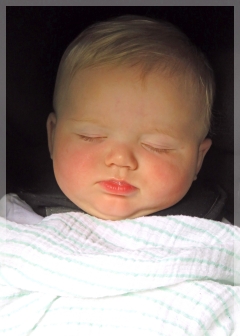
Ruthless and paranoid about possible usurpers to his throne, King Herod the Great killed three of his sons, several uncles and cousins, and one each of his wives, mothers-in-law, and brothers-in-law to protect his regime and keep his crown. Having been crowned “King of the Jews” in 40 BC by the Roman Senate, it’s not likely a man like that would be willing to share his title with an infant the Magi described as “the king of the Jews!” When Herod realized he was duped by the Magi and had no way to identify the infant king, the merciless man safeguarded his reign by ordering the wholesale slaughter of all Bethlehem’s boys two and under.
While there is no historical evidence of this slaughter, the story is plausible. It’s easy to believe that Herod, the Kim Jung-un/Joseph Stalin/Mao Zedong of the ancient world, would order the death of innocent children. When he was dying, the heartless king hatched a diabolical plan to gather all of the Jewish leaders and execute them upon his death. By doing this, he guaranteed that, instead of people rejoicing at his death, the entire nation would mourn. Massacring innocent children was right up his alley!
Perhaps, because the early church grossly inflated the number killed by Herod’s men to between 14,000 and 144,000, historians question its historicity. Bethlehem’s population at the time was somewhere between 300 and 1,500 so there probably would have been no more than two dozen children under the age of two (about half being girls). While the death of even one child is a tragedy, the deaths of 12 to 15 baby boys in a time of high infant mortality probably wasn’t newsworthy. Those innocent children may have gone unnoticed by ancient historians but they had names and mothers and their loss was noticed by all who knew them.
The first Christian martyr wasn’t Jesus on Calvary or even the sainted Stephen; it was a nameless baby boy in Bethlehem. St. Augustine called these murdered children the “flowers of the martyrs” and “the first buds of the Church killed by the frost of persecution,” while pointing out that “they died not only for Christ but in His stead.” They died for the one who would die for all!
Around 485 AD, Herod’s massacre of these innocent children was commemorated in a feast day called Holy Innocents or Childermas. For the Western church, yesterday was this often-overlooked feast day. Just three days after singing “All is calm, all is bright,” we’re singing of Herod slaying children. Instead of picturing Mary peacefully holding Jesus in her arms, we picture Herod’s soldiers tearing babies out of their mother’s arms. This day is the dark side of Christmas. It serves as a poignant reminder of the vulnerability of the innocent and the depths of human cruelty; it is a day to reflect on the sanctity of all human life.
As we recall Herod’s victims, we thank God for the children with which we have been blessed. May we also remember the holy innocents of the twenty-first century. Not just children, but all who are trafficked or abused, refugees or homeless, hungry or disenfranchised. Today’s holy innocents are all who are victimized, poverty-stricken, vulnerable, or casualties of war. Both young and old, all are God’s precious children. How can we protect them from the Herods of today?
We remember today, O God, the slaughter of the holy innocents of Bethlehem by King Herod. Receive, we pray, into the arms of your mercy all innocent victims; and by your great might frustrate the designs of evil tyrants and establish your rule of justice, love, and peace; through Jesus Christ our Lord, who lives and reigns with you, in the unity of the Holy spirit, one God, for ever and ever. Amen [Collect for Holy Innocents from the Book of Common Prayer]
Then was fulfilled what was spoken by the prophet Jeremiah: “A voice was heard in Ramah, weeping and loud lamentation, Rachel weeping for her children; she refused to be comforted, because they are no more.” [Matthew 2:17-18 (ESV)]
Copyright ©2025 jsjdevotions. All rights reserved.

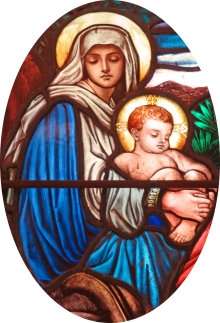 It’s tempting to speed-read through the long genealogies found in the Hebrew Scriptures, especially the nine chapters of names in 1 Chronicles. Just when we thought we were done with them, we get to the New Testament and Matthew begins with a lengthy genealogy. His abbreviated genealogy, however, is more than a list of often unpronounceable names. Because it was prophesized that the Messiah would be a descendant of Abraham and from the line of David, Matthew takes us through Jesus’ family tree to firmly establish His royal lineage and legal right to be the king of the Jews. There are three notable omissions in the line of ancestors—the vile kings Ahaziah, Joash, and Amaziah, all of whom Scripture says “did evil in the eyes of the Lord”—but there are five remarkable additions. While highly unusual to mention women in a genealogy, Matthew mentions five women, all of whom had what we might call “colorful” pasts.
 With just one week until Christmas, we may find ourselves sorely tempted to repeat Scrooge’s “Bah, humbug!” We’ve been busy with planning, cooking, baking, cleaning, decorating, shopping, wrapping, packing, and shipping; chances are that our expectations have become unrealistic and impossible to achieve. It’s easy to get so wrapped up in doing and getting that we forget the purpose of this wonderful holiday.
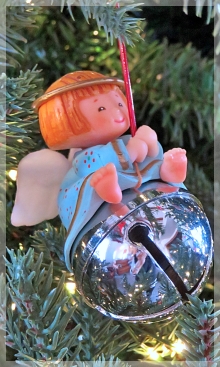 In the midst of all the tedious and repetitive regulations regarding sacrificial offerings in Leviticus, we find evidence of God’s love and mercy. For several sacrifices, a distinction was made between offering requirements for the wealthy and the poor. Called korban oleh v’yored, there was a sliding scale for sacrifice based on a person’s economic position. In Luke’s gospel, for example, we learn that Mary and Joseph brought two birds as their sacrifice after Jesus’ birth. Had the family been wealthier, they would have brought a one-year-old lamb and a pigeon or dove and, had they been poorer, they would have brought only two quarts of choice flour.
 Earlier this week, I wrote of the Levites’ failure to protect Judah from idolatry but one Levite stands out in his loyalty to God and commitment to the temple: Jehoiada the priest. When Judah’s King Ahaziah died, his mother, Queen Athaliah seized Judah’s throne. The daughter of Ahab and Jezebel, she was as evil as her parents and tried to kill all of her son’s heirs. Unknown to her, Ahaziah’s infant son Joash was hidden by his aunt and survived. Raised by the high priest Jehoiada, the boy’s existence was kept secret while the priest plotted to put him on the throne. When the boy was seven, Jehoiada made a pact with five army commanders who covertly travelled throughout Judah to summon the Levites and leaders to a meeting at the Temple.
 Devotions of the Heart