
Now we live with great expectation, and we have a priceless inheritance—an inheritance that is kept in heaven for you, pure and undefiled, beyond the reach of change and decay. [1 Peter 1: 3b-4 (NLT)]
 Back in March, when this pandemic began, people began thinking seriously about worst-case scenarios. Looking at the death tolls in other countries and seeing them rise in ours, many began scrambling to write their wills and end of life directives. By late April, one on-line estate planning platform reported a 223% increase in customers. When schools announced plans to resume in-person classes, that trend continued as many teachers added will writing to their back-to-school tasks.
Since we’re well into our seventies, my husband and I didn’t need a pandemic to remind us of our pending departure dates. Wanting to be good stewards of our financial blessings in both life and death, we’ve made arrangements and written our wills. Our lawyer wisely suggested that our end goal should be to have everyone in the family still speaking to one another when all is said and done. Unfortunately, even with a pandemic, many people fail to plan ahead for what we know will happen eventually to all of us. Sadly, their families end up squabbling over money, Uncle Joe’s war memorabilia, Grandma’s ring, or Sue’s Beanie Baby collection! By the time everything is resolved, the lawyers are the only ones who come out ahead and no one is speaking to anyone. Money rarely brings out the best in any of us.
Other than our financial assets (or debts, as the case may be) and a few possessions, what do we really leave to our children? Money and property are not the only legacy about which we should be concerned. Some things are far more important than cars, houses, insurance policies, or jewelry.
Perhaps we should be as concerned about our spiritual estate planning as we may be about our financial one. Unlike money, the quality of a spiritual bequest is far more important than its quantity. Good memories, an example of Christian living, wisdom, morals, love and good will are all more valuable than money or property. If we leave our children with humility, confidence, courage, hope, self-respect, the ability to laugh at themselves, and the desire to give and serve, we’ll have given them far more than money can buy.
The one thing we can’t leave them, however, is faith; that’s something they’ll have to find for themselves. We may have laid the groundwork by raising them as Christians but the choices they make are theirs alone. We can give them our prayers, good example, guidance, and love but they’ll have to do the rest on their own.
Heavenly Father, we give you our children—our heirs—and pray that they will become your heirs, as well. May they become heirs to the richness of your kingdom and glory.
I have now disposed of all my property to my family. There is one thing more I wish I could give them, and that is the Christian Religion. If they had that and I had not given them one shilling they would have been rich; and if they had not that and I had given them all the world, they would be poor. [Patrick Henry]
 Depending on the Bible translation used, there are five strange words we might encounter when reading the Psalms: maskil, miktam, shigionoth, gittith and selah. Maskil is seen in the titles of thirteen psalms and once in a psalm’s text (47:7). Believed to be derived from the Hebrew word sakal, meaning to be prudent, understand or ponder, maskil may indicate a psalm of wisdom with instructions for godliness. It’s sometimes translated as a “contemplative poem,” “instruction,” or “skillful psalm.” It also could refer to the skillful construction of the psalm (like a sonnet with its 14 lines and fixed rhyme scheme). The Amplified Bible covers both bases by calling a maskil “a skillful song, or a didactic or reflective poem.” Since the maskil psalms don’t share a common theme or a unique form, maskil could just be a musical term relating to its performance and its exact meaning remains a mystery in the Psalter.
 Of course, in another time or place, a missing nail might have better consequences. Without the nail, horseshoe and rider, the horse wouldn’t have been on the road, reared at the sight of a snake, and thrown off his rider (who died from his injuries)! Life is unpredictable.
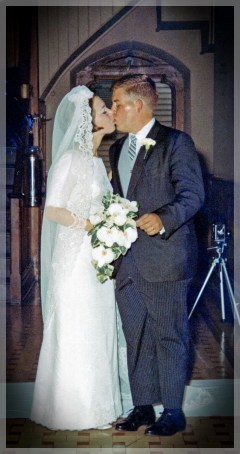 While being in lockdown for months may have given some couples a chance to reconnect, that connection wasn’t welcomed by all. Once their mandatory 10-week lockdown was lifted, Italian lawyers reported a 30% surge in couples starting divorce proceedings and both China and Saudi Arabia showed a similar rise when couples emerged from quarantine. For some couples, 24/7 togetherness for weeks on end exacerbated typical martial issues like money, housework, drinking, child care, screen and phone time, and dirty dishes in the sink. With the additional stressors of homeschooling, job loss or working at home, apprehension about the future, and trying to navigate safely in a COVID-19 world, even the best marriages have been tested.
 Although God passed along some very detailed commands, the people of Israel frequently refused to obey them and, in Judges 17-18, we see what happens when people do whatever seems right in their own eyes. After stealing 1,100 pieces of silver from his mother, Micah hears her curse the thief. Fearful of her curse, he confesses and returns the money. After blessing Micah to remove the curse, his mother dedicates the money to the Lord. In honor of her thieving son, however, she gives 200 of those coins to a silversmith for the fashioning of an image (a figure carved from wood overlaid with silver) and an idol (a figure cast from molten silver). Micah then sets up a shrine for the prohibited items, adds some household idols of his own, makes an ephod (a priestly garment), and installs his son as his own personal priest. This was wrong in so many ways: not only were people expressly forbidden from making either carved images or molten idols but only a Levite could serve as a priest!
