
When the Lord brought back his exiles to Jerusalem, it was like a dream! We were filled with laughter, and we sang for joy. And the other nations said, “What amazing things the Lord has done for them.” Yes, the Lord has done amazing things for us! What joy! [Psalm 126:1-3 (NLT)]
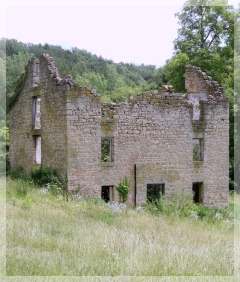 When the first group of exiles returned from Babylon, they rebuilt the altar and celebrated the Festival of Shelters. Seven months later, after laying a new foundation for the temple, the people again gathered for a celebration. Trumpets blew and cymbals clashed. They sang responsively with one chorus chanting, “He is so good!” and the other answering, “His faithful love endures forever!” In the midst of the crowd’s great shouts of praise, however, weeping could be heard.
Those shouts of praise were from the younger people: the ones who knew nothing of the glorious temple that Solomon had spared no expense in erecting. They’d never seen the doors and walls decorated with carvings of cherubim, flowers, and palm trees and completely overlaid with gold. They’d never walked on the porch or gazed up at the two 27-foot tall pillars of bronze topped by 7-feet chapiters decorated with lilies and pomegranates. For the younger people, the temple foundation was a beginning but, for those who’d seen the once magnificent temple, it was a painful reminder of all they’d lost.
50 years earlier, all of Jerusalem had been looted and destroyed. To those who’d seen the thriving city, splendid palace, and ornate temple, the smaller foundation in the middle of Jerusalem’s rubble was a poor substitute for what once was. David had amassed 1,000 times more money for the construction of Solomon’s temple than they had for this one and they knew it could never come close to matching the first. Standing in the midst of the city’s remains, they were disheartened. I imagine those returning to their homes along the Louisiana coastline after Hurricane Laura feel much the same way as they look at the devastation surrounding them.
In the years that followed, the Judeans encountered opposition to rebuilding the temple from their enemies. The real enemy, however, was their own discouragement and apathy. Sixteen years after they celebrated the temple’s foundation, God’s house still was unfinished while their own homes had been built (quite possibly with the lumber initially meant for the temple). The prophets Haggai and Zechariah called for the completion of God’s temple. The Lord’s message through Haggai was simple and direct: “Now go up into the hills, bring down timber, and rebuild my house.” [1:8] The people obeyed and, four years later, the second temple was dedicated.
I suppose we could call COVID-19 the “great detour” of 2020. It’s been our exile to Babylon and, while it hasn’t lasted decades, it sure feels that way. This year’s events certainly caught us off guard. Unless we were epidemiologists, most of us thought things would be back to normal by now. We now understand that, when this pandemic eventually is over, the world to which we return will not look the same. While it won’t be the wreckage of an uninhabited and destroyed Jerusalem and a vandalized and demolished temple, it will be vastly different from the one we left in March. Like the Judeans, we will have to rebuild and, like them, we will have to fight our greatest enemy: discouragement. Let us “Be strong, all you people still left in the land. And now get to work, for I am with you, says the Lord of Heaven’s Armies.” [Haggai 2:4b] Let us remember, “He is so good! His faithful love endures forever!”
 When Bartimaeus called out to Jesus, the crowd surrounding him kept telling him to be quiet. Not about to be deterred, the blind beggar just shouted louder. Another man in Jericho was as determined as Bartimaeus: the short and much disliked publican named Zacchaeus. When the little man couldn’t shove his way through to the front of the crowd to catch a glimpse of Jesus, he climbed up a tree (an extremely unseemly behavior for a man of his position).
 Several years ago, while spending the winter in the mountains, our morning walk took us by an art gallery. We frequently stopped to chat with the owner, look at the latest acquisitions and watch the progress of a local sculptor who had set up shop in the gallery. Working in clay, he was crafting the model for what would eventually be a cast bronze sculpture. As the final shape began to emerge, the artist continued to tweak it with small changes, a little pinch here or a small adjustment there, each time making it a better representation of a cowboy and his string of horses. Envisioning the final product and assured that it was nearly ready for casting, my husband and I made a pre-cast purchase of the piece.
 The Valley of Vision is a collection of Puritan prayers spanning from the sixteenth through the late nineteenth centuries. Having grown up with the King James Bible, its antiquated thees and thous along with verbs forms like wilt, didst, and makest don’t bother me. Their formality actually adds to the beauty and charm of the prayers. Although context usually explained outdated words like nethermost, subserve, and extenuations, I had to look up a few new words like peradventure.
 While France was in lockdown because of COVID-19, French marathon runner Elisha Nochomovitz ran a solo marathon on his 26-foot apartment balcony. Having to make around 3,000 laps meant Nochomovitz was unable to get momentum or gain any speed before he had to turn around again. Finding it harder than any other race he’d run, it took the runner six hours and 48 minutes (more than double his usual time) to complete the 26.2 miles. Struggling with self-doubt, he imagined an open window through which someone was telling him he couldn’t finish. Rather than listen, however, he closed that window. “In the end,” said the runner, “it’s only about the mind!” Nochomovitz showed endurance!
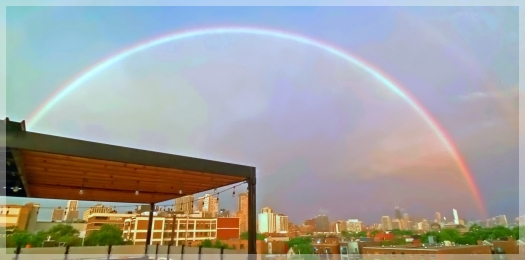 I will never again curse the ground because of the human race, even though everything they think or imagine is bent toward evil from childhood. I will never again destroy all living things. As long as the earth remains, there will be planting and harvest, cold and heat, summer and winter, day and night. [Genesis 8:21-22 (NLT)]
 Devotions of the Heart