REVERENCE AND RESPECT [1 Samuel 4 to 6 (Part 2)]

The Ark remained in Kiriath-jearim for a long time—twenty years in all. During that time all Israel mourned because it seemed the Lord had abandoned them. [1 Samuel 7:2 (NLT)]
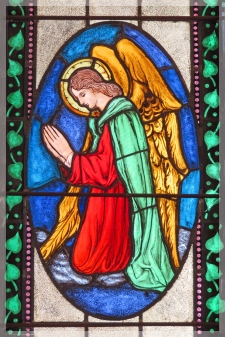
As we settled into our pews in the sanctuary, people talked loudly, called out to one another, laughed raucously, visited other pews, and checked their phones even after the organist started his beautiful prelude. It wasn’t until the pastor stood at the pulpit and started speaking that they eventually quieted down and put away their phones. As I wondered what became of the awe and reverence that should accompany us into God’s house, I again thought of the time Israel brought the sacred Ark of the Covenant into battle with them. Putting aside their idolatry, consider the lack of respect given to this religious chest designed by God and representing His presence among His people.

After being defeated by the Philistines, Israel blatantly disregarded the law that the Ark was to remain in the Tabernacle’s Holy of Holies in Shiloh and brought it to their camp in Ebenezer. Rather than treating it with the reverence due the most sacred object in the land, they loudly cheered the Ark’s arrival as if it were a team mascot. Pagan armies carried their gods into battle with them and, when they carried the Ark into battle the next day, the Israelites were no different than the pagan Philistines. Their sacrilege ended with defeat and 30,000 dead.

In the ancient world, the gods of the defeated were carried off by the victors and the Philistines took their battle trophy to their temple in Ashod. Thinking Israel’s god was in the box, they placed the Ark in the temple to serve as a secondary god to their major deity Dagon. The great God Jehovah, however, is second to none and He is not to be treated disrespectfully. When things went from bad to worse for the Philistines, they finally decided to return the Ark to Israel. Accompanied by a guilt offering of golden tumors and rats like the ones that probably ravaged their land with a plague, the Ark was returned to the Israelite city of Beth-shemesh.

The people of Beth-shemesh were overjoyed at the Ark’s return but, instead of treating it as the sacred object it was, they treated it as a curiosity. The inquisitive men opened the Ark and looked into it. This sacrilege was a serious violation of the law. As descendants of Aaron, the men of Beth-shemesh were priests and knew that they were prohibited from looking in the Ark “for even a moment.” Regardless of intentions, even touching (let alone opening) the Ark was punishable by death. When 70 men (some translations say 50,070) were struck down for this sacrilege, like the Philistines, the people of Beth-shemesh wanted to get rid of the Ark as soon as possible. What they failed to comprehend was that the Ark didn’t cause those deaths; it was the people’s impious, thoughtless, and reckless behavior that did!

Men from Kiriath-jearim came for the Ark but, rather than taking it back to the Tabernacle in Shiloh where it belonged, they took it to the home of Abinadab. Stored unceremoniously as if it were an old trunk in the attic, it remained there for twenty years.

Which brings me back to the noisy sanctuary last week. While church should be a welcoming place, it seems that we’ve shifted from relaxed, friendly, and unintimidating to irreverent, cavalier, and rude. A neighbor has noticed the same thing in her church.

A sanctuary is a sacred place set aside for worship—it may be in a large cathedral, small church, rustic chapel, park, living room, arena, auditorium, school room, or store front. Nevertheless, wherever it is, God demands (and certainly deserves) reverence and respect. Do we approach the sanctuary with awesome wonder at being welcomed into God’s house or do we irreverently give no thought at all to where and why we’re there? Does our behavior in church honor and glorify God? Does it reveal our gratitude for worshipping freely, safely, and openly; for hearing God’s word and singing His praises; and for sharing the Eucharist with our brothers and sisters in Christ? It should.

Israel “mourned because it seemed that the Lord had abandoned them” and it was twenty years before they repented of their behavior. God, however, had never abandoned them; they had abandoned Him when they stopped revering Him and started treating His Ark with disrespect and contempt. May we never make the mistake of treating our place of worship (His house) the same way!
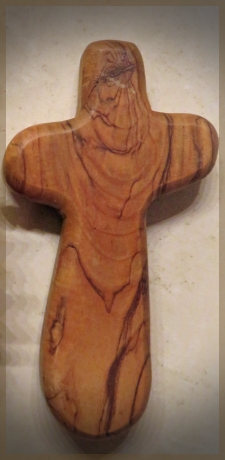
You must keep my Sabbath days of rest and show reverence for my sanctuary. I am the Lord. [Leviticus 26:2 (NLT)]

Since we are receiving a Kingdom that is unshakable, let us be thankful and please God by worshiping him with holy fear and awe. [Hebrews 12:28 (NLT)]

Copyright ©2023 jsjdevotions. All rights reserved.

TALISMANS [1 Samuel 4 to 6 (Part 1)]

You must not have any other god but me. You must not make for yourself an idol of any kind or an image of anything in the heavens or on the earth or in the sea. You must not bow down to them or worship them, for I, the Lord your God, am a jealous God who will not tolerate your affection for any other gods. [Exodus 20:3-5 (NLT)]

During the time of the judges, the Israelites were at war with the Philistines. Following their loss of 4,000 men, they questioned why God had allowed their defeat but never bothered asking Him. Instead, they decided that carrying the Ark of the Covenant into battle would guarantee a future victory. Perhaps they remembered the story of Israel entering the Promised Land—how the Jordan River stopped flowing when the feet of the priests carrying the Ark touched the water and the entire nation crossed the dry riverbed into Canaan. They may have recalled Jericho’s defeat when Israel’s priests carried the Ark around the walled city for seven days and the city’s seemingly invincible walls collapsed. Maybe they thought it was the Arks’ presence that caused those miracles; in any case, they brought the Ark to their camp in Ebenezer.

Rather than put their faith in God’s power to save them, the men put their faith in a powerless box that held revered artifacts. While sacred, the Ark had no more power to bring victory than would a scarab amulet. Nevertheless, Israel put their trust in this talisman instead of God. I wonder if they blamed the Ark rather than their sacrilege when the Philistines defeated them, captured the Ark, and took it into their territory.

Israel failed to remember that, in the 400 years since crossing the Jordan and defeating Jericho, the Ark never had been taken into battle and, in both of those instances, God specifically commanded the action. Worse, the men had broken the first commandment by putting their faith in something other than God.

The Philistines may have thought themselves lucky to have captured the Ark but that quickly changed. Although they placed it in their temple next to their chief deity Dagon, the next morning, Dagon was found on the ground before the Ark, face down in a position of humility and worship. After the idol was returned to its place, it was found face down again the next day. Decapitation of foes and the severing of hands was a common practice in the ancient world and Dagon’s head and hands were broken off and lying in the temple’s doorway. Jehovah’s message was clear: Dagon was a powerless god who couldn’t even prevent his own execution in his temple!

Still, the Philistines failed to return the Ark and, when God sent an illness of tumors (possibly something like bubonic plague), they played a deadly game of “hot potato” for the next seven months by moving the Ark from town to town. Wherever it landed, however, the plague of tumors followed. When a cry went through the land, the Philistines finally returned the Ark to Israel. Like Israel, they made the mistake of attributing power to the Ark rather than to the great God Jehovah!

As did the Israelites, we must never put our trust in things—whether it’s lucky coin, crystal, rabbit’s foot, or cross on a necklace. Although a rosary dangling from the rearview mirror, an olivewood cross in your purse, a fish symbol on the trunk, a St. Christopher medal on the dash, or an angel pin on your lapel may serve as visual reminders of our powerful God, they are powerless to keep us from being lost, injured, ill, or getting into an accident, or having some other trouble. God cannot be manipulated to bring about good fortune! Treating any object (secular or religious) as a talisman or good luck charm turns it into an idol!

In the same way, we must never live in fear of things like the number 13, not forwarding a chain letter, or seven years of bad luck after breaking a mirror. Those things are as powerless as was the Philistine’s god Dagon. At its simplest, superstition simply is fear. As Paul told Timothy in his second letter, “God has not given us a spirit of fear and timidity, but of power, love, and self-discipline.” [1:7] Rather than fearing superstitions or symbols, we should fear God with a fear that manifests itself in our respect, obedience, submission, and worship of Him.

Divine protection and victory come from God alone, not from pictures, jewelry, talismans, or even the Ark. There is a fine line between respecting an object and idolatry. Philistine and Israelite alike crossed that line; let’s be sure we never do.

The idols of the nations are merely things of silver and gold, shaped by human hands. They have mouths but cannot speak, and eyes but cannot see. They have ears but cannot hear, and mouths but cannot breathe. And those who make idols are just like them, as are all who trust in them. [Psalm 135:15-18 (NLT)]

Copyright ©2023 jsjdevotions. All rights reserved.

PLAYING WITH FIRE

A little yeast works its way through the whole lump. [Galatians 5:9 (NTE)]

CAMPFIREWhile baking banana bread, I decided to add in the last of the walnuts I found in the refrigerator. After pouring the dough into the prepared pans, I spotted a few walnut pieces that hadn’t made the mixing bowl and popped them in my mouth. One taste told me they were rancid! Not only are rancid nuts horrid tasting but, if enough are consumed, they can make you sick! Just as there’s no way to get a little bit of yeast out of a lump of dough, there was no way to get every last bit of nut nastiness out of the bread. A mere cup of nuts managed to turn more than eight cups of what should have been sweet and delicious into something bitter and sour. As I emptied the pans into the garbage, I recalled a sermon illustration about a thirteen-year-old girl.

The young teen tried to convince her mother that she should be allowed to see a certain R-rated movie. Explaining that there was only a little inappropriate material (such as casual sex, violence, bad language, nudity, and drugs) in the movie, she promised she’d take none of it to heart. Although the teen begged to be allowed to view it with her friends, her mother denied the request. Saying she couldn’t understand, the girl left in a snit to sulk in her room. Meanwhile, her mother set to work baking cookies in the kitchen. A wonderful aroma filled the house and, when the cookies were baked, the mother asked her daughter if she’d like to taste a special new recipe. Although they looked like regular chocolate chip cookies, her mother said something extra had been added. As the girl greedily reached for the tasty looking cookies, she asked about the new ingredient. Her mother explained that she added a small scoop of leavings from the cat’s litter box and mixed it into the batter. Since it was just a small scoop, it would hardly be noticeable and she was certain her daughter could ignore it while enjoying the rest of the cookie. It was then that the girl understood why her mother had prohibited the movie! Like the little bit of R in the movie, the incest in the Corinthian church, the false doctrine in Galatia, the rancid walnuts in my batter, and the cat poop in the cookies, even a little bit of sin is more than any of us should consume!

As adults, we consider ourselves wiser and more discerning than teenagers and, as Christ’s followers, we like to think we’re able to withstand the negative influences of today’s world. Let’s not fool ourselves. Temptation is all around us. While it may look as harmless as did that R-rated movie to the teen, we can’t step in the muck without getting a little dirty. When David, a “man after God’s heart,” snuck a quick look at the naked Bathsheba, he never intended it to grow into adultery and murder, but it did. Like David’s voyeurism, even a little bit of nastiness, corruption, vanity, revenge, arrogance, prejudice, spite, smut, hatred, deceit, or immorality has a tendency to produce something far worse.

Think of Solomon—supposedly the wisest man who ever lived. When he ignored the law by marrying Egyptian, Moabite, Edomite, Sidonian, and Hittite women, the king probably thought himself impervious their pagan beliefs. After all, with 1,000 women in his harem, what was the harm of a handful who worshipped idols? Solomon, however, wasn’t as wise as he thought! In his old age, those women “turned his heart to worship other gods instead of being completely faithful to the LORD his God.” [1 Kings 11:4] The one who so wisely warned others to avoid the path of sin foolishly walked right onto it!

Sin is deceptive and, sometimes it looks as harmless and enticing as fresh-baked banana bread or chocolate chip cookies. But, like a little scoop of cat poop or some rancid nuts in a bowl of batter, no matter how small, every little bit of bad we allow to enter our lives affects us. Solomon warned that, when we play with fire, we should expect to get burned. Sadly, he didn’t heed his own words. Let’s not make the same mistake!

The temptation once yielded to gains power. The crack in the embankment which lets a drop or two ooze through is soon a hole which lets out a flood. [Alexander MacLaren]

Can a man scoop a flame into his lap and not have his clothes catch on fire? Can he walk on hot coals and not blister his feet? [Proverbs 6:27-28 (NLT)]

Copyright ©2023 jsjdevotions. All rights reserved.

BEWARE THE YEAST (Yeast – Part 2)

“Why can’t you understand that I’m not talking about bread? So again I say, ‘Beware of the yeast of the Pharisees and Sadducees.’” Then at last they understood that he wasn’t speaking about the yeast in bread, but about the deceptive teaching of the Pharisees and Sadducees. [Matthew 16:11-12 (NLT)]

oleanderFor a single-cell microorganism member of the fungus family, yeast is mighty powerful. When added to water and flour, it starts to grow and multiply as it ferments the sugars in the flour, releases carbon dioxide, and causes the dough to rise. Moreover, once added to something, yeast can’t be removed. When a small amount of old fermented dough called a starter or seor is kneaded into flour and water, it permeates the dough and makes it rise. Some of the newly leavened dough can be saved to become the starter for the next batch of bread and so on.


In the right conditions, yeast seems nearly immortal. San Francisco’s Boudin Bakery uses a sourdough starter originating in 1849.  Scientists even revived yeast microbes from 4,500 years ago to make a loaf of bread! Indeed, the longevity, growth potential, and pervasiveness of yeast makes it a powerful substance.

The way yeast permeates and affects the dough with which it is mixed certainly makes it a good metaphor for the influence of one thing on another. Even though the Hebrew Scriptures never equated leavening with sin or evil, leaven and corruption had become almost synonymous with one another by the 1st century. Although Jesus used yeast’s power in a positive way as a metaphor for the growth and spread of the Messianic Kingdom, He also used yeast in a negative way; just as good can influence the world around it, so can bad.

At various times, Jesus used yeast as a metaphor for the power of evil to spread. He warned the disciples about the yeast of skepticism and unbelief found in the Pharisees, Sadducees, and Herod. In spite of the bountiful evidence of Jesus’ true identity seen in His miracles, the Pharisees and Sadducees demanded yet another “sign from heaven” to prove His authority. When Jesus appeared before Herod, the king wanted to see the proof of His miracles, as well. Not wanting His followers to be infected with such distrust or thinking of His miracles as entertainment for unbelievers, Jesus made this warning several times. Taking Him literally at first, the disciples thought Jesus was speaking of bread until they finally understood His meaning.

Along with the Pharisee’s skepticism, Jesus didn’t want his disciples influenced by their addition of the Talmud’s oral traditions to God’s final word in the Hebrew Bible or their hypocrisy in meticulously following the letter of the law while ignoring the most important commandment—that of loving God and their neighbor. Jesus also didn’t want His disciples affected by the Sadducees’ deceptive teachings. More concerned with their ritual purity than people’s welfare and politics than religion, the Sadducees denied things like angels, heaven, hell, and the resurrection while believing that people’s souls died with their bodies. As for Herod’s evil influence—Jesus didn’t want His disciples influenced by the actions of this immoral and self-indulgent man.

In letters to the Corinthians and the Galatians, the Apostle Paul also used yeast as a metaphor for the powerful influence of erroneous thinking and sinful behavior. When the Corinthian church ignored the flagrant immorality of one of its members, Paul warned them to remove him from the congregation lest such immorality spread through the entire congregation (as yeast does when added to fresh dough). In the same way, Paul warned the Galatians about the danger of accepting the perverted gospels of both the Judaizers (who insisted Gentiles had to adhere to Jewish laws like circumcision) and the Legalists (who preached a doctrine of salvation by works). Such false teaching was dangerous because, like yeast, it spreads out and affects everything with which it comes into contact.

Be it even a little false doctrine or immorality (whether sexual sin or things like abuse of power, financial fraud, deception, decadence, hate, hypocrisy, or gossip), when such evil is tolerated by the Church, it is like yeast. It’s evil works invisibly and will permeate and influence all that it touches. Just as a little leaven leavens the whole lump, a little sin can destroy the individual as well as the Church—the body of Christ. Let us beware!

Don’t you realize that this sin is like a little yeast that spreads through the whole batch of dough? Get rid of the old “yeast” by removing this wicked person from among you. Then you will be like a fresh batch of dough made without yeast, which is what you really are. [1 Corinthians 5:6-7 (NLT)]

Copyright ©2023 jsjdevotions. All rights reserved.

HIDDEN CRUMBS

For seven days the bread you eat must be made without yeast, as when you escaped from Egypt in such a hurry. Eat this bread—the bread of suffering—so that as long as you live you will remember the day you departed from Egypt. Let no yeast be found in any house throughout your land for those seven days. Deuteronomy 16: 3-4 (NLT)]

spiderwort

In Exodus 12 and Deuteronomy 16, God ordained a seven-day festival commemorating both the day death’s angel passed over Jewish homes when striking down Egypt’s firstborn sons and Israel’s emancipation from slavery. Prior to the innovation of a fixed mathematical calendar determining the full moon’s date, Jews living outside of Israel celebrated for eight days. Today, in spite of knowing the exact date of the full moon, Orthodox and Conservative Jews outside of Israel continue to celebrate eight days while Jews living in Israel and Reform Jews (no matter where they live) celebrate seven. Whether observed for seven or eight days, Passover and the Feast of Unleavened Bread begin at sunset this Wednesday when our Jewish sisters and brothers will celebrate with a Seder supper.

A Seder plate holds at least six ritual items to help retell the story of Israel’s exodus from Egypt. Along with a lamb shank representing the paschal (lamb) sacrifice, bitter herbs representing the bitterness of slavery, and saltwater representing the peoples’ tears and sweat will be an unleavened bread called matzah. Called the bread of affliction or suffering, the unleavened bread was to remind Israel of the day they left Egypt.

Although there is written evidence that Egyptians used yeast to bake bread some five thousand years ago, archeologists suspect it was used long before that and leavened bread was a regular part of ancient Israel’s diet when the people fled Egypt. But, because they left in haste, there was no time for dough to rise so the bread they brought with them was unleavened. When God ordained this commemoration, He prohibited eating anything with leavening the entire seven days. Along with refraining from leavened food, He instructed Israel to rid their homes from all leavening agents or products containing leaven.

More than 3,400 years later, preparing for this holiday involves more than eliminating bread, cookies, pastries, yeast, and cake mixes from the pantry. In preparation for Passover, any traces of those items are completely eradicated. The house is meticulously cleaned so that no crumbs remain in the toaster, oven, refrigerator, under cushions, or in pockets. The night preceding Passover, families do one last search for chametz (anything with leavening) and any found is removed from the house and burned outside. In actuality, cleaning one’s house of all yeast is just about impossible because yeast is a fungus. Existing in the air, soil, and on plants, it will find a way to enter even the cleanest house.

While yeast and leavening are what makes baked goods rise, when yeast or leavening are mentioned in the Bible, they sometimes represent sin. Jesus used yeast to describe corruption, false teaching and hypocrisy. Sin, like yeast, is all around us and can enter our lives through the tiniest cracks. Like yeast, sin can grow, multiply, and take on a life of its own. Just as a little yeast can go a long way and spread through dough, a little sin can spread right through a person and spread into those around him.

For Christians, thinking of yeast as symbolic of sin gives additional meaning to the Passover celebration. Because Jesus freed us from the laws and rituals of the Old Testament, we don’t need to search for cookie and bagel crumbs in our pantry nor do we have to forego French toast and toasted cheese sandwiches for the next week. Nevertheless, just as there are crumbs hiding in the bottom of the toaster and under the sofa’s cushions, there is sin hidden in our lives. Rather than hunt through the house for crumbs with leavening, let us search through our hearts for concealed and unacknowledged sin. In preparation for Resurrection Sunday this week, we should look deep into the nooks and crannies of our thoughts and actions and remove all that doesn’t belong.

For Jews, this week celebrates their deliverance from Egypt. As Christians, may this Holy Week prepare us for the celebration of our deliverance from sin!

Don’t you realize that this sin is like a little yeast that spreads through the whole batch of dough? Get rid of the old “yeast” by removing this wicked person from among you. Then you will be like a fresh batch of dough made without yeast, which is what you really are. Christ, our Passover Lamb, has been sacrificed for us. So let us celebrate the festival, not with the old bread of wickedness and evil, but with the new bread of sincerity and truth. [1 Corinthians 5:6-8 (NLT)]

Copyright ©2023 jsjdevotions. All rights reserved.

HE HUMBLES

Uzziah sought God during the days of Zechariah, who taught him to fear God. And as long as the king sought guidance from the Lord, God gave him success. … But when he had become powerful, he also became proud, which led to his downfall. [2 Chronicles 26:5,16 (NLT)]

peacockWhen writing about pride earlier this week, I remembered the Bible’s stories of proud men who got their comeuppance. 2 Chronicles 26 tells of Uzziah who, as long as he “sought guidance from the Lord, God gave him success.” His mighty army defeated the Philistines, Arabians, and Meunites (who then paid him an annual tribute) and, under his rule, Jerusalem’s walls were fortified, wilderness forts were established, water cisterns were dug, and something like catapults were erected on the walls to defend the city. With Uzziah as king, Judah prospered and the powerful king’s fame spread “far and wide.” Sadly, along with prosperity, power, and fame came pride. Believing he was above the law, the proud king entered the sanctuary and usurped the high priest’s role by offering incense. When priests warned him about his sacrilege, the proud king raged at them and immediately was stricken with leprosy—a disease that meant the “unclean” man lived the rest of his life in isolation and never again could enter the Temple. All the blessings, accomplishments, and prosperity of his reign were overshadowed by Uzziah’s one act of pride, insolence, and arrogance.

It is in the book of Daniel that we meet the proud Babylonian King Nebuchadnezzar. He was so full of pride that he erected a 90-foot golden statue of himself and then demanded that people fall down and worship it as a sign of loyalty to him. When the king had a disturbing dream about a tree that grew tall and then was cut down, he called upon Daniel to interpret its meaning. Daniel explained that Nebuchadnezzar was the tree and would be cut down by losing his kingdom. He then would live like an animal until he repented of his pride and learned that Heaven, not man, rules. Although Daniel advised the king to acknowledge God’s rule and govern with justice, his words fell on deaf ears.

About a year later, as Nebuchadnezzar looked down from his rooftop at the majestic splendors of Babylon, he proudly congratulated himself on his mighty power that accomplished such great things. Before the words were even out of his mouth, a voice from heaven pronounced judgment upon him and the king developed what is known as boanthropy, a psychological disorder in which one becomes delusional and thinks they’re a cow. The high and mighty king was driven from society and lived and ate like an animal for the next seven years. It was not until the once proud (but now repentant) king raised his eyes to heaven and acknowledged that God is the ruler over mankind that his sanity returned and his kingdom was restored.

For forty days and nights, the Philistine giant Goliath had proudly sauntered out to taunt the Israelite troops. Dressed in his bronze helmet, coat of mail, and leg armor while armed with spear, javelin, and sword, he challenged them to fight. Calling himself the Philistine champion and Israel’s army mere servants of Saul, the arrogant warrior thought himself invincible. What the Philistine didn’t know (but David did) was that, in taunting Israel, the braggart had insulted the God of Israel. When the nine-foot Goliath saw David walk toward him, he was filled with disdain for the apparently weaponless youth. In his smugness and conceit, he never considered the possibility that the boy was armed with sling, stones, and the power of Jehovah. When David ran toward him, the giant never saw what hit him. What a humiliating end for the warrior! He was felled by a single stone and beheaded by a shepherd boy wielding the giant’s own sword! Goliath’s demise is a perfect example of the old saying that “pride comes before a fall!”

Pride leads us down a dangerous path and, as we’ve seen from Scripture, pride inevitably leads to humiliation. It’s not just kings and giants who are proud rather than humble and fail to acknowledge from whom their gifts come and to whom they should submit. All that we possess in the way of power, strength, riches, intelligence, possessions, ability, talent, and even health are gifts from God—and He can take them away as easily as He gives them! Let us be humble.

No matter how dear you are to God, if pride is harbored in your spirit, He will whip it out of you. They that go up in their own estimation must come down again by His discipline. [Charles Spurgeon]

The Lord detests the proud; they will surely be punished. … Pride goes before destruction, and haughtiness before a fall. First pride, then the crash—the bigger the ego, the harder the fall. Better to live humbly with the poor than to share plunder with the proud. [Proverbs 16:5,18-19 (NLT)]

Copyright ©2023 jsjdevotions. All rights reserved.