BEWARE THE YEAST (Yeast – Part 2)

“Why can’t you understand that I’m not talking about bread? So again I say, ‘Beware of the yeast of the Pharisees and Sadducees.’” Then at last they understood that he wasn’t speaking about the yeast in bread, but about the deceptive teaching of the Pharisees and Sadducees. [Matthew 16:11-12 (NLT)]

oleanderFor a single-cell microorganism member of the fungus family, yeast is mighty powerful. When added to water and flour, it starts to grow and multiply as it ferments the sugars in the flour, releases carbon dioxide, and causes the dough to rise. Moreover, once added to something, yeast can’t be removed. When a small amount of old fermented dough called a starter or seor is kneaded into flour and water, it permeates the dough and makes it rise. Some of the newly leavened dough can be saved to become the starter for the next batch of bread and so on.

In the right conditions, yeast seems nearly immortal. San Francisco’s Boudin Bakery uses a sourdough starter originating in 1849.  Scientists even revived yeast microbes from 4,500 years ago to make a loaf of bread! Indeed, the longevity, growth potential, and pervasiveness of yeast makes it a powerful substance.

The way yeast permeates and affects the dough with which it is mixed certainly makes it a good metaphor for the influence of one thing on another. Even though the Hebrew Scriptures never equated leavening with sin or evil, leaven and corruption had become almost synonymous with one another by the 1st century. Although Jesus used yeast’s power in a positive way as a metaphor for the growth and spread of the Messianic Kingdom, He also used yeast in a negative way; just as good can influence the world around it, so can bad.

At various times, Jesus used yeast as a metaphor for the power of evil to spread. He warned the disciples about the yeast of skepticism and unbelief found in the Pharisees, Sadducees, and Herod. In spite of the bountiful evidence of Jesus’ true identity seen in His miracles, the Pharisees and Sadducees demanded yet another “sign from heaven” to prove His authority. When Jesus appeared before Herod, the king wanted to see the proof of His miracles, as well. Not wanting His followers to be infected with such distrust or thinking of His miracles as entertainment for unbelievers, Jesus made this warning several times. Taking Him literally at first, the disciples thought Jesus was speaking of bread until they finally understood His meaning.

Along with the Pharisee’s skepticism, Jesus didn’t want his disciples influenced by their addition of the Talmud’s oral traditions to God’s final word in the Hebrew Bible or their hypocrisy in meticulously following the letter of the law while ignoring the most important commandment—that of loving God and their neighbor. Jesus also didn’t want His disciples affected by the Sadducees’ deceptive teachings. More concerned with their ritual purity than people’s welfare and politics than religion, the Sadducees denied things like angels, heaven, hell, and the resurrection while believing that people’s souls died with their bodies. As for Herod’s evil influence—Jesus didn’t want His disciples influenced by the actions of this immoral and self-indulgent man.

In letters to the Corinthians and the Galatians, the Apostle Paul also used yeast as a metaphor for the powerful influence of erroneous thinking and sinful behavior. When the Corinthian church ignored the flagrant immorality of one of its members, Paul warned them to remove him from the congregation lest such immorality spread through the entire congregation (as yeast does when added to fresh dough). In the same way, Paul warned the Galatians about the danger of accepting the perverted gospels of both the Judaizers (who insisted Gentiles had to adhere to Jewish laws like circumcision) and the Legalists (who preached a doctrine of salvation by works). Such false teaching was dangerous because, like yeast, it spreads out and affects everything with which it comes into contact.

Be it even a little false doctrine or immorality (whether sexual sin or things like abuse of power, financial fraud, deception, decadence, hate, hypocrisy, or gossip), when such evil is tolerated by the Church, it is like yeast. It’s evil works invisibly and will permeate and influence all that it touches. Just as a little leaven leavens the whole lump, a little sin can destroy the individual as well as the Church—the body of Christ. Let us beware!


Don’t you realize that this sin is like a little yeast that spreads through the whole batch of dough? Get rid of the old “yeast” by removing this wicked person from among you. Then you will be like a fresh batch of dough made without yeast, which is what you really are. [1 Corinthians 5:6-7 (NLT)]

Copyright ©2023 jsjdevotions. All rights reserved.

HIDDEN CRUMBS

For seven days the bread you eat must be made without yeast, as when you escaped from Egypt in such a hurry. Eat this bread—the bread of suffering—so that as long as you live you will remember the day you departed from Egypt. Let no yeast be found in any house throughout your land for those seven days. Deuteronomy 16: 3-4 (NLT)]

spiderwort

In Exodus 12 and Deuteronomy 16, God ordained a seven-day festival commemorating both the day death’s angel passed over Jewish homes when striking down Egypt’s firstborn sons and Israel’s emancipation from slavery. Prior to the innovation of a fixed mathematical calendar determining the full moon’s date, Jews living outside of Israel celebrated for eight days. Today, in spite of knowing the exact date of the full moon, Orthodox and Conservative Jews outside of Israel continue to celebrate eight days while Jews living in Israel and Reform Jews (no matter where they live) celebrate seven. Whether observed for seven or eight days, Passover and the Feast of Unleavened Bread begin at sunset this Wednesday when our Jewish sisters and brothers will celebrate with a Seder supper.

A Seder plate holds at least six ritual items to help retell the story of Israel’s exodus from Egypt. Along with a lamb shank representing the paschal (lamb) sacrifice, bitter herbs representing the bitterness of slavery, and saltwater representing the peoples’ tears and sweat will be an unleavened bread called matzah. Called the bread of affliction or suffering, the unleavened bread was to remind Israel of the day they left Egypt.

Although there is written evidence that Egyptians used yeast to bake bread some five thousand years ago, archeologists suspect it was used long before that and leavened bread was a regular part of ancient Israel’s diet when the people fled Egypt. But, because they left in haste, there was no time for dough to rise so the bread they brought with them was unleavened. When God ordained this commemoration, He prohibited eating anything with leavening the entire seven days. Along with refraining from leavened food, He instructed Israel to rid their homes from all leavening agents or products containing leaven.

More than 3,400 years later, preparing for this holiday involves more than eliminating bread, cookies, pastries, yeast, and cake mixes from the pantry. In preparation for Passover, any traces of those items are completely eradicated. The house is meticulously cleaned so that no crumbs remain in the toaster, oven, refrigerator, under cushions, or in pockets. The night preceding Passover, families do one last search for chametz (anything with leavening) and any found is removed from the house and burned outside. In actuality, cleaning one’s house of all yeast is just about impossible because yeast is a fungus. Existing in the air, soil, and on plants, it will find a way to enter even the cleanest house.

While yeast and leavening are what makes baked goods rise, when yeast or leavening are mentioned in the Bible, they sometimes represent sin. Jesus used yeast to describe corruption, false teaching and hypocrisy. Sin, like yeast, is all around us and can enter our lives through the tiniest cracks. Like yeast, sin can grow, multiply, and take on a life of its own. Just as a little yeast can go a long way and spread through dough, a little sin can spread right through a person and spread into those around him.

For Christians, thinking of yeast as symbolic of sin gives additional meaning to the Passover celebration. Because Jesus freed us from the laws and rituals of the Old Testament, we don’t need to search for cookie and bagel crumbs in our pantry nor do we have to forego French toast and toasted cheese sandwiches for the next week. Nevertheless, just as there are crumbs hiding in the bottom of the toaster and under the sofa’s cushions, there is sin hidden in our lives. Rather than hunt through the house for crumbs with leavening, let us search through our hearts for concealed and unacknowledged sin. In preparation for Resurrection Sunday this week, we should look deep into the nooks and crannies of our thoughts and actions and remove all that doesn’t belong.

For Jews, this week celebrates their deliverance from Egypt. As Christians, may this Holy Week prepare us for the celebration of our deliverance from sin!

Don’t you realize that this sin is like a little yeast that spreads through the whole batch of dough? Get rid of the old “yeast” by removing this wicked person from among you. Then you will be like a fresh batch of dough made without yeast, which is what you really are. Christ, our Passover Lamb, has been sacrificed for us. So let us celebrate the festival, not with the old bread of wickedness and evil, but with the new bread of sincerity and truth. [1 Corinthians 5:6-8 (NLT)]

Copyright ©2023 jsjdevotions. All rights reserved.

HE HUMBLES

Uzziah sought God during the days of Zechariah, who taught him to fear God. And as long as the king sought guidance from the Lord, God gave him success. … But when he had become powerful, he also became proud, which led to his downfall. [2 Chronicles 26:5,16 (NLT)]

peacockWhen writing about pride earlier this week, I remembered the Bible’s stories of proud men who got their comeuppance. 2 Chronicles 26 tells of Uzziah who, as long as he “sought guidance from the Lord, God gave him success.” His mighty army defeated the Philistines, Arabians, and Meunites (who then paid him an annual tribute) and, under his rule, Jerusalem’s walls were fortified, wilderness forts were established, water cisterns were dug, and something like catapults were erected on the walls to defend the city. With Uzziah as king, Judah prospered and the powerful king’s fame spread “far and wide.” Sadly, along with prosperity, power, and fame came pride. Believing he was above the law, the proud king entered the sanctuary and usurped the high priest’s role by offering incense. When priests warned him about his sacrilege, the proud king raged at them and immediately was stricken with leprosy—a disease that meant the “unclean” man lived the rest of his life in isolation and never again could enter the Temple. All the blessings, accomplishments, and prosperity of his reign were overshadowed by Uzziah’s one act of pride, insolence, and arrogance.

It is in the book of Daniel that we meet the proud Babylonian King Nebuchadnezzar. He was so full of pride that he erected a 90-foot golden statue of himself and then demanded that people fall down and worship it as a sign of loyalty to him. When the king had a disturbing dream about a tree that grew tall and then was cut down, he called upon Daniel to interpret its meaning. Daniel explained that Nebuchadnezzar was the tree and would be cut down by losing his kingdom. He then would live like an animal until he repented of his pride and learned that Heaven, not man, rules. Although Daniel advised the king to acknowledge God’s rule and govern with justice, his words fell on deaf ears.

About a year later, as Nebuchadnezzar looked down from his rooftop at the majestic splendors of Babylon, he proudly congratulated himself on his mighty power that accomplished such great things. Before the words were even out of his mouth, a voice from heaven pronounced judgment upon him and the king developed what is known as boanthropy, a psychological disorder in which one becomes delusional and thinks they’re a cow. The high and mighty king was driven from society and lived and ate like an animal for the next seven years. It was not until the once proud (but now repentant) king raised his eyes to heaven and acknowledged that God is the ruler over mankind that his sanity returned and his kingdom was restored.

For forty days and nights, the Philistine giant Goliath had proudly sauntered out to taunt the Israelite troops. Dressed in his bronze helmet, coat of mail, and leg armor while armed with spear, javelin, and sword, he challenged them to fight. Calling himself the Philistine champion and Israel’s army mere servants of Saul, the arrogant warrior thought himself invincible. What the Philistine didn’t know (but David did) was that, in taunting Israel, the braggart had insulted the God of Israel. When the nine-foot Goliath saw David walk toward him, he was filled with disdain for the apparently weaponless youth. In his smugness and conceit, he never considered the possibility that the boy was armed with sling, stones, and the power of Jehovah. When David ran toward him, the giant never saw what hit him. What a humiliating end for the warrior! He was felled by a single stone and beheaded by a shepherd boy wielding the giant’s own sword! Goliath’s demise is a perfect example of the old saying that “pride comes before a fall!”

Pride leads us down a dangerous path and, as we’ve seen from Scripture, pride inevitably leads to humiliation. It’s not just kings and giants who are proud rather than humble and fail to acknowledge from whom their gifts come and to whom they should submit. All that we possess in the way of power, strength, riches, intelligence, possessions, ability, talent, and even health are gifts from God—and He can take them away as easily as He gives them! Let us be humble.

No matter how dear you are to God, if pride is harbored in your spirit, He will whip it out of you. They that go up in their own estimation must come down again by His discipline. [Charles Spurgeon]

The Lord detests the proud; they will surely be punished. … Pride goes before destruction, and haughtiness before a fall. First pride, then the crash—the bigger the ego, the harder the fall. Better to live humbly with the poor than to share plunder with the proud. [Proverbs 16:5,18-19 (NLT)]

Copyright ©2023 jsjdevotions. All rights reserved.

PRIDE BLINDS

Sin whispers to the wicked, deep within their hearts. They have no fear of God at all. In their blind conceit, they cannot see how wicked they really are. [Psalm 36:1-2 (NLT)]

prickly pear cactusI enjoy stopping for a short stroll on the boardwalk of a local nature preserve that is home to well over 100 gopher tortoises (a protected species) and a wide assortment of native plants. The boardwalk is low to the ground and has no railing because it’s not there to protect people from the alligators and snakes of the swamp; it’s there to protect the animals and their dry scrub habitat from people! Several signs are posted about not stepping off it onto the fragile landscape. When I spotted an absolutely beautiful prickly pear cactus in full bloom, I was disappointed it was out of decent photo range. Since mine had been the only car in the parking lot, I was tempted to disobey the posted signs. “I really want that photo! Who’d know? What harm could I do?” I asked myself. If I’d seen someone else stepping off the boardwalk, however, I would have admonished them for their lack of environmental concern! Recognizing sin’s whisper in my ear, I stayed put. Nevertheless, I realized how tempting it is to think my desires are more important than anything or anyone else.
It’s easy to get so caught up in the importance of ourselves—our projects, possessions or purpose—that we forget it’s not really about us. Last year, a town north of us had a severe water shortage and asked residents to water lawns only once a week—yet, despite the city’s pleas, people disregarded the restrictions. Apparently, their landscaping took priority over the needs of their community. When no water comes out of the fire hydrants, however, the color of their grass will be of no importance.

I regularly see drivers run red lights, fail to yield right of way when entering roundabouts, and multi-task by texting, applying make-up, eating, and reading while driving. Apparently, their desire to get somewhere on their timeline takes precedence over anyone else’s safety. Of course, the few seconds they may save will be lost in an accident!

Why do we disobey laws (or God) so easily? What was it that made me (even briefly) think I deserved a photo denied to any but those with the finest camera and telephoto lens? The answer C.S. Lewis might give is pride. Calling it the “complete anti-God state of mind,” he considered pride the underlying cause of every other vice.

Competitive in nature, pride causes people to look down on things and other people. Could it be pride that makes people decide their lawns are more important than their city’s water supply or their destination is more important than the safety of their fellow drivers? Is it pride that causes us to think God’s commands, government regulations, traffic laws, community requirements, ethical principles,  moral standards, and even the rules of common courtesy apply to everyone else but not to us? Is it pride that makes us forget about doing unto others as we would have done to us? Could it be pride that makes us think that we deserve bigger, better, faster, fancier, sooner, or more than the other guy? It certainly was pride that allowed me to briefly think I deserved a photo op denied to others!

Pride means more than enmity between people; it is enmity to God. Faced with one infinitely superior to him, it was Satan’s pride that caused him to rebel and fall from heaven. It is our pride that makes us rebel, as well. We foolishly think that we’re better, smarter, richer, prettier, wittier, grander, saintlier, and more deserving than anyone else. We’re not!

It is pride which has been the chief cause of misery in every nation and every family since the world began. …Pride is spiritual cancer: it eats up the very possibility of love, or contentment, or even common sense. [C.S. Lewis]

“Scoffer” is the name of the arrogant, haughty man who acts with arrogant pride. [Proverbs 21:24 (ESV)]

Haughty eyes, a proud heart, and evil actions are all sin. … Mockers are proud and haughty; they act with boundless arrogance. [Proverbs 21:4,24 (NLT)]

(A week later, I came across another cactus right beside the walking path in the Botanic Garden. Thank you, God!)

Copyright ©2023 jsjdevotions. All rights reserved.


THE MAN FROM GALILEE

There was nothing beautiful or majestic about his appearance, nothing to attract us to him. He was despised and rejected—a man of sorrows, acquainted with deepest grief. We turned our backs on him and looked the other way. He was despised, and we did not care. [Isaiah 53:2-3 (NLT)]

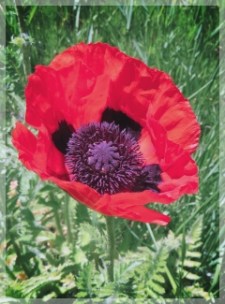
poppyBecause we know little about the geography or politics of Jesus’ time, we sometimes miss subtleties in the gospel accounts. We know Jesus was from Galilee but what do we know of Galilee? Located north of Judea with the province of Samaria separating them, Galilee originally was settled by the tribes of Naphtali, Asher, Issachar, and Zebulun—all of whom failed to drive out the Canaanites. King Solomon gave twenty towns in the northern part of Galilee to King Hiram of Tyre either as payment for the cedar, cypress, and gold Hiram provided for the Temple’s construction or as collateral to cover later payments. In any case, Hiram later returned the cities to Solomon who then settled Israelites in them. When the kingdom divided, this region became part of the northern kingdom of Israel.

When Assyria defeated Israel, much of the Jewish population was relocated while those remaining often intermarried with the Gentiles sent there to repopulate the area. By the 7th century BC, the region was known as Galilee with Upper (northern) Galilee known as the “Galilee of the Gentiles.” This was a rich and fertile region and, with the Sea of Galilee being the largest freshwater lake in the area, it was an ideal location for settlements and fishing. After returning from their exile in Babylon, Judean immigrants resettled the region.

By the time of Jesus, Galilee was a heavily populated area. Jesus was raised in Nazareth in Lower Galilee. Most, if not all, of His disciples were from Galilee and He spent much of his ministry preaching around the northern shore of the Sea of Galilee in towns like Capernaum and Bethsaida. It was in Galilee that he turned water into wine, gave the Sermon on the Mount, and performed miracles like feeding the 5,000, healing the centurion’s servant, raising Jairus’ daughter and the widow of Nain’s son, walking on water, and calming a storm.

What we 21st century believers probably don’t know is that, in Jesus’ day, Judeans disparaged Galileans. Even though most Galileans were Jewish, the pureness of their ancestry had been diluted by intermarriage and Judeans considered them of questionable ancestry. The Galilean Aramaic dialect differed enough from Judean Aramaic that Galileans (like New Yorkers) were recognizable by their accents. It was Peter’s accent that identified him as a Galilean when he denied Jesus and it was their distinctive accent that caused Judeans to consider Galileans uneducated. One story in the Babylonian Talmud told of prohibiting them from speaking in the Temple for fear they might mispronounce something and offend God! In Acts 4:32, we find the Council amazed at the confidence with which Peter and John spoke because they were “unlearned and ignorant” men. It was their thick Galilean accents, not their words, that caused the incorrect assumption of ignorance.

Regional prejudices were as prominent in Jesus’ time as they are in ours and Judeans, especially Jerusalemites, viewed Galileans as uncultured peasants. “Galilean” was as derogatory a term as are “redneck” or “hillbilly.” Consider Nathanael’s surprise when Philip told him the Messiah was from Nazareth: “Can anything good thing come from Nazareth?” When Nicodemus dared to defend Jesus by pointing out He deserved a trial, his fellow Pharisees taunted him with their answer: “Are you from Galilee, too? Search the Scriptures and see for yourself—no prophet ever comes from Galilee!” Not only did their scorn prove their bias and prejudice, but it also revealed their own ignorance. The prophet Jonah came from Gath-Hepher, just a few miles north of Nazareth, in Galilee! Their bias also kept them from seeing how Jesus filled Isaiah’s prophecy of a Messiah in Isaiah 9 (repeated in Matthew 4:13-16).

Are we as judgmental as were the Pharisees? Do we make assumptions about groups of people based on pre-existing beliefs about their heritage, race, accent, attire, age, gender, religion, or disability? Many in Judea turned their backs on Jesus and the disciples because all they saw were uneducated peasants who spoke with a Galilean accent! Because of their prejudice, they continued to sit in the darkness in the presence of the Light! Let’s not make a similar mistake!

He went first to Nazareth, then left there and moved to Capernaum, beside the Sea of Galilee, in the region of Zebulun and Naphtali. This fulfilled what God said through the prophet Isaiah:  “In the land of Zebulun and of Naphtali, beside the sea, beyond the Jordan River, in Galilee where so many Gentiles live, the people who sat in darkness have seen a great light. And for those who lived in the land where death casts its shadow, a light has shined.” [Matthew 4:13-16 (NLT)]

Copyright ©2023 jsjdevotions. All rights reserved.

TATTOOS – Part 2

Don’t you realize that your body is the temple of the Holy Spirit, who lives in you and was given to you by God? You do not belong to yourself, for God bought you with a high price. So you must honor God with your body. [1 Corinthians 6:19-20 (NLT)]


While the New Testament does not specifically address tattooing, my friend’s question about tattoos got me wondering whether it’s addressed in general terms. Because tattoos apparently originated in things like pagan symbolism, superstition, and idolatry, some maintain they’re prohibited in Scripture. Indeed, the Israelites were prohibited from worshipping the pagans’ gods, following their customs, and participating in “detestable acts” like child sacrifice and the New Testament warns of sorcery and idolatry, but applying those words to tattoos seems a long stretch. The dates of holidays like Christmas (Saturnalia), All Saints’ Day (Samhain), and Valentine’s Day (Lupercalia) have pagan beginnings as do customs like placing flowers on graves, embalming, and celebrating birthdays. Must we abandon those (along with the heart symbol) because of their pagan origins? In that case, we’ll need to ditch our calendars since both the days of the week and the names of the months are founded in astrology and pagan gods (i.e., Saturday/Saturn, Thursday/Thor, March/Mars, and June/Juno)! Where do we draw the line?

Just because pagans did something doesn’t necessarily mean it is sinful. Before condemning every pagan custom, we should remember that even the pagans ate, harvested crops, worshipped, and prayed! In fact, much of the early church’s success was because it adapted to (but didn’t adopt) the pagan culture of its time without compromising the gospel message. “Like the apostle Paul,” said pastor and theologian Dr. E. Glenn Hinson, “they sought to be all things to all people, that Christianity might become the religion of as many as possible.”

The Apostle Paul refers to a Christian’s body as God’s temple and some condemn tattoos with this verse. Likening tattoos to graffiti in the sanctuary of a church, they consider them nothing short of vandalism or defilement. Citing Paul, they maintain that altering our bodies in any way is a sin. Again, where do we draw the line—at make-up, plucking eyebrows, shaving, piercings, coloring hair, Lasix and cataract surgery, corrective and reconstructive plastic surgeries, Botox, or even Spanx? All alter our bodies in one way or another. Since the Apostle was specifically addressing sexual immorality among believers, that’s not what Paul had in mind with his words.

Perhaps the best Scripture to guide us regarding any body embellishment is found in 1 Peter 3. Rather than prohibiting adornments altogether, Peter was emphasizing a proper sense of values. Materialism, boastfulness, conceit, attention seeking, and obsession with sex existed in the 1st century just as they do today. Whether it’s a body entirely covered with tattoos, one enhanced with every sort of plastic surgery, a see-though gown with plunging neckline, heavy gold chains around the neck and gold rings on every finger, or tee shirts with rude or hateful messages on them, none seem to display the Spirit of God or represent the way our humble, gentle, and holy Lord would have appeared.

How we adorn our bodies is one of those grey areas that, to some extent, is a matter of taste and judgment. Remembering that we are created in God’s image and hold His Holy Spirit within us, we must be led by the Spirit, the Word, and common sense. Clearly, any practice that is vulgar, ostentatious, insensitive, or a distraction to one’s Christian influence should be avoided yet, even those guidelines are open to interpretation. When in doubt, I find it best to err on the side of caution and ask, “What would Jesus do?”

Our lifestyle, language, attitudes, and manner of dress reflect on His name. He leads us in paths of righteousness for His name’s sake. Unless you are honestly convinced that the thing in question will bring glory to God, then don’t do it. [Curtis Hutson]

Don’t be concerned about the outward beauty of fancy hairstyles, expensive jewelry, or beautiful clothes. You should clothe yourselves instead with the beauty that comes from within, the unfading beauty of a gentle and quiet spirit, which is so precious to God. [1 Peter 3:3-4 (NLT)]

Copyright ©2023 jsjdevotions. All rights reserved.