
The Spirit of the Sovereign Lord is upon me, for the Lord has anointed me to bring good news to the poor. He has sent me to comfort the brokenhearted and to proclaim that captives will be released and prisoners will be freed. He has sent me to tell those who mourn that the time of the Lord’s favor has come, and with it, the day of God’s anger against their enemies. [Isaiah 61:1-2 (NLT)]
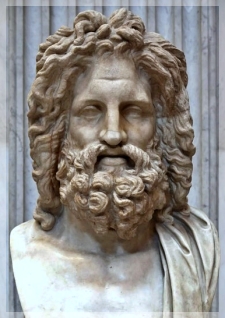
Greek god Zeus
While the Bible is silent about the centuries separating the Hebrew Scriptures from the New Testament, history is not. During those hundreds of years, Judah suffered. Although they were allowed to worship Jehovah under Persian rule, the pagan nation ruled them, required their political obedience, and demanded exorbitant taxes to support its king, court, armies, and self-serving foreign governors. When Persia weakened and fell to Alexander the Great in 331 BC, Judah simply traded one set of foreign rulers for another.
When Alexander died, the Greek Empire was divided among his generals. Ptolemy the 1st and his descendants ended up controlling the Jews. Under Ptolemaic rule, as long they maintained order and paid their taxes, Judeans were free to worship and Judaism thrived. Nevertheless, Judah was an occupied country and, for twenty years, the people were caught in a violent cross-fire between the Ptolemies and their rivals, the Syrian Seleucids. When the Seleucids defeated the Ptolemies, the Jews ended up with rulers who mercilessly persecuted them. The Temple was robbed, Jerusalem’s walls destroyed, Scripture burned, sacrifices to Jehovah banned, circumcision outlawed, Jews were forced to eat pork, and observing the Sabbath and feast days was prohibited. Statues of Greek gods and idols were placed in every town and those who refused to worship them were put to death.
The Jews must have wondered what became of God’s covenant with David as well as the one He made with Abraham promising that Israel would be a great nation, that He’d bless Abraham’s descendants and curse his enemies, and that Canaan would belong to his descendants. God even confirmed that same promise to Isaac and Jacob. But now, Israel’s promised homeland belonged to Greece and they were ruled and persecuted by their enemies. If anything, Abraham’s descendants were the ones cursed. Was Jehovah a liar?
When the Seleucid ruler, Antiochus Epiphanes, rededicated the Temple to Zeus and sacrificed a pig on the altar, Judah finally rebelled and a guerilla army was formed. Three years after the Temple’s desecration, the Syrians were defeated and the Temple recaptured and rededicated. Tonight is the first night of Hannukah which celebrates the eight-day miracle following that event. Even though the Temple was reclaimed, Judah remained a Syrian province and fighting continued between Syrian and Jewish forces for twenty more years.
Eventually, the constant fighting between the various Greek city-states weakened the Greek Empire and Judah’s independence was realized in 142 BC. Simon Maccabee became head of state and the Hasmonean dynasty was established. For the first time since the fall of Jerusalem in 586, a Jew sat on the throne but the prophecies hadn’t been fulfilled. He wasn’t from the tribe of Judah and David’s lineage, his realm didn’t extend from sea to sea, and peace did not reign. The Hasmoneans’ time in power was troubled by corruption, political infighting, terrorism, and violent clashes between the Pharisees and Sadducees. The nation became divided and weak.
After the Roman general Pompey defeated the Greeks, he had no trouble extending control over the divided nation of Judah and, in 63 BC, Rome conquered Jerusalem. Once again God’s chosen people were subservient to a foreign power. When the New Testament opens, rather than a descendant of David’s, it was Herod the Great, a descendant of Esau, who sat on the throne!
The people of Judah wondered when Jehovah would fulfill His promises. Would the time of His favor ever come? When would His anointed king avenge His people?
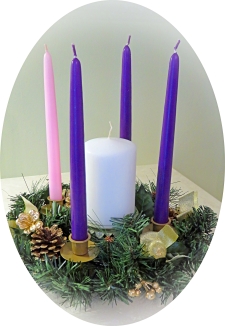 Yesterday was the first Sunday in Advent—a season when Christians throughout the world prepare for the coming of Christ. For most of my life, I attended liturgical churches where, on each of the four Sundays in this season, we’d sing “Oh, Come, Oh Come, Immanuel” as the Advent candles were lit. Although this song is sung by 21st century Christians, its words easily could have been sung by 1st century Jews. Immanuel means “God with us” and, after centuries of being subject to pagan nations, they yearned for God to come and ransom their captive land.
 Devotions of the Heart