
Only by your power can we push back our enemies; only in your name can we trample our foes. I do not trust in my bow; I do not count on my sword to save me. You are the one who gives us victory over our enemies; you disgrace those who hate us. O God, we give glory to you all day long and constantly praise your name.[Psalm 44:5-8 (NLT)]
 Some of the lesser-known heroes of the Bible are found in the lists of David’s mightiest men. Among his warriors, David’s mighty Three had the most authority, influence, and leadership. Their leader was Jashobeam, a man who once used his spear to kill 800 warriors in a single battle. Next in rank was Eleazar who remained with David in battle when the rest of the troops fled. He killed Philistines until he no longer could lift his sword. The third of the Three was Shammah. After being attacked in a field by the Philistines, the troops fled. Shammah alone remained to defend it and bring victory to Israel. These three were so devoted to David that, when he expressed a desire for fresh water from Bethlehem, they risked their lives to break through enemy lines to get some for him. David’s Three were among the best of the best when it came to valor, courage, and allegiance.
David also had an elite group of about thirty warriors. The mighty men of the Thirty helped David establish his kingdom and served as commanders for the rest of his troops. As famous as the Three was Abishai. Leader of the Thirty, he once killed 300 of the enemy in a single battle!
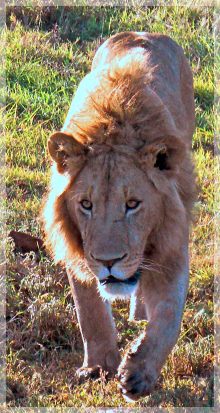
Described by Samuel as being more honored than any of the Thirty was Benaiah (son of Jehoiada). Among his feats was the killing of two ariels from Moab. The meaning of ariels is unclear and, while it could mean two lion-like oversize warriors like Goliath, it also could be a description of the lion-like ferociousness and strength of his opponents. In either case, alone and outnumbered two to one, the odds were against Benaiah, but he bravely defied the odds, and killed those lion-like warriors. Another time, upon encountering a lion, Benaiah accessed the situation and spotted a pit. Instead of turning tail and fleeing, the warrior turned toward the lion, chased it down into the pit, and killed it. Later, armed only with a club, he killed an impressive-looking Egyptian warrior bearing a spear. At a disadvantage since his clumsy club was useful only in close-up battle and the Egyptian’s spear was long, Benaiah ran toward his enemy, wrenched the spear from his hands, and killed him with his own weapon (much as David did with Goliath)!
Although we’re not likely to face great warriors or lions, we often encounter a number of what often seem to be unbeatable odds or invincible adversaries. Our first reaction to overwhelming challenges easily can be to abandon the cause and accept defeat without even trying. That’s what the troops did when they left David, Eleazar, and Shammah to fight the Philistines alone!
Warriors like David, Jashobeam, Eleazar, Shammah, Abishai, and Benaiah knew how to face both danger and adversaries. Instead of being paralyzed by fear or fleeing, these men faced each challenge head-on. What made these warriors so mighty? It wasn’t their bravery, strength, and prowess on the battlefield that made them that way; their might came from their knowledge of and faith in the Lord! They had courage, power, and steadfastness because they knew they weren’t fighting their battles alone; God was with them!
Could we be missing God-ordained opportunities because we only see insurmountable obstacles, invincible opponents, or fierce lions? It’s easy to let fear discourage and even paralyze us. Doing nothing, however, gets us nowhere. When the odds are against us, let’s think of these mighty men, trust in God, and give chase to the lions in our life!
Stand up to your obstacles and do something about them. You will find that they haven’t half the strength you think they have. [Norman Vincent Peale]
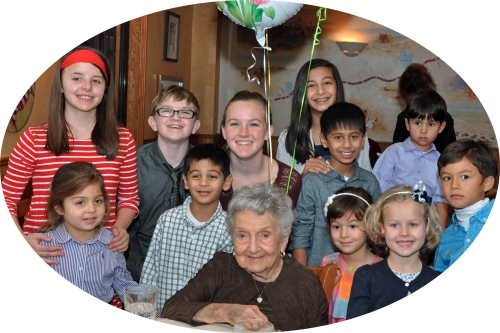 While writing Monday’s devotion about the seemingly insurmountable giants we face, I wondered about the identity of my Goliath. Of who or what am I afraid? What giant looms over me and blinds me to the presence of God?
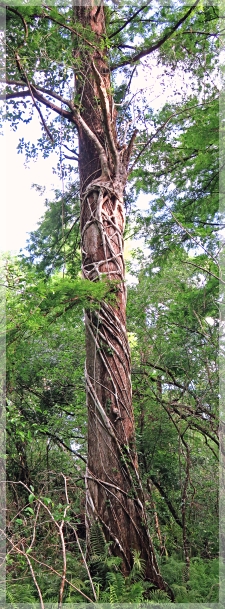 Most trees begin life as a seed in the soil of the forest floor and most trees also observe proper forest etiquette by not killing one another. The strangler fig (Ficus aurea), however, is not your typical tree. Rather than starting in the soil where the fig’s seeds would struggle to germinate in the darkness of the dense forest’s floor, strangler figs usually begin life high up in the forest’s canopy. Blown there by the wind or deposited by animals in their droppings, the sticky fig seed usually begins its life in the bark crevices of a mature tree.
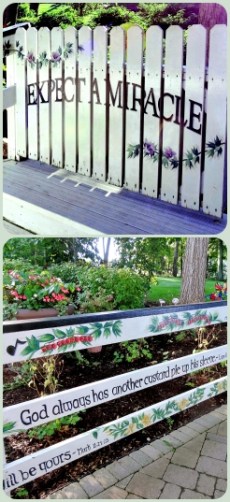 When we lived in the north, we often walked a public path that meandered along the shoreline of a nearby lake. Running through both public and private properties, it crossed the front lawns of historic lakefront estates and stunning homes with beautifully landscaped yards and gardens. One such home placed a lakeside bench for tired walkers that said, “Sit-Pray-Mediate-Enjoy” under a sign that read, “You can trust me. Love, God.” A delightful white fence delineated their private property from the public path. Decorated with whimsey, “Expect a Miracle” was the message on the gate and assorted Bible verses and words of wisdom were painted on the fence’s horizontal slats.
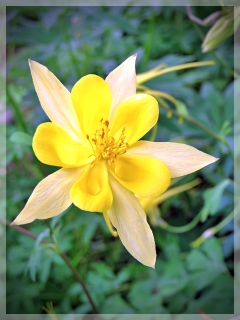 In our family, the car’s driver controls the music. Since my husband usually drives, that tends to be ‘50s and ‘60s rock. My thrice weekly chiropractor appointments, however, have given me the opportunity to listen to worship music rather than golden oldies. Last week, while alone in the car, I joined with Elevation Worship as they sang of laying the worries of the world, the needs of their loved ones, their hopes and dreams, and every anxious thought at God’s feet. “I will look back and see that you are faithful; I look ahead believing you are able!” Those words are so true and yet I frequently forget to look back to God’s past provision or ahead with trust that He is able to provide exactly what is needed.
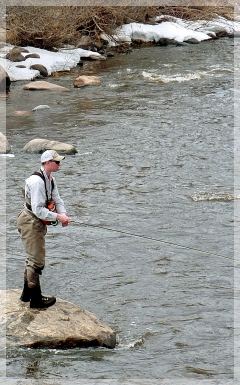 Even though I’m not an angler, whenever I read about casting my cares, I picture using a fly rod and casting my concerns out into the river so the fast moving water can carry them away to God. When we lived in the mountains, one of our favorite walking trails ran alongside the Yampa River and we often paused to watch as the fishermen (and women) cast their lines into the water. Fly fishing is all about the art of casting and a bit like poetry in motion. It was fascinating to watch an angler flick the rod back and forth, gradually increasing the speed of the motion, before finally casting the line forward so the fly would land in the perfect spot. Masquerading as a water insect, the fly is made of things like fur, feathers, fabric and tinsel and secured to a hook. Rather than purchasing flies, many fishermen spend hours tying their own flies. Not wanting to lose either fly or fish in the river, anglers use at least five different knots to securely connect the reel to the backing, fly line, leader, and tippet before finally tying on the fly.
 Devotions of the Heart