
Woe to you, scribes and Pharisees, hypocrites! For you clean the outside of the cup and the plate, but inside they are full of greed and self-indulgence. You blind Pharisee! First clean the inside of the cup and the plate, that the outside also may be clean. [Matthew 23:25-26 (ESV)]
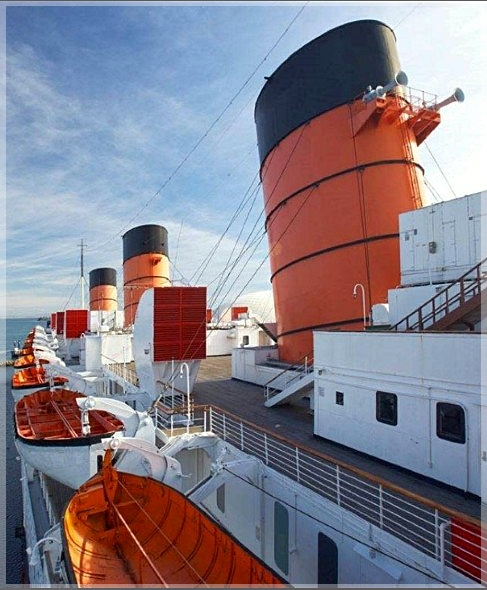 When it was launched in 1936, the Queen Mary was the largest transatlantic ocean liner. Retired from active service in 1967, the ship relocated to Long Beach, California, and was converted into a floating hotel, museum, event venue, and historic attraction. During its conversion, the ship’s three smokestacks were removed to allow access to the engine room. Made of steel over an inch thick, the funnels had 30-foot diameters and ranged in height from 62 to 70 feet. As the massive smokestacks were being lowered onto the wharf, they crumbled and collapsed!
The beautifully painted exteriors of the ship’s smokestacks concealed their inner decay. Having rusted away inside, all that remained of the funnels was the 30 coats of paint applied over the years! Their external appearance hid the internal reality of their deteriorating condition. That’s what Jesus was talking about when he condemned the Pharisees for their hypocrisy by comparing them to unclean cups and “whitewashed tombs…full of dead people’s bones and all uncleanness.”
Jesus’ problem with the Pharisees wasn’t that they were sinners. After all, the Lord dined with tax collectors and other sinners, blessed the woman of ill repute who anointed Him, and His longest recorded conversation was with a Samaritan woman “married” five times who lived with a man not her husband! Those people, however, never pretended to be something other than who and what they were—sinners.
Jesus condemned the religious elite for their hypocrisy. The word “hypocrite” comes from the Greek word hypokrites, meaning actor. Like the Greek thespians who wore masks while acting in the theater, the religious leaders often presented one face to the world while the real person was hidden behind their mask. As sinful as any other flawed human, they hid behind their enlarged prayer boxes and long tassels on their robes, overtly public prayers, and strict adherence to the rules. They put on a façade of devotion and piety to enhance their reputations while failing to do God’s will. Like the Queen Mary’s smokestacks, their immaculate façades belied the corrosion in their lives. Like a cup clean on the outside but filled with gunk on the inside or a marble mausoleum filled with decomposing bodies, they appeared pristine and unsullied while their hearts were filled with rot, decay, and corruption.
We’re all sinners and even the most devout among us misses the mark on occasion (or frequently, in my case). Being a Christian doesn’t mean we don’t struggle with sin—Jesus set a high standard and we all fall short of it. Sadly, sin is part of being a human in this fallen world. Being a sinner, however, isn’t hypocrisy; being a sinner who pretends not to be, is! While all hypocrites are sinners, not all sinners are hypocrites! Honest sinners recognize, acknowledge, and repent of their sins; they know what they are and admit it. On the other hand, hypocrites recognize their sin but neither acknowledge nor repent of it.
Today, the Queen Mary’s smokestacks are made of aluminum but, like a hypocrite, they are good for nothing but show!
It is not the being seen of men that is wrong, but doing these things for the purpose of being seen of men. The problem with the hypocrite is his motivation. He does not want to be holy; he only wants to seem to be holy. He is more concerned with his reputation for righteousness than about actually becoming righteous. The approbation of men matters more to him than the approval of God. [Augustine]

