
O clap your hands, all ye people; shout unto God with the voice of triumph. For the Lord most high is terrible; he is a great King over all the earth. [Psalm 47:1-2 (KJV)]
The Lord is great in Zion; and he is high above all the people. Let them praise thy great and terrible name; for it is holy. [Psalm 99:2-3 (KJV)]
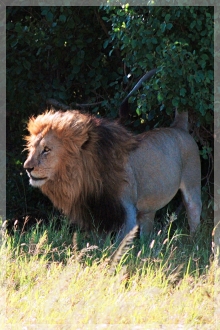
“He’s not a tame lion.” Anyone familiar with The Chronicles of Narnia by C.S. Lewis knows to whom this sentence refers. Throughout the seven Narnia books, that same thought is expressed in various ways when describing Aslan (the Christ-like character in the series). When the Pevensie children discover that Aslan is a lion, they ask if he’s safe. “Who said anything about safe?” is the reply. “’Course he isn’t safe,” adds Mr. Beaver, “But he’s good. He’s the King, I tell you.” A safe lion would be a tame lion because a tame lion has been trained. It’s predictable and can be managed, manipulated, controlled, and taught. Aslan, most definitely, is not tame but he is good and, at times, that fact is forgotten. Perhaps it is because, as Lewis explains: “People…sometimes think that a thing cannot be good and terrible at the same time.”
The Hebrew word describing God in the Psalms and translated as “terrible” in the King James, was yare, meaning “to be feared.” Most other modern translations use “awesome” or a similar less terrifying word. Back in the 1600s, when the King James version was first published, the type of “terror” associated with the word was a reverent fear of God. It conveyed both dread and terror as well as solemn awe and reverence—an appropriate response to a Being who is far greater and more powerful than any human could ever hope to be. When describing God (or Lewis’ lion Aslan), “terrible” means tremendous, awe-inspiring, formidable, intense, and fearsome. Our God is all that and more; what He isn’t is tame!
The children eventually understand that Aslan is intrinsically good and, because the lion is good, it doesn’t matter that he isn’t tame. The same goes for God! If we truly believe Him to be good, we can trust that everything He does is for our good. When life takes a bad turn, however, we tend to lose sight of God’s goodness and love. Forgetting that His inherent goodness and terribleness are inseparable, we allow challenging circumstances to steal our confidence in a good God. Like Aslan, God can’t be evil any more than He can be tamed.
Afraid of trusting an unpredictable, fearsome, and awesome God, we would prefer a God who is tame—one we could tell what to do along with when and how to do it. We wouldn’t need to please a tame God; He’d want to please us. He would coddle rather than challenge and beg rather than demand. A tame God would answer to us rather than hold us accountable to Him. Since a tame God would live to please our sinful nature, a tame God could not be good!
In Lewis’ books, the untamed but good lion brings the children into Narnia not to live bland or boring lives but to face foes, trials, and difficulties and become better for it. Nevertheless, they never face those challenges alone; Aslan is always there for them. In the same way, our awesome God does not call us to lead humdrum safe lives. He calls us to live far-reaching, uncompromising, purposeful, profound, and often challenging ones. Jesus told His disciples to take up their crosses and have lives of radical goodness and love; He tells us to do the same thing.
Our God is not tame, but He is good; He is untamed goodness and love!
 Devotions of the Heart