
Then I saw a great white throne and him who was seated on it. From his presence earth and sky fled away, and no place was found for them. And I saw the dead, great and small, standing before the throne, and books were opened. Then another book was opened, which is the book of life. And the dead were judged by what was written in the books, according to what they had done. … And if anyone’s name was not found written in the book of life, he was thrown into the lake of fire.[Revelation 20:11-12,15 (ESV)]
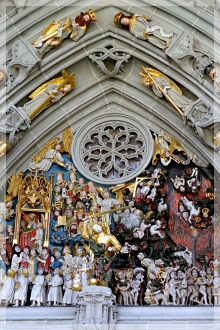 Before stepping inside of the Bern Münster Cathedral, you’ll probably stop and stare at the archway above the main entrance. There you’ll see 294 carved sandstone figures in a graphic illustration of God’s final judgment when the wicked are separated from the righteous. To your right are the naked damned souls in the midst of flames while, on your left, the righteous stand clothed in white and marked with the seal of God on their foreheads. Lady Justice with her scales and the Archangel Michael with his sword stand in the center. The entire scene is surrounded by larger statues of various saints and martyrs as well as the five wise virgins and the five foolish ones who weren’t ready for the bridegroom’s return!
Crafted in the late 1400s, this powerful visual sermon brings to life the biblical scene from Revelation of Christ’s return to judge humanity. While we’re not likely to find anything like that in our modern churches, the last judgment was a common theme for church doorways in the Middle Ages. Most people were illiterate and depictions like this one instilled both devotion and a healthy dose of fear into the hearts of the faithful as they entered God’s house. Nevertheless, to us in the 21st century, Judgment Day seems an odd way to welcome people into church!
For the people of the Middle Ages, however, death was waiting just around the corner. Unpredictable, it took the young as easily as the old. Between 1347 and 1353, for example, the Black (bubonic) Plague wiped out as much as half of Europe’s population. Disease, poor nutrition, famine, lack of medical care, inadequate housing, and violent warfare meant the average life expectancy was as low as 30 years. Leprosy, influenza, tuberculosis, small pox, and dysentery ran rampant, maternal and infant mortality rates were high, and, with no vaccines, antiseptics, antibiotics, anesthesia, or proper sanitation, death was an everyday event. Surrounded by the dead daily, death simply was an unavoidable part of life and one expected sooner rather than later.
Along with Revelation’s joyful news of Christ’s return and the world set right, is the prophecy that there will be a final judgment which, depending on the person, can be good news or bad. For those who put their faith in Christ while alive, there is nothing to fear; Jesus is forever. But, for those who ignored previous warnings and failed to put their faith in Christ while living, there are no second chances; eternal hell awaits. That frightening scene over the doorway was a vivid reminder that the day was coming when Jesus would return—a day when He’ll send His followers to everlasting life and the others to everlasting torment. With stakes like that and death within sight, the cathedral’s entry reminded people to be prepared for the day of judgment. Perhaps it caused them to ponder where they would be standing when that day happened.
Here in the 21st century U.S., we live in a safer more sanitized world than medieval Europe—one far removed from the daily threat of death. Although we know we have an expiration date, unless we have a terminal diagnosis, that date seems far removed. Nevertheless, death is an inescapable part of life. Regardless of how rich, famous, or beautiful we might be, death awaits us all just as it did for the people of the Middle Ages.
Whether our last day on earth is accompanied by the coroner or the sound of trumpets at Jesus’ triumphant return, that doorway in Bern remains a powerful reminder that the day of reckoning will come. On Judgment Day, anyone who has lived will appear before the throne of God and be judged, but only those whose names are in the book of life will enter the new heaven and earth. The stakes are as high today as they were more than 600 years ago and death’s arrival remains unavoidable. It’s been said that many who plan to seek Christ at the 11th hour die at 10:30! Where will you stand when Judgment Day comes? Where will those we love be standing?
 Devotions of the Heart