
As iron sharpens iron, so a friend sharpens a friend. [27:17 (NLT)]
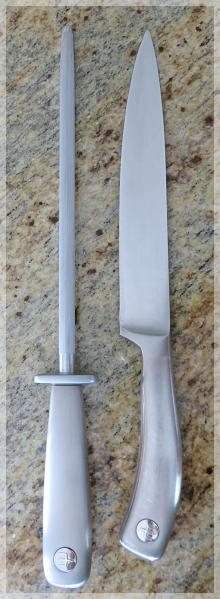 This proverb about iron sharpening iron reminds me of Sunday dinners when I was a girl. After the roast beef was placed in front of my father, he picked up the carving knife and a steel rod. With dramatic flair, he would run the knife back and forth against the steel before carving the meat. For the perfect slice of beef, he used iron to “sharpen” iron.
At the time, I thought he was sharpening the blade; instead, he was honing it. Whenever a knife is used, its sharp edge begins to bend and catch on whatever is being cut. Pulling a knife’s blade along a honing steel brings its rough edges back into an upright position so the knife can perform at its best. A whetstone is necessary to sharpen a dull or damaged knife. But, because it rubs away some of the blade to create a brand-new edge, the more a knife is sharpened, the thinner the blade gets and the shorter its lifespan.
Just as there is a difference between a steel honing rod and a whetstone, constructive comments and words of correction differ from harsh criticism and disparagement—one enriches and improves while the other gradually diminishes. When called to do a little sharpening, we should proceed prayerfully and gently, always remembering that we should be more like honing steels than whetstones. Rather than grinding off any mettle, our purpose is to enhance by smoothing out the rough edges. Moses’ father-in-law Jethro did some honing when he pointed out Moses’ mistake in thinking he could manage two million people by himself. Jethro offered excellent advice on how to delegate responsibility and Moses became a better leader because he listened.
While a carving knife has no choice about accepting that steel rod, we do. Nevertheless, if we want to maintain our sharpness, be properly aligned, and work at our best, a little honing might be necessary. Solomon’s son Rehoboam certainly didn’t take his father’s warning that, “Fools think their own way is right, but the wise listen to others.” [Pro 12:15] Rather than accepting sage counsel from his father’s trusted advisors, he turned to his sycophantic friends because they would tell him what he wanted to hear! His foolishness and their poor advice resulted in a divided kingdom of Israel.
God puts wise people in our lives for a reason and it’s for more than encouragement. Matthew Henry said their purpose is to “improve both others and ourselves…to provoke one another to love and to good works and so to make one another wiser and better.” Like Moses, we can accept the correction that comes from those who love us or, like Rehoboam, we can resist the honing and insist on doing it our way. Just as we are tested by the way we respond to praise, we are tested by the way we respond to correction and constructive criticism. In both cases, we must remain humble and thankful.
The trouble with most of us is that we would rather be ruined by praise than saved by criticism. [Norman Vincent Peale]
 Devotions of the Heart