
Do not have differing weights in your bag, one heavy and one light. Do not have differing dry measures in your house, a larger and a smaller. You must have a full and honest weight, a full and honest dry measure, so that you may live long in the land the Lord your God is giving you. For everyone who does such things and acts unfairly is detestable to the Lord your God. [Deuteronomy 25:13-16 (CSB)]
Differing weights are detestable to the Lord, and dishonest scales are unfair. [Proverbs 20:23 (CSB)]
In 1971, archeologists near the Temple Mount discovered a 2,700-year-old stone weight bearing two parallel lines. Although those lines indicated a weight of two gerah (a little less than a gram), it weighed 3.61 grams. Researchers believe it was used to defraud customers—something first condemned by God in Deuteronomy. Its discovery tells us that, despite Deuteronomy’s words, cheating weights and fraudulent scales were used in ancient Jerusalem. Nowadays, unless we’re butchers, greengrocers, goldsmiths, or grain merchants, we probably don’t have occasion to cheat anyone by short weighting them. Nevertheless, the Hebrew Scripture’s words about dishonest weights may not be limited to cheating someone out of a few ounces of lamb or grain.
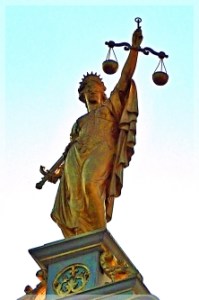
Just because we don’t put our thumb on the scale or cheat on our income taxes doesn’t necessarily mean we’re using honest weights. Consider the scales of justice, one of the oldest and most familiar symbols associated with law. Representing the fairness expected in our courts, they represent the weighing of evidence on its own merit. Lady Justice often is depicted carrying those scales. Her blindfold means that she is blind to a person’s wealth, power, gender, politics, nationality, religion, and race. She doesn’t have double weights and measures or double standards. But, just as justice does not always wear its blindfold in our legal system, it often doesn’t in our personal lives, as well.
How fair and unbiased are we when we deal with people? Do we prejudge them based on their race, accent, clothing, age, or position? Do we favor those who are more attractive, wealthier, more influential, better educated, or look like us? Does it tip the scales when someone can return a favor or do something for us? Do we give the benefit of the doubt to certain people and not to others? Are we as considerate and polite to those who serve us as we are to those we serve?
Do we hold ourselves to a different standard than that we hold for others? Using a different weight, do we readily overlook our poor behavior when we wouldn’t tolerate that same behavior in someone else? Do we love some neighbors more than others or more freely extend mercy and kindness to certain people? When we buy something do we expect full disclosure but say, “buyer beware,” when we sell it? Do we correct the check when it’s in the restaurant’s favor but leave well enough alone when it’s in ours? Do our ethics and morals change with the situation or the people present? If the answer is yes to any of these questions, we’ve been using differing weights and dishonest scales!
The prophets Amos and Micah pronounced judgment on Israel for their lack of social justice, theft, exploitation, corruption, violence, bribery, and unethical business practices. What would the prophets say about us?
You can easily judge the character of a man by how he treats those who can do nothing for him. [James D. Miles Allison]
 Devotions of the Heart