
But if you refuse to listen to the Lord your God and do not obey all the commands and decrees I am giving you today, all these curses will come and overwhelm you… The Lord himself will send on you curses, confusion, and frustration in everything you do, until at last you are completely destroyed for doing evil and abandoning me. [Deuteronomy 28:15,20 (NLT)]
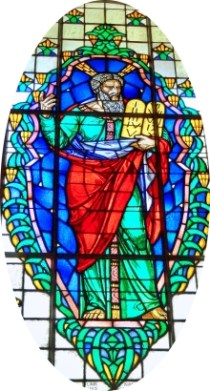 There are 613 commandments in the Torah/Pentateuch (the first five books of the Bible). But, as seen in Jesus’ interaction with the lawyer who wanted “neighbor” defined, there was room for interpretation. For example, what exactly does it mean to “honor” one’s parents? When Deuteronomy 11:18-20 says to bind “these words” to one’s hands and forehead and place them on doorposts and gates, exactly what words and how was it to be done? Work on the Sabbath is prohibited in twelve places but is the command limited to the few types of work mentioned? For that matter, what defines work?
Jesus criticized the Pharisees over their pettiness regarding the law but it’s easy to see how the system of laws governing Jewish life became so complex. After listing the blessings for obedience to God in Deuteronomy, Moses laid out the many curses for disobedience. Those curses include everything from wasting diseases, plagues, drought, boils, military defeat, and scorching heat to becoming food for scavenging birds, madness, swarms of insects, starvation, oppression, and exile. Moses painted a graphic and gruesome picture when warning the people to obey all the words of the law.
Since people will use any possible excuse to break a rule, it’s easy to see how fear of punishment led to Jewish legalism—especially in the Second Temple period when the Jews returned to Judah from Babylon. Having seen Jerusalem’s rubble and the Temple’s ruins, religious leaders knew firsthand the steep price Israel paid for their disobedience. Fearful of punishment and striving for absolute obedience, they wanted to cover every eventuality by putting a “fence around the Torah” with the Oral Law.
To clarify honoring and reverencing one’s parents, the oral law obligated children to care for their parents’ needs and prohibited things like sitting or standing in their place, contradicting them, or calling them by their first names. As for the binding and posting of words, the oral law specified tefillin (phylacteries), mezuzahs, and the verses that were to be placed in them. Rather than simplifying obedience, however, they complicated it with several thousand laws governing everything from the text, writer, pen, and ink to letter shape, parchment, and placement.
Based on the work required in building the tabernacle, 39 classes of prohibited work were specified in the Oral Law. Then, lest someone unintentionally work on the Sabbath, more rules were added. Tools used in prohibited work couldn’t be handled on the Sabbath which meant that touching things like scissors or needles was forbidden. Any action resembling prohibited work also was prohibited on the Sabbath so things like braiding hair (weaving) or separating good fruit from spoiled (winnowing/sifting) were banned. When the disciples were criticized for breaking the Sabbath by plucking off and eating some heads of grain, it was because the Pharisees considered their action the work of harvesting.
Jesus’ grievance wasn’t with the Law; it was with the Pharisees who had allowed the minutiae of the law to become more important than a relationship with the One who gave them the Law. Although the law pointed out sin, they didn’t understand that no matter how intricately it was interpreted or followed, the law never could keep people from sin. People are sinful and, try as they may, they always will fall short of perfect obedience.
As Christians, we must never make the mistake of thinking we can reach a level of perfection good enough for God; in spite of all their laws, the people of Judah couldn’t and neither can we. Jesus didn’t abolish the law—He fulfilled it! Our righteousness is attained only through faith in Him. We can’t obey God’s law on our own but, by the grace of God and the power of the Holy Spirit, we can begin to be the people He created us to be. Christians don’t obey God’s law to work our way into His good graces, to earn our way into heaven, or to avoid captivity or pestilence. We obey God out of love! If we genuinely love Him with all our being, obedience isn’t a burden because we want to do only what pleases Him.
The law tells me how crooked I am. Grace comes along and straightens me out. [D.L. Moody]
 Devotions of the Heart