
Jesus told her, “I am the resurrection and the life. Anyone who believes in me will live, even after dying.” [John 11:25 (NLT)]
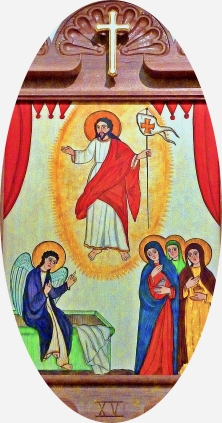 “Happy Easter,” said the Pastor as she welcomed us to worship. She was neither a week late nor four weeks early for Greek Orthodox Easter. While it’s no longer Easter Sunday and all the jelly beans, chocolate bunnies, and hard-boiled eggs have been eaten, it is Eastertide (“tide” just being an old-fashioned word for “season” or “time”). The Christian or liturgical calendar designates Eastertide as the fifty days from Easter/Resurrection Sunday to Pentecost (when we celebrate the outpouring of the Holy Spirit and the birth of the church).
Because it didn’t come by divine revelation, the church calendar isn’t sacred. Scripture doesn’t mandate the celebration of holy days and seasons like Lent, Good Friday, Easter, Advent, and Christmas. Nevertheless, God commanded the Israelites to celebrate specific events in their history and seasons of fasting and feasting tied to Jewish history are found throughout the Old Testament. Although the Christian church calendar isn’t established in Scripture, its basis certainly is.
We don’t even know the exact date of Christ’s birth, death, or resurrection and it wasn’t until 325 AD that Easter’s date was set as the first Sunday after the first full moon on or after March 21. The church (or liturgical) calendar was developed by tradition and church law so that, regardless of their location, all of Christ’s followers could collectively commemorate an act of God in the history of their redemption. People didn’t have ready access to Bibles in the 4th century and the regular celebration of events in the life of Christ and the church helped believers to better understand and remember them.
While liturgical churches such as the Episcopal, Lutheran, Methodist, and Roman Catholic still observe the seasons of the church, many Protestant churches do not. Some non-liturgical churches, however, are beginning to return to the traditional church calendar as a way of combatting the commercialization of our religious holidays. A few years ago, a non-denominational mega-church near our northern home announced, “This year we’re going to observe Lent!” as if it were a new idea rather than one more than 1,500 years old!
Although my neighbors went out and purchased half-price candy the day after Easter, we don’t want to spend the next several weeks dying eggs, making Easter baskets, having egg hunts, or consuming jelly beans and Peeps. Rather than repeating those secular traditions until Pentecost on May 19, Eastertide gives us fifty days to celebrate the meaning of Easter (and seven Sundays to sing the beautiful “alleluias” in Christ the Lord is Risen Today.)
During these next several weeks, let us spend as much time contemplating, appreciating, and celebrating Jesus’ resurrection as we did anticipating, planning, and celebrating His birth last December. After all, Easter is the whole reason for Christmas! Without Jesus’ resurrection, Christmas would simply celebrate the birth of a good man who said some wise things and was killed for his words.
The promise of our salvation didn’t disappear when the last chocolate bunny was eaten; the glorious Easter message is everlasting. Christ’s resurrection brings us love, grace, peace, forgiveness, redemption, and salvation, not just on Easter, but every day of our lives. One day is hardly enough time to celebrate a risen Christ—even fifty days are insufficient to rejoice in our salvation. We should be Easter people all year long.
The resurrection gives my life meaning and direction and the opportunity to start over no matter what my circumstances. [Robert Flatt]
 Devotions of the Heart