
There are four things on earth that are small but unusually wise….Hyraxes—they aren’t powerful, but they make their homes among the rocks. [Proverbs 30:24,26 (NLT)]
High in the mountains live the wild goats, and the rocks form a refuge for the hyraxes. [Psalm 104:18 (NLT)]
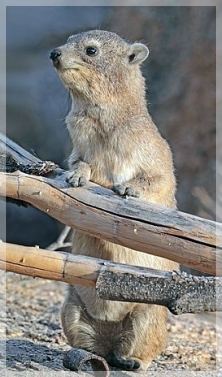 Making the point that wisdom is better than strength, the sage Agur spoke of the wisdom of ants, locusts, lizards, and sāphān. Often translated as badgers, rock-badgers, hyraxes, conies, or marmots, the animal’s exact identity is unknown but commentators suspect it to be the Syrian rock hyrax. Looking like a cross between a rabbit, guinea pig, and meerkat, these social animals gather in colonies of up to 80 individuals. Sleeping and eating together, they live in the natural crevices of rocks and boulders or take over the abandoned burrows of other animals.
Although hyraxes are mammals, like reptiles, they rely on ambient warmth to help regulate their body temperature. To warm up in the morning, they spend several hours sunbathing on the rocks together. Once warmed up, they head out to eat a little and then return to rest again on the rocks. If the sun gets too hot, they take their afternoon siesta in the shade.
Since hyraxes spend most of their time sprawled out resting on rocks in full view of any predators, these defenseless critters seem anything but wise. Looks, however, can be deceiving. Hyraxes never venture far from a safe crevice into which they can dash in an instant. Although these vulnerable animals appear to be asleep on the rocks, their eyes are open and, at the first sign of trouble, an alert is sounded. Within seconds of that alert, these agile and speedy animals will disappear deep into rocky crevices. When hyraxes forage for food, the ever-alert animals form a circle with their heads pointing outward to keep watch for predators. I suspect it was their ability to both detect and escape peril while living openly on dangerous cliffs that caused Agur to call the hyrax “exceedingly wise.”
As a shepherd, David would have been quite familiar with the hyrax. As the likely author of Psalm 104, he even mentioned how the “rocks formed a refuge” for them. Like the hyrax, David and his men found security in the rocks and caves when they were hunted by Saul. The psalmist’s safe concealment in cliffs and caves may be the reason so many psalms refer to the rocks and cliffs as places of refuge. In Psalms alone, we find more than fifteen metaphors of God as a rock serving as the psalmist’s place of safety.
Since we’re not small and vulnerable animals who spend most of their time resting in the sunshine, what are we to make of Agur’s observation and David’s rock metaphors? Even when it looks like they’re asleep, the hyraxes never close their eyes to their enemies—the hungry lion, leopard, hyena, and eagle. Like the hyrax, Christians must be alert to their enemy, Satan—the one who prowls around like a lion looking for someone to devour. [1 Peter 5:8] Despite its vulnerability, the hyrax doesn’t conceal itself in the dark like a mole; neither should Christians. Rather than hide in the dark crevices, hyraxes boldly sunbathe in the open on the rocks because they have a secure refuge in the rocks. As Christians, we can be as bold and open in our faith because we have a secure refuge in our Triune God. Indeed, He is our fortress, deliverer, stronghold, shield, redeemer, and salvation! And, like the hyrax and David, when we’re in jeopardy, we can quickly flee to the Rock! As hymn writer Augustus Toplady wrote, “Rock of Ages, cleft for me, let me hide myself in thee!”
 Devotions of the Heart