
And the servants of the master of the house came and said to him, “Master, did you not sow good seed in your field? How then does it have weeds?” He said to them, “An enemy has done this.” So the servants said to him, “Then do you want us to go and gather them?” But he said, “No, lest in gathering the weeds you root up the wheat along with them. Let both grow together until the harvest, and at harvest time I will tell the reapers, ‘Gather the weeds first and bind them in bundles to be burned, but gather the wheat into my barn.’” [Matthew 13:27-30 (ESV)]
Come, ye thankful people, come, raise the song of harvest home;
all is safely gathered in, ere the winter storms begin. [Henry Alford]
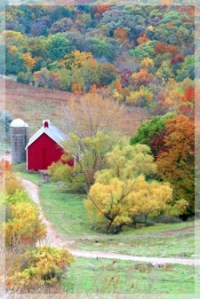 Because the pastor’s sermon was about being thankful, she’d selected “Come, Ye Thankful People, Come” as the evening’s opening hymn. Henry Alford wrote this hymn in 1844 for village harvest festivals in England called Harvest Home. Rural churches would celebrate the harvest by decorating with pumpkins and autumn leaves, collecting the harvest bounty, and then distributing it to the needy. Because of its seasonal harvest imagery, we usually sing this hymn in November at Thanksgiving but this was mid-July! Reading the hymn’s words out of their traditional Thanksgiving context, I understood their meaning in an entirely different way.
While the literal meaning of “harvest” is the gathering in of crops, when Jesus spoke of the harvest, He used it as a metaphor for the gathering of souls into the kingdom. With its references to Jesus’ words about the harvest, Alford’s hymn is more than a song celebrating a bountiful crop of wheat, barley, oats, and potatoes; it is a metaphor for the final judgment and Christ’s return! The first verse, with its call for people to come to the harvest, alludes to Jesus’ words about the coming harvest being great but the workers being few. It reminded me that we all are called to be workers in His field!
The second verse’s, “All the world is God’s own field, fruit as praise to God we yield; wheat and tares together sown are to joy or sorrow grown,” combines imagery from Jesus’ parable of the growing seed in which the harvest comes through God’s provision and His parable of the wheat and tares. The wheat seeds symbolize the true believers sown by Jesus and the tares or weeds the bad seeds sown by Satan. While both the grain and weeds grow side by side, only the wheat will grow to joy while the tares will grow to sorrow! Alford concludes the second stanza with the simple prayer: “Lord of harvest, grant that we wholesome grain and pure may be.”
The apocalyptic theme of the hymn becomes clear in the third and fourth verses: “For the Lord our God shall come, and shall take the harvest home.” Repeating imagery from Matthew 13, Alford continues: “Giving angels charge at last, in the fire the tares to cast; but the fruitful ears to store in the garner evermore.” Both wheat and tares will receive their reward; the wheat (the righteous) will be stored in the barn and enter into the Kingdom but the tares (false believers) will be gathered and burned in Hell.
How can a hymn about the final judgment be so joyful and filled with thanksgiving? Because, for a believer, the message of the gospel is one of hope. There will be no tares in heaven. As Alford says, it will be “free from sorrow, free from sin.” The hymn concludes with a prayer that Jesus would soon return for the harvest: “Even so, Lord, quickly come, bring thy final harvest home … come, with all thine angels, come, raise the glorious harvest home.”
As believers, we can be thankful because we’ve read the last chapter. We know our story won’t end with “weeping and gnashing of teeth.” Instead, we will “shine like the sun in the kingdom” of our Father!
Lord of harvest, grant that we wholesome grain and pure may be. [Henry Alford]
 Devotions of the Heart