
Rejoice, O people of Zion! Shout in triumph, O people of Jerusalem! Look, your king is coming to you. … I will destroy all the weapons used in battle, and your king will bring peace to the nations. His realm will stretch from sea to sea and from the Euphrates River to the ends of the earth. [Zechariah 9:9,10 (NLT)]
O come, O come, Immanuel, and ransom captive Israel
that mourns in lonely exile here until the Son of God appear.
Rejoice! Rejoice! Immanuel shall come to you, O Israel.
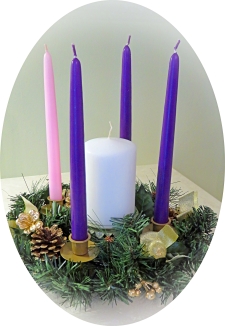 Yesterday was the first Sunday in Advent—a season when Christians throughout the world prepare for the coming of Christ. For most of my life, I attended liturgical churches where, on each of the four Sundays in this season, we’d sing “Oh, Come, Oh Come, Immanuel” as the Advent candles were lit. Although this song is sung by 21st century Christians, its words easily could have been sung by 1st century Jews. Immanuel means “God with us” and, after centuries of being subject to pagan nations, they yearned for God to come and ransom their captive land.
They certainly wondered when God would fulfill the promise made to David 1,000 years earlier. Found in 2 Samuel 7, God promised David a secure homeland for the people of Israel; assured him of a never-ending dynasty; that one of his descendants would build God a house and sit on the royal throne; and that the descendant would have a Father/son relationship with God. God’s promise ended with these words: “Your house and your kingdom will continue before me for all time, and your throne will be secure forever.”
“Forever” meant the promise was eternal and absolute. With no restrictions placed upon the promise’s fulfillment, it didn’t depend on the obedience of David or Israel. This promise rested solely on God’s faithfulness and it was this promise that became the basis for Israel’s hope of a Messiah—the anointed one who would deliver Israel from God’s enemies.
No timeline for the fulfillment of God’s promise was given and, in the thousand years that followed, Israel was anything but free of enemies and opposition. The nation divided, its two kingdoms fought one another, the northern kingdom was exiled to Assyria, the southern to Babylon, and David’s earthly dynasty ended.
When the exiles returned after Persia defeated Babylon, no heir of David sat on the throne and Judah was just a tiny part of Persia’s vast empire. The Old Testament leaves Jewish history around 432 BC in the books of Ezra and Nehemiah with the Temple rebuilt and Jerusalem’s walls reconstructed and closes with the prophetic voices of Zechariah and Malachi.
Prophesying about Israel’s future, Zechariah spoke of a coming king and the restoration of God’s people. God promised, “I will strengthen Judah and save Israel; I will restore them because of my compassion. It will be as though I had never rejected them, for I am the Lord their God, who will hear their cries.” [10:6] The prophet Malachi relayed God’s promise of two messengers. The first would prepare the way for the Lord and the second, the one for whom the people longed, would be the messenger of the covenant—the Lord Himself.
Because only one page in our Bibles separates the book of Malachi from that of Matthew, we may not realize that about 500 years pass in the turn of that page. There were nearly five centuries of silence from God and His prophets until we hear a voice like that of Elijah, in the Judean wilderness, preparing the way of the Lord.
Look! I am sending my messenger, and he will prepare the way before me. Then the Lord you are seeking will suddenly come to his Temple. The messenger of the covenant, whom you look for so eagerly, is surely coming. [Malachi 3:1 (NLT)]
Listen! It’s the voice of someone shouting, “Clear the way through the wilderness for the Lord! Make a straight highway through the wasteland for our God!” [Isaiah 40:3 (NLT)]
Copyright ©2023 jsjdevotions. All rights reserved.
 Devotions of the Heart