
He went on a little farther and bowed with his face to the ground, praying, “My Father! If it is possible, let this cup of suffering be taken away from me. Yet I want your will to be done, not mine.” [Matthew 26:39 (NLT)]
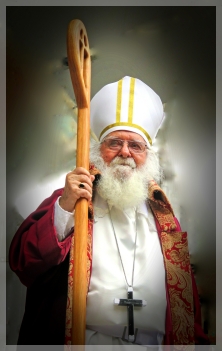 Sometime near the end of the 3rd century, the Bishop of Myra died and a conclave was held to elect his replacement. Legend has it that the bishops kept praying and voting but could not come to an agreement. In a stalemate, they prayed all night for God’s guidance. That night, one bishop heard a voice telling him that, at the hour of matins, the man who walked into the church was the one God wanted to shepherd His flock.
A young man was the first to come in the door and, when asked his name, it is said he replied, “Nicholas, the sinner.” The man was brought into the sanctuary, placed on the bishop’s seat, and consecrated as the new Bishop of Myra. In spite of the odd manner of Nicholas’ selection, from what we know of the man—his good deeds, wisdom, generosity, and deep faith are legendary—God knew what He was doing.
When those bishops first got together to select the new bishop, I suspect each man had his favorite candidate and his prayers probably were that the other bishops would see the light and vote for his man. Busy telling God the outcome they desired rather than asking Him to reveal who He wanted, it’s no surprise the bishops came to an impasse. Once they agreed to ask God for His divine wisdom, their prayers were answered.
There’s no point asking God for His guidance, however, if we’re unwilling to accept His answer. Granted, selecting the first man into church seems rather strange but God knew who that would be. While there are variations in the story’s details, most agree that Nicholas was no more than thirty. While he was devout and well-versed in Scripture and even may have been a monk, the man was a complete stranger and not even a priest. Could some of the bishops have had second thoughts at that point? Here was an unknown entity: someone who’d never been deacon or priest, inexperienced in the church and its politics, who would now be on an equal footing with the other bishops and in charge of the deacons and priests of Myra. And what of young Nicholas? Many stories mention his hesitation at taking on such an undeserved honor. Nevertheless, both the young man and the bishops were obedient to God’s plan; Nicholas became the Bishop of Myra and history tells us he was the right man for the job.
Do we really think God needs our advice in running the world and our lives? When we pray, do we tell Him what we want Him to do and the outcome we desire or are our prayers open-ended, leaving the end result up to God’s will? God is not a cosmic vending machine and even He can’t please all the people all of the time. If I get every green light, then someone else is getting all the reds! We all can’t get what we want but we all can get what God wants for us! In Gethsemane, Jesus asked for release but He finished His prayer with acquiescence to God’s will. We must do the same in our prayers. When we say, “Thy will be done,” however, we can’t have the unspoken proviso of, “as long as I like Your answer.”
For me, the story of his ordination is the best part of the St. Nicholas legend and yet the saint plays a minor role in it. It’s both a story of faith—faith in a loving and wise God, a God who answers the right prayers—as well as a story of submission—submission to God’s will and the immediate acceptance of His answer, strange as that answer seemed.
 Devotions of the Heart