
Therefore the kingdom of heaven may be compared to a king who wished to settle accounts with his servants. When he began to settle, one was brought to him who owed him ten thousand talents. [Matthew 18:23-24 (ESV)]
 Jesus told several parables about the Kingdom of Heaven and, in Matthew 18, He compared it to a king who wanted to bring his accounts up to date with the servants who owed him money. The parable is pretty straight-forward; the king symbolizes God, the servant each one of us, and the debt our sins. One servant owed the king ten thousand talents but was unable to pay. There were serious consequences for not paying debts so the king ordered that the servant’s home and possessions be sold off and that the man and his family be sold into slavery until the debt was paid.
Jesus often used hyperbole to make his point but, unfamiliar with the talent or tálanton, 21st century readers may miss it, even when the debt is translated as several or even ten million dollars. Weighing about 75 pounds, the talent had the value of 6,000 drachmas or denarii, the Greek and Roman coins used in 1st century Judah. Generally speaking, one denarius was a laborer’s wage for a day. According to Forbes and the Bureau of Labor Statistics, the average hourly wage is about $28 and, figuring an eight-hour day, a denarius would be worth about $224 today. Since 6,000 denarii equaled one talent, a talent would be worth about $1,344,000 (6,000 days of work) in 2024. The servant, however, owed 10,000 talents and his debt would require 60 million days of work. In today’s dollars, that is more than $13.44 billion. To put his 10,000-talent debt into 1st century perspective, the yearly tax revenue collected by Herod the Great was only about 800 talents!
Moreover, because “ten-thousand” was the largest number used in Jesus’ day, it also meant “beyond measure.” The servant’s debt was so enormous that it was incalculable. Although he promised to make payment, Jesus’ listeners knew the promise was absurd—repayment of such an astronomical amount was impossible!
Jesus deliberately chose such an outrageous number because there is absolutely no way any of us could ever work hard enough or give the Lord enough to repay Him for his never-ending mercies. This illustration makes it clear that, “The wages of sin is death,” because the enormous debt of sin never can be re-paid! Fortunately, the parable doesn’t stop there.
Asking for patience, the man begged for mercy and the king, filled with compassion, released his servant and forgave the debt entirely. The servant did nothing to deserve forgiveness; in fact, he may have incurred that debt through his mismanagement or embezzlement of the king’s funds. Nevertheless, as undeserved as it was, the debt was forgiven because of the king’s grace and mercy. While the wages of sin is death, “the free gift of God is eternal life in Christ Jesus our Lord.” [Romans 6:23]
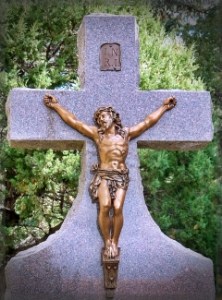
When the king forgave the debt, however, the debt wasn’t paid; justice had not been served. The king remained 10,000 talents the poorer for it! When God canceled the payment due for our sins, however, justice was served because someone else paid our debt—Jesus! We are no more deserving of God’s forgiveness than was the king’s servant but, out of God’s merciful grace, our sin debt was paid in full by God’s only Son!
When the parable continues, it takes a dark turn but, for now, consider the first part of the story and the size of the servant’s debt—a debt so massive that it was incalculable—but was forgiven. Those, my friend, are our sins—countless sins forgiven by the grace of God! Thank you, Jesus!
 Devotions of the Heart